Mali faces its largest coordinated assault in years as separatist and jihadist groups strike simultaneously across the country. The Azawad Liberation Front (FLA), seeking a breakaway Tuareg state, attacked northern cities including Kidal and Gao while the al-Qaeda-linked JNIM staged parallel strikes in the capital Bamako and central regions. The groups confirmed an alliance for this operation, with an FLA spokesman telling the BBC they had coordinated for months. Mali's military claims to have routed the attackers with hundreds killed, though fighting continues and independent verification remains impossible. The assault exposes deep fractures in Mali's security architecture, where Russian mercenaries have supplemented government forces since the 2021 coup. A three-night curfew now covers Bamako, and the UK has warned against all travel to the country.
Mali has experienced insurgency since 2012, when Tuareg separatists and jihadist groups seized the north. A 2021 military coup brought current leaders to power, who expelled French forces and hired Russian Wagner Group mercenaries. The FLA formed in 2023 from former separatist factions.
Chinese scientists have developed a direct coal fuel cell that generates electricity without combustion, eliminating carbon dioxide emissions entirely. The system pulverizes and treats coal before feeding it into an electrochemical cell where oxidation across a membrane produces power directly, bypassing steam turbines entirely. The process achieves higher efficiency than conventional coal plants while capturing pure CO2 at the anode for conversion into chemical feedstocks like synthesis gas or sodium bicarbonate. This addresses a strategic vulnerability: China generates over 60% of its electricity from coal but remains dependent on imported uranium for nuclear expansion. The technology remains experimental, but successful scaling would allow China to leverage its vast coal reserves without the climate penalty that has made coal politically untenable elsewhere.
Coal fuel cells have been researched since the 1980s but faced material degradation and efficiency challenges. China's approach uses solid oxide fuel cell technology adapted for carbon-based fuels. The research comes from the Chinese Academy of Sciences.
Researchers at the Chinese Academy of Sciences have built microscopic light-powered motors that swim through water and selectively capture uranium ions. The 2-micrometer particles, made from metal-organic frameworks, use photon energy to propel themselves while their sponge-like structure absorbs uranium. This could enable extraction from seawater, where uranium exists at low concentrations but in vast total quantities, and aid cleanup of radioactive contamination. China currently imports most of its uranium despite rapidly expanding nuclear capacity. Previous seawater extraction methods required passive filtration or energy-intensive pumping; these autonomous micromotors actively seek and concentrate target ions. The work represents a convergence of materials science, nanorobotics, and nuclear engineering with clear strategic implications for energy security.
Seawater contains approximately 4 billion tons of uranium, but at 3 parts per billion concentration. Metal-organic frameworks (MOFs) are porous crystalline materials with extremely high surface areas. The Qinghai Institute of Salt Lakes led this research.
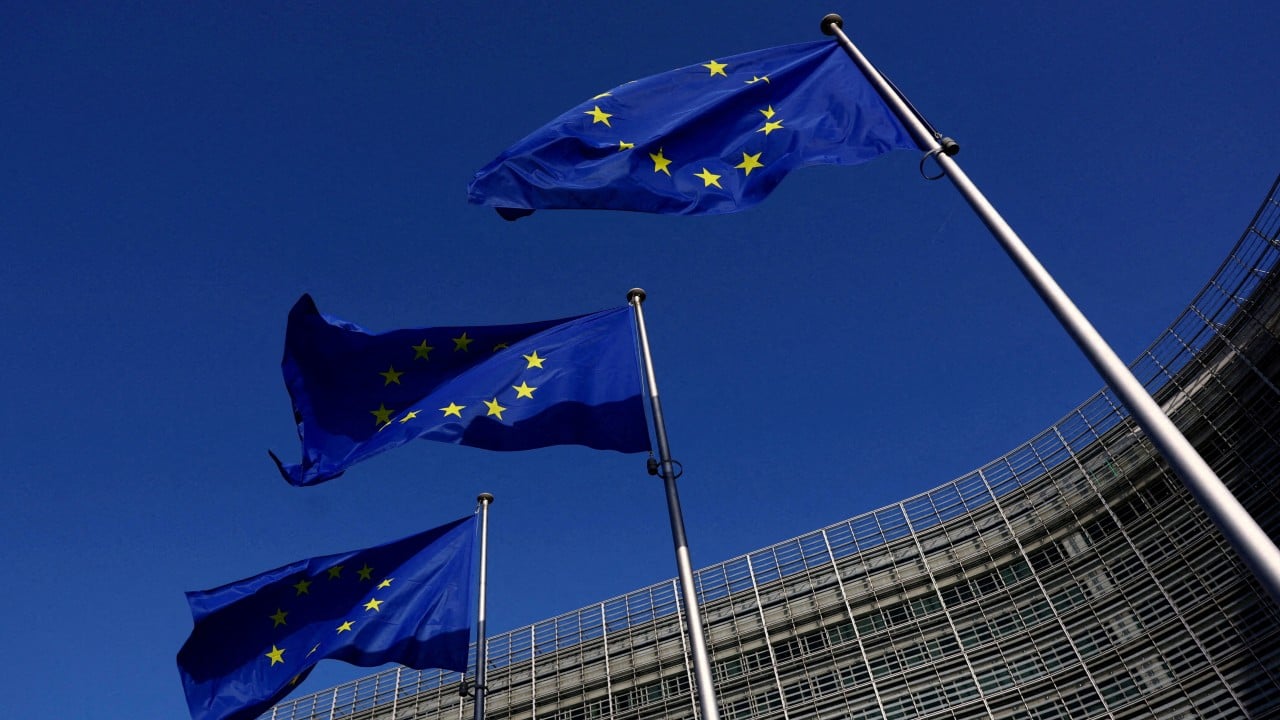
Beijing's Ministry of Commerce has demanded the European Union lift sanctions on 27 mainland Chinese and Hong Kong companies accused of supplying Russia's military-industrial complex, warning that Brussels will 'bear the consequences' if it refuses. The 20th round of EU sanctions, announced Thursday, targeted entities allegedly providing dual-use goods or helping Moscow circumvent Western restrictions. China called the measures a violation of international trade rules that undermines bilateral trust, despite having raised objections repeatedly. The confrontation illustrates how secondary sanctions are becoming a central friction point in great-power competition. China maintains it does not supply weapons to Russia, but Western governments have documented extensive flows of components with military applications through third-country transshipment.
The EU has now imposed 20 rounds of sanctions on Russia since February 2022. China-Russia trade reached $240 billion in 2024, with semiconductors, machinery, and vehicle parts prominent. The Ministry of Commerce (商务部) handles China's trade policy and WTO engagement.
Mexico's government confirmed that two US officials who died in a car crash on April 19 had no authorization to participate in anti-drug operations on Mexican soil. The men, reportedly CIA officers, had joined a raid on suspected methamphetamine labs in Chihuahua state before their vehicle plunged off a mountain road. President Claudia Sheinbaum, under pressure from the Trump administration to intensify counter-narcotics efforts, has consistently rejected unilateral US operations and insists on federal approval for any foreign agent activity. The incident exposes operational tensions behind the public facade of cooperation: while intelligence sharing continues, Sheinbaum has drawn a hard line against 'boots on the ground.' A 2024 Reuters investigation documented years of CIA covert operations in Mexico, making the current government's public rebuke notable for its directness.
The CIA has operated in Mexico for decades with varying levels of official cooperation. The 2024 Reuters investigation revealed covert targeting of drug kingpins. Sheinbaum took office in October 2024, succeeding Andrés Manuel López Obrador.
GnuPG 2.5.19 has shipped with Kyber encryption support, marking one of the first major open-source cryptographic tools to integrate post-quantum algorithms into its mainline release. The update implements ML-KEM (Module Lattice-based Key Encapsulation Mechanism), standardized as FIPS-203, alongside traditional encryption methods. This matters because sufficiently powerful quantum computers, when built, will break RSA and elliptic-curve cryptography that currently secures most digital communications. The 2.5 series also improves 64-bit Windows support and streamlines smartcard interactions. Developers note that the older 2.4 branch reaches end-of-life in June, making migration urgent for production systems. The release reflects accelerating preparation for cryptographic transition as NIST standards mature and threat timelines compress.
NIST finalized its first post-quantum cryptography standards in August 2024. GnuPG implements OpenPGP and S/MIME standards for email and file encryption. The project began in 1997 as a free replacement for PGP.
Internal Slack messages and interviews reveal deepening unease at Palantir as employees confront the company's role in Trump administration immigration enforcement. Workers have questioned management about ICE contracts following the fatal shooting of a nurse during a Minneapolis protest, with one writing that involvement has been 'swept under the rug.' The concerns mark a shift from the company's post-9/11 founding narrative: originally positioned as protecting civil liberties while fighting terrorism abroad, Palantir now faces accusations of enabling domestic surveillance and deportation infrastructure. CEO Alex Karp has responded to internal criticism with philosophical deflection rather than operational transparency, according to multiple employees. The tension illustrates how national security contractors are navigating polarized domestic politics when their government customers change character.
Palantir's Gotham platform aggregates data for intelligence and law enforcement. The company went public in 2020 and has deepened government relationships under the current administration. Co-founder Peter Thiel was an early Trump supporter.
OpenAI has stopped using SWE-bench Verified to evaluate its coding models, arguing that the benchmark no longer discriminates at the frontier of capability. The company contends that state-of-the-art systems now solve the benchmark's problems so consistently that score differences reflect measurement noise and test-set contamination rather than genuine capability gaps. This reflects a broader crisis in AI evaluation: as models exceed human performance on established benchmarks, the field struggles to construct new tests that are simultaneously difficult, valid, and resistant to memorization. The move carries methodological weight because SWE-bench has been widely adopted as a standard for comparing code generation systems. OpenAI suggests alternative evaluation approaches focused on real-world software engineering tasks with longer time horizons and more ambiguous requirements.
SWE-bench, introduced in 2023, tests models on real GitHub issues from popular Python repositories. Contamination concerns have plagued coding benchmarks as training data increasingly includes public codebases. OpenAI's o3 and o4-mini models reportedly achieved near-perfect scores.
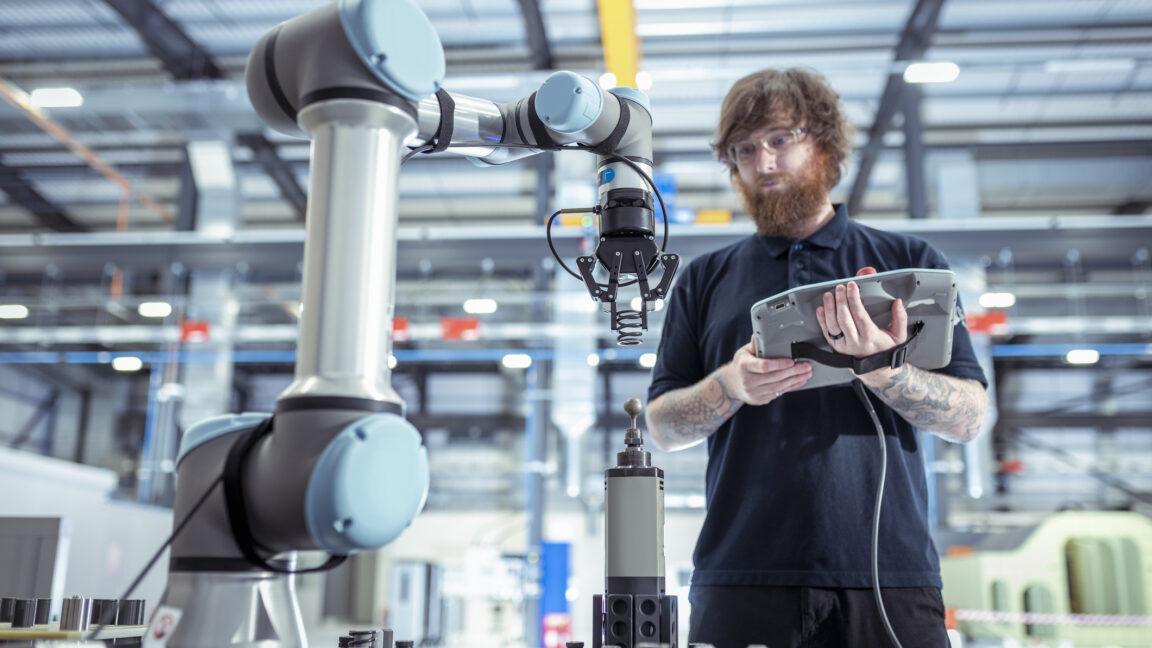
EPFL researchers have developed Kinematic Intelligence, a framework that lets robots transfer learned skills across different hardware without retraining. The system embeds deep mathematical awareness of each robot's physical constraints, preventing failures when joint configurations approach singularities, positions where standard control algorithms fail catastrophically. Unlike current approaches that tie skills to specific robot bodies or require AI training on every target hardware, this method uses classical geometry to map demonstrated motions onto new kinematic structures. A robot taught to wipe a table can execute the same motion on a different arm with longer links or alternative joint orientations. The work addresses a practical bottleneck in robotics deployment: the inability to upgrade hardware without rebuilding software from scratch.
Robotic singularities occur when joints align to eliminate a degree of freedom, causing control instability. EPFL (École Polytechnique Fédérale de Lausanne) is a leading European technical university. The research appears in Science Robotics.
Vertical Aerospace's VX4 prototype completed a piloted transition flight on April 14, converting from vertical hover to wing-borne cruise and back, a maneuver that has destroyed previous eVTOL attempts. The British company's tiltrotor design, with eight propellers that swivel from upward to forward orientation, achieved the feat at Cotswold Airport in conditions aligned with certification requirements rather than just technology demonstration. This matters because transition represents the highest-risk phase of electric vertical flight, where aerodynamic and control complexity peak. The success moves Vertical closer to regulatory approval for passenger service, though extensive failure testing and design reviews remain. The company aims for 2028 operational certification, competing in a crowded field where several rivals have crashed during similar test phases.
eVTOL (electric vertical takeoff and landing) aircraft combine helicopter flexibility with airplane efficiency. The V-22 Osprey military tiltrotor, operational since 2007, demonstrated the concept's viability but with high accident rates during development. Vertical Aerospace was founded in 2016.