Researchers at the Chinese Academy of Sciences Institute of Metal Research have developed an all-iron flow battery that could reshape grid-scale energy storage. The system uses iron, which costs over 80 times less than lithium as a raw material, while achieving record performance for the field in longevity and efficiency. Flow batteries store energy in liquid electrolytes rather than solid electrodes, making them suited to long-duration storage for intermittent solar and wind power. The breakthrough addresses a critical bottleneck in the global energy transition: storing renewable power at scale cheaply enough to stabilize electrical grids. The findings were published in Advanced Energy Materials.
Flow batteries separate energy storage from power generation, allowing independent scaling of capacity and output. Iron-based chemistry avoids rare earth dependencies and thermal runaway risks that plague lithium-ion systems at grid scale.
A team from MIT and the MIT-IBM Watson AI Lab has built a tool that predicts GPU power consumption for AI workloads in seconds rather than hours. The EnergAIzer method exploits repeatable patterns in optimized AI code to estimate energy use without simulating every computational step. Data center operators could use these predictions to allocate limited power budgets across models and hardware more efficiently. The technique also lets algorithm developers assess energy costs before deployment. With data centers projected to consume 12% of U.S. electricity by 2028, the tool addresses a pressing sustainability challenge in AI infrastructure.
Traditional power modeling emulates GPU modules step-by-step, which can take days for large training workloads. EnergAIzer captures patterns from software optimizations developers already use to parallelize code efficiently.
China has mobilized top scientific institutions and biotech firms to develop original treatments for Alzheimer's disease, as projections warn the condition could affect nearly 10% of Chinese citizens by 2050. The national initiative, launched by the Chinese Academy of Medical Sciences, aims to create four new biological drugs to address what will be the world's fastest-growing dementia caseload. Current therapies remain limited and expensive. The threefold increase in diagnosed cases over the past three decades, combined with an aging population, threatens both public health and economic stability. The campaign represents a shift from importing foreign treatments to building domestic pharmaceutical capability.
Alzheimer's is a degenerative brain disease and the most common cause of dementia. China's aging population is expanding faster than its healthcare infrastructure for age-related conditions.
Military spending in the Asia-Pacific rose 6.3% in 2025, the fastest pace in 16 years, as U.S. allies confronted growing uncertainty about American security commitments, according to SIPRI. Regional expenditures reached $681 billion. The acceleration reflects anxiety that the Trump administration might not honor traditional alliance guarantees, prompting countries to invest more in autonomous defense capability. Global military spending hit $2.89 trillion, with the U.S., China, and Russia accounting for over half. The trend suggests a structural shift in regional security architecture, with implications for arms racing and strategic stability in the Western Pacific.
The Stockholm International Peace Research Institute tracks global military expenditures annually. The 2.9% global increase marks the 11th consecutive year of rising defense budgets worldwide.
Italy has approved the extradition of Xu Zewei, a Chinese national wanted by the US Department of Justice on charges including stealing COVID-19 medical research. The decision follows an Italian court ruling earlier this month that extradition was permissible. China's Foreign Ministry opposed the move, accusing the US of fabricating charges through political manipulation and urging Italy to avoid becoming an accomplice. Xu's lawyer stated his client had received no official communication and previously claimed mistaken identity. The case highlights ongoing tensions over cyberespionage attribution and the extraterritorial reach of US criminal charges against Chinese nationals.
Xu was arrested in Italy following a US indictment. Extradition proceedings for cybercrime suspects have become a recurring friction point in US-China relations.
Software engineering is splitting into two camps: those who use AI to remove drudgery and spend more time on problem framing, tradeoffs, and original insight, and those who use it to avoid thinking entirely. The second group pastes prompts, collects polished output, and presents machine reasoning as their own. This simulates competence without building it. The engineers who will matter are those who refuse to spend time on work AI can do, while understanding everything done on their behalf. They use time savings to operate at higher levels of abstraction and judgment. The risk is intellectual dependency masquerading as leverage, skipping the repetitions that build genuine expertise.
The author draws analogies to students who copied answers through school: they looked successful until situations requiring actual understanding exposed hollow foundations. The calculator analogy distinguishes using tools from outsourcing comprehension.
SentinelLABS has uncovered fast16, a cyber sabotage framework from 2005 that targeted high-precision calculation software by patching code in memory to tamper with results. The kernel driver predates Stuxnet by at least five years and represents the first known operation of its kind. Attackers combined the payload with self-propagation to produce equivalent inaccurate calculations across entire facilities. The framework used an embedded Lua virtual machine for modularity, a technique that appeared in later NSA tools including Flame. The name surfaced in the ShadowBrokers leak of NSA's 'Territorial Dispute' components, where an evasion signature instructed operators to ignore it.
The discovery began with investigating whether modern malware's use of embedded Lua VMs shared a common origin. Hunting for Lua fingerprints in mid-2000s samples surfaced svcmgmt.exe, which contained a PDB path linking to fast16.sys.
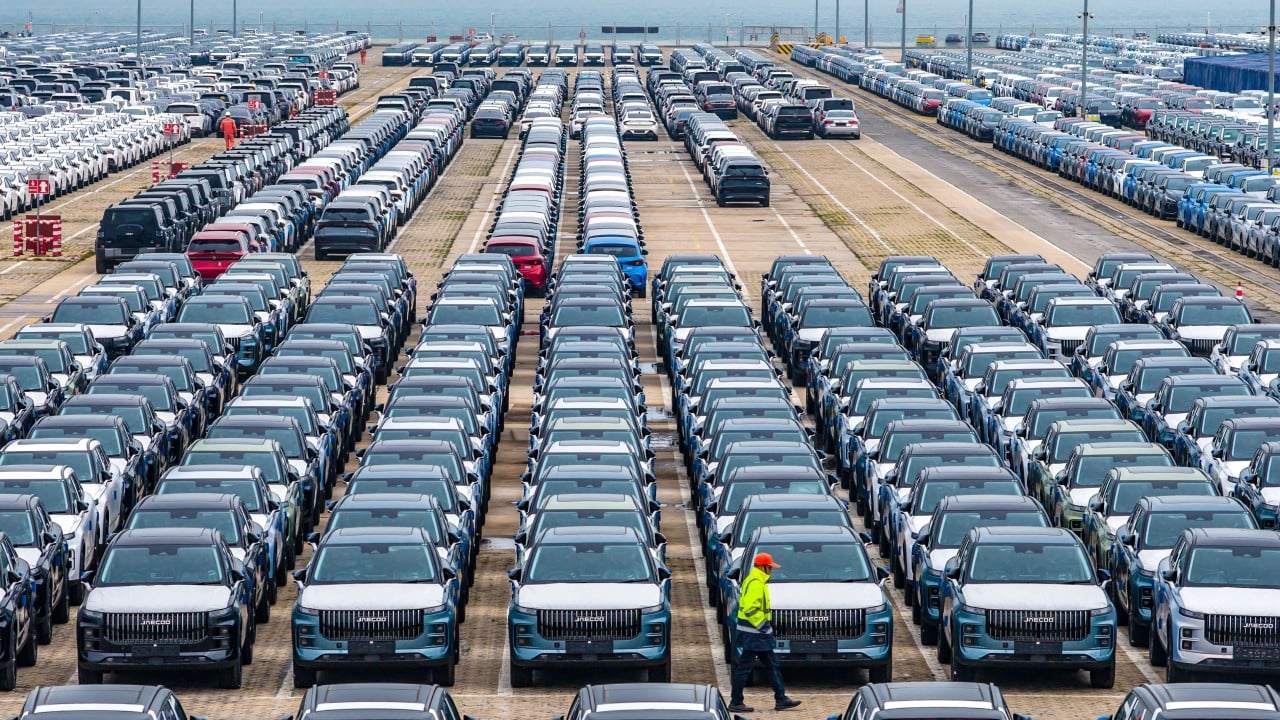
Electric vehicles manufactured in China now account for 33.9% of new registrations in South Korea, up from 4.7% in 2022, according to Kaida data. The surge is driven primarily by [Tesla's] Shanghai-built models, which sell at 10 million won ($6,740) below US-made versions with slightly reduced specifications. BYD has emerged as one of Korea's fastest-growing imported EV brands, while Chery and others target expansion. Korean domestic brands saw market share fall from 75% to 57.2% despite 126% sales growth. Higher fuel prices linked to Middle East supply disruptions and looser restrictions than traditional Western markets have created favorable conditions for Chinese manufacturers in a market long dominated by local giants Hyundai and Kia.
South Korea has historically protected its auto market through regulations and consumer preference for domestic brands. The speed of Chinese EV penetration suggests shifting competitive dynamics in battery technology and cost structure.
China Merchants Heavy Industry (Jiangsu) has delivered China's largest LNG carrier, a 180,000-cubic-meter vessel named Celsius Georgetown, bringing the number of domestic shipyards capable of building such advanced vessels to five. The ship, constructed for Danish firm Celsius Shipping, operates at temperatures as low as minus 163 degrees Celsius. LNG carriers represent the apex of shipbuilding technology due to sophisticated cryogenic engineering requirements. The delivery marks [China Merchants Group's] formal entry into the core global camp of large-scale LNG builders, intensifying competition with South Korea, which has dominated high-value shipbuilding segments. China led global shipbuilding orders by volume last year.
Liquefied natural gas carriers require specialized containment systems to maintain cryogenic temperatures. South Korean shipbuilders have historically dominated this high-margin segment due to technology barriers.
Democratic lawmakers across New England are warning that the Trump administration is laying groundwork to undermine November's midterm elections, despite administration denials. Representative Seth Moulton and Senator Chris Murphy have cited aggressive federal tactics against voter rolls and immigration enforcement as potential precursors to poll interference. The Department of Justice has sued for voter data in Massachusetts, New Hampshire, and Maine, and established new voter fraud teams. A federal judge recently blocked Massachusetts from complying with the DOJ demand. While the administration says it has no plans to deploy federal agents to polls, statements by allies including Steve Bannon calling for ICE to surround polling stations have intensified concerns about voter intimidation and suppression.
The federal government lacks personnel to police 100,000 polling stations nationwide. Election officials are preparing for uncertainty around mail-in voting challenges and voter roll examinations.