The Pentagon has asked the White House to support a supplemental request worth roughly $200 billion for the Iran war, opening a new political fight over a conflict Congress still has not formally authorized. AP reports the money would come on top of last year's big defense add-ons, while Pete Hegseth publicly stopped short of confirming the exact number and said only that the administration would return to Congress to ensure the military is properly funded. The problem for the White House is that this is now less a battlefield question than a budget one. Fiscal hawks already dislike the scale of wartime spending, Democrats want a clearer account of US goals, and lawmakers are still pressing for details on other Pentagon money that was approved recently. The war is turning into a fight over whether Congress is willing to write another enormous check after the mission has already expanded.
AP says the Pentagon's regular budget is already above $800 billion. Lawmakers in both parties have been warning that the administration has not fully explained the war's scope, strategy, or likely duration.
Japanese Prime Minister Sanae Takaichi arrived at the White House needing to calm two problems at once: a widening Iran war that threatens Japan's energy lifeline and Donald Trump's open irritation that allies have not done more around the Strait of Hormuz. AP reports that Trump even invoked Pearl Harbor while defending his decision not to warn allies before striking Iran, a remark that underscored how awkward the meeting became despite warm public compliments. Takaichi reaffirmed Japan's opposition to Iran's nuclear programme and appealed to Trump's self-image as a peacemaker, but the underlying dispute is practical. Japan depends heavily on Gulf energy shipments yet has constitutional and political limits on military involvement, so Washington wants visible support from a partner that cannot easily act like Britain or the US. The meeting showed how quickly the war is spilling into alliance management and forcing Asian partners to define what solidarity actually means.
The Strait of Hormuz is the narrow shipping passage between the Persian Gulf and the open ocean. Threats there matter immediately for Japan because much of its imported oil and gas still moves through that route.
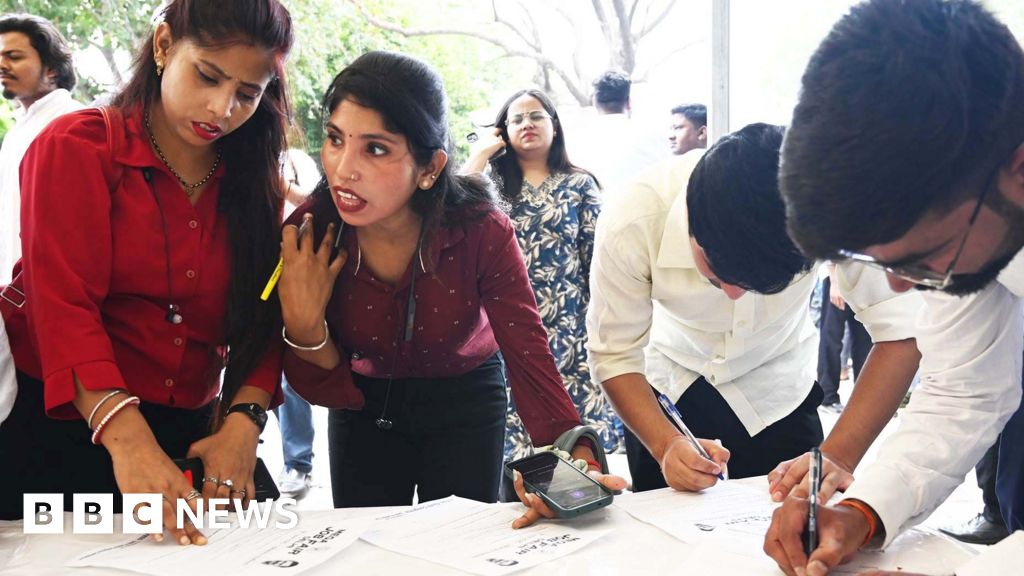
India now has 367 million people between 15 and 29, the world's largest youth cohort, and the country's educational expansion has been real: secondary and college enrolment have risen sharply, and access for poorer households has improved. But the BBC's look at a new State of Working India report shows how weak the handoff from school to work remains. Nearly 40% of graduates aged 15 to 25 are jobless, along with about 20% of graduates aged 25 to 29, because the economy has not produced enough stable salaried jobs to match rising aspirations. The result is a labour market where young people are more qualified, more connected, and more willing to wait for formal work than earlier generations, only to discover that the available jobs are often less secure than the education system implicitly promised. India's demographic dividend is still possible, but the report argues it will not arrive automatically just because classrooms filled up.
The report argues that India's central problem is not just unemployment in the abstract, but an "aspiration-availability mismatch": education rose quickly, while formal private-sector hiring did not keep pace.
California legislative leaders said Thursday that they want to rename Cesar Chavez Day to Farmworkers Day after sexual-abuse allegations against the late labour icon triggered a broader reckoning over how public institutions commemorate him. AP reports the bill would move before the end of March and still needs Gov. Gavin Newsom's approval, though he has already said he is open to a name change. The immediate catalyst was a cascade of new reporting and public testimony, including Dolores Huerta's statement that Chavez abused her while they were leading the United Farm Workers. That turns what might once have been treated as a symbolic fight into a sharper question about whether the farmworker movement should remain publicly tied to Chavez's personal legacy. California was the first state to officially recognize the holiday, so a rename there would signal that the movement's achievements are being separated from the man who helped lead it.
AP says California's legislative leaders want the renamed holiday bill passed before the month ends. Around the country, some Chavez Day events have already been renamed, postponed, or canceled after the allegations surfaced.
The US and China are not converging on one digital-money future. They are moving further apart. SCMP reports that American crypto advocates are using competition with China to push the Clarity Act, especially the idea that US stablecoin issuers should be allowed to pay interest-like rewards to holders. Banks are fighting that hard because they fear deposits would leak out of the traditional system and reduce lending capacity. Beijing, meanwhile, is pushing in the opposite direction: it is putting the sovereign e-CNY at the centre of its architecture and treating digital money as an extension of state monetary infrastructure rather than a private-sector product line. The result is an increasingly asymmetrical contest. Washington's debate is about how much room to give private dollar tokens, while China's model is about expanding official digital cash and cross-border state-led rails. That matters because the argument is no longer just about crypto; it is about who gets to design the future plumbing of finance.
The House passed the Clarity Act last year, but the Senate has not moved it forward. The fight has become a broader battle between banks, crypto firms, and policymakers over whether digital dollars should sit inside or alongside the banking system.
A Hays survey of 13,000 Asian professionals suggests white-collar China has become a place of low expectations rather than imminent rebound. SCMP reports that 44% of professionals in China expect no pay rise in 2026, the highest share anywhere in Asia, while 6% expect an outright cut. The gloom reflects experience as much as fear: 51% received no raise last year and one in 10 took a pay cut, both also the worst outcomes in the region. What makes the numbers more interesting is that Chinese workers are not responding with aggressive job-hopping. Only 34% say they plan to move this year, far below the Asian average, because weak demand and a graduate glut have made caution feel safer than ambition. The picture is of a labour market where dissatisfaction is widespread but confidence is scarce, so workers stay put even when they think staying put will not improve their situation.
SCMP ties the pessimism to weak consumer demand, strained local-government finances, and a continuing glut of graduates. China's overall urban unemployment rate also ticked up to 5.3% in February from 5.2% in January.
Eli Lilly's experimental drug retatrutide just cleared an important credibility threshold: in a phase 3 trial for people with type 2 diabetes, it produced both big drops in blood sugar and unusually large weight loss. Scientific American reports that after 40 weeks, participants saw A1C fall by roughly 1.7 to 2 percentage points, while those on the top 12-milligram dose lost an average of 36.6 pounds. What makes retatrutide especially interesting is that it is a "triple agonist" hitting three hormone pathways at once - GLP-1, GIP, and glucagon - rather than one or two. That raises the possibility that the next wave of obesity and diabetes drugs could outperform semaglutide and even tirzepatide, not just imitate them. The caution is that the full data have not yet been peer-reviewed, so the current excitement is about very promising trial results, not a settled verdict. Even so, the race to build stronger metabolic drugs has plainly moved into another gear.
The current blockbuster obesity drugs mostly work by mimicking one or two gut-hormone signals. Retatrutide is among the most watched candidates in the next generation because it aims to widen that hormonal toolkit.
The 2026 Abel Prize goes to Gerd Faltings, whose work changed what mathematicians could prove about equations with rational-number solutions. The official citation says he is being honoured for introducing powerful tools in arithmetic geometry and for resolving the long-standing diophantine conjectures of Mordell and Lang. In plainer language, Faltings helped show that many equations which look as if they might admit endlessly many rational solutions in fact permit only finitely many. His 1983 proof of the Mordell conjecture, now usually called Faltings' theorem, became one of the landmark results of late-20th-century number theory because it connected deep geometric structure to old questions about whole and fractional numbers. The award is a reminder that some of mathematics' biggest advances are not new formulas so much as new languages powerful enough to make previously impossible problems tractable. Faltings did not just solve a famous conjecture; he altered the toolkit other mathematicians now reach for.
The Abel Prize is awarded by the Norwegian Academy of Science and Letters and is widely treated as mathematics' closest analogue to a Nobel. Faltings' work has shaped modern number theory for more than four decades.
MIT researchers are attacking one of the most annoying failure modes in large language models: answers that sound certain and polished but are still wrong. The usual trick for measuring uncertainty is to ask the same model the same question several times and see whether it stays consistent. The MIT team argues that this mainly measures self-confidence, which is exactly the thing that breaks when a model hallucinates convincingly. Their alternative is to compare the target model's answer against a panel of similar models and treat cross-model disagreement as a separate warning signal. Combined with ordinary self-consistency, that produced a stronger uncertainty score across 10 realistic tasks, including question answering and math reasoning. The appeal is practical. If systems in finance, medicine, or law are going to use LLMs at all, they need a better way to tell the difference between genuine confidence and fluent bluffing. This work does not solve hallucinations, but it does make them easier to spot before users trust the output.
The researchers tested the method on 10 tasks and found that the combined metric beat standard uncertainty measures. The main conceptual shift is that one model's own repeated answers are not enough to estimate reliability.
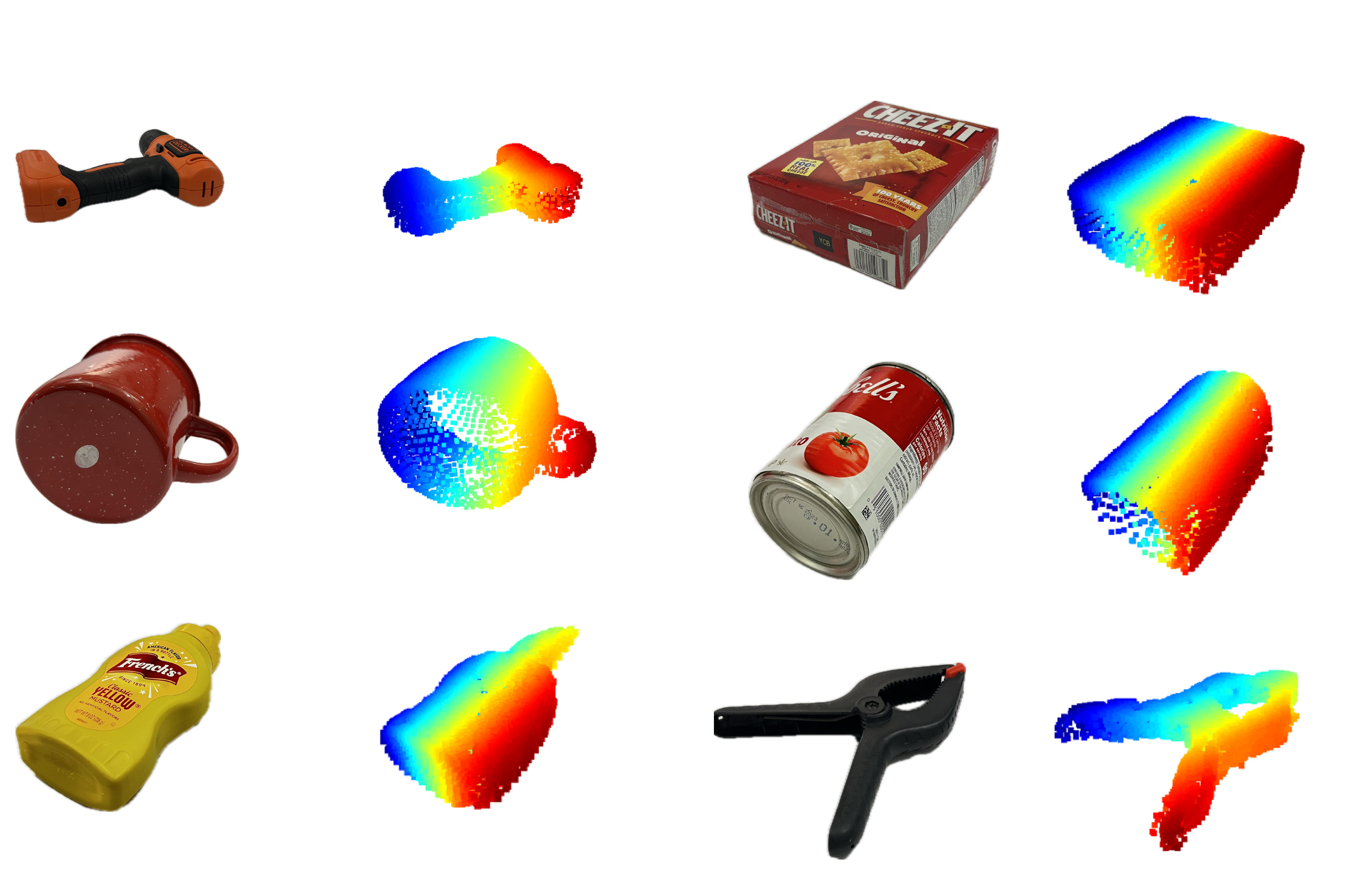
MIT's latest wireless-imaging work pushes a weird idea closer to something robots could actually use: reconstructing hidden objects and even whole rooms from radio reflections instead of camera views. The new system, called Wave-Former, starts with partial shape information from wireless signals bouncing off a concealed object, then uses a generative model to fill in the missing geometry. MIT says the team also built a room-scale version that can reconstruct interior scenes from a single stationary radar by using reflections off people moving through the space, avoiding the need to mount sensors on a roaming robot. That matters because older approaches were clumsy, incomplete, or privacy-invasive compared with what this design promises. The obvious applications are warehouses, assisted living, and smart homes where a machine needs spatial awareness without a camera pointed at everything. It is still research, but it is a more concrete vision of AI helping sensors infer the parts of the world they cannot directly see.
MIT's group has worked on wireless perception for more than a decade. The new result matters because it uses one stationary radar and a generative model, rather than needing a mobile scanner to sweep the room.