Iran expanded its retaliation against the Gulf energy system on Thursday, hitting Qatari liquefied-natural-gas facilities, setting two Kuwaiti refineries ablaze, and forcing the United Arab Emirates to shut one gas operation after Israel struck Iran's South Pars field. The attacks widened the war from direct military targets to the export infrastructure that helps keep Asia and Europe supplied with fuel. AP called it a major escalation, and the market reaction was immediate: Brent crude is now up more than 50% from where it stood when the war began on February 28, while gas benchmarks also jumped. The new pattern matters because it threatens production and processing capacity outside Iran itself, making the conflict harder to contain as a regional price shock.
Israel's strike on Iran's South Pars gas field on March 18 had already pushed oil above $108. Thursday's attacks spread the disruption to neighboring producers and exporters, raising the stakes for global fuel shipments through the Gulf.
The Federal Reserve left its benchmark rate unchanged at 3.5% to 3.75%, extending the pause that has been in place since December as war-driven energy prices complicate the inflation outlook. Jerome Powell said the latest forecast revision reflects an "oil shock" on top of price pressures that officials still expect from last year's tariffs. Fed policymakers now see inflation ending 2026 at 2.7%, up from the 2.4% they projected in December, while still expecting unemployment to hold near 4.4%. The rate decision itself was widely expected; what changed is the degree to which Middle East fighting is now directly shaping central-bank assumptions. The Fed is effectively saying it does not yet trust lower headline inflation enough to cut while oil markets and supply-chain costs remain this unstable.
Before the latest energy shock, markets had been watching for resumed rate cuts in 2026. Powell also said he would remain chair until a Trump-appointed successor is confirmed, even though his term is due to end in May.
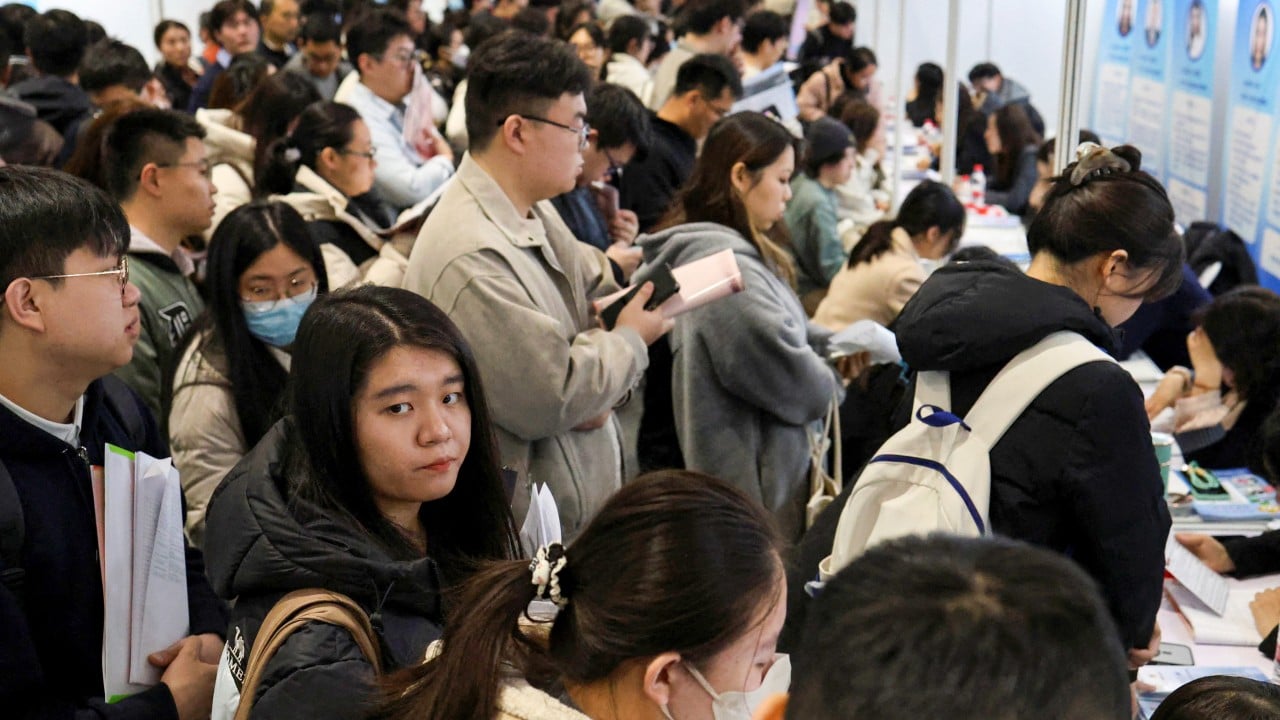
China's official youth jobless rate for 16-to-24-year-olds who are not students edged down to 16.1% in February from 16.3% in January, extending a six-month decline but doing little to change the mood for jobseekers. The figure has been drifting down since August, when a record wave of graduates pushed it to 18.9%, yet interviews in the report suggest the normal spring hiring season still feels unusually weak. That matters because Beijing has made graduate employment a political priority this year, and the headline improvement is small enough that it could reflect a labor market stabilizing at a still-painful level rather than genuinely recovering. In practice, the story is less that China's youth employment crisis is ending than that it has stopped getting worse as quickly.
China changed its youth-unemployment methodology in late 2023 to exclude students, after the old series produced politically sensitive highs. Employment support for graduates was again highlighted in this month's government work report.
Colleges are scrambling to comply with the administration's new Admissions and Consumer Transparency Supplement, a federal survey that demands seven admissions cycles' worth of applicant-level data on race, gender, grades, test scores, and family income. The burden is not just political; it is operational. The Chronicle reports that campuses were given roughly three months to build a brand-new workflow the Education Department says will take about 200 hours on top of normal reporting, often with tiny institutional-research staffs and buggy data tools. Some schools are digging back through old transcripts just to reconstruct unweighted GPAs, while other planning work has effectively stopped. A temporary restraining order pushed the deadline to March 25, but the deeper complaint is that a statistical reporting system is being turned into an enforcement weapon against universities.
The new survey, known as ACTS, was created after Trump's 2025 memo demanding more transparency following the Supreme Court's 2023 ruling against race-conscious admissions. Seventeen states are suing to block the requirement.
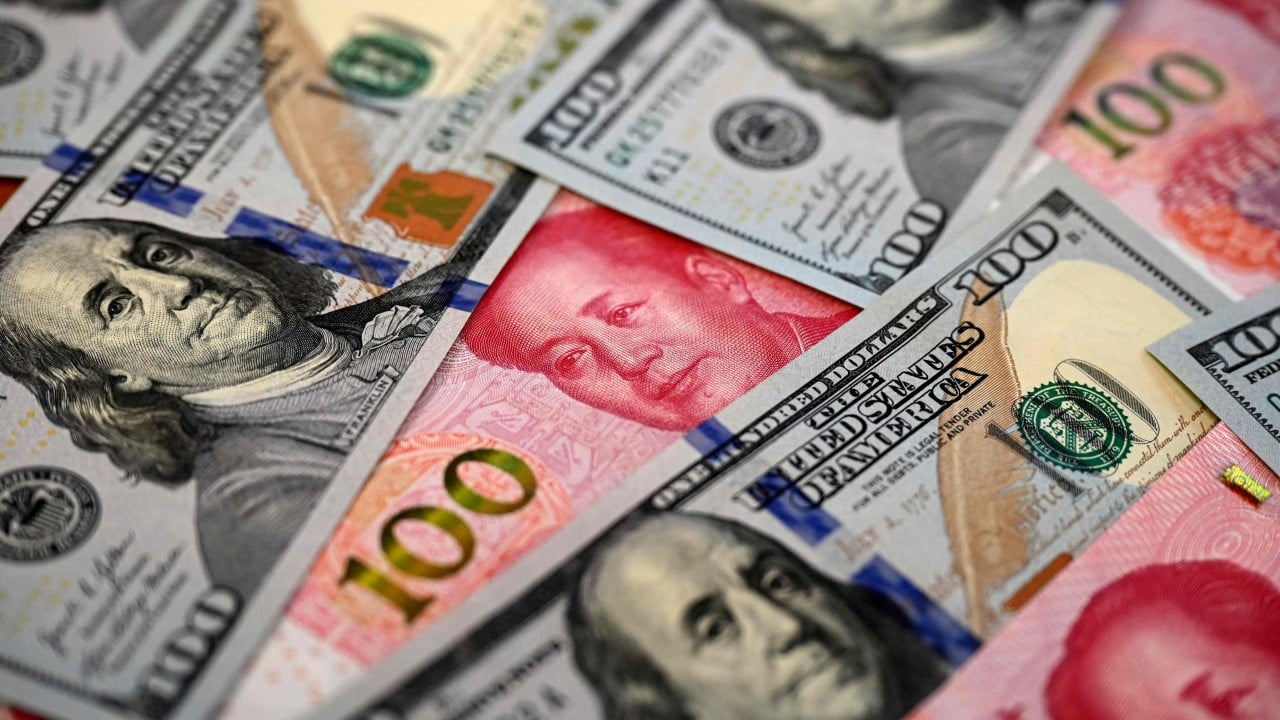
Beijing has removed several important restrictions around its Cross-border Interbank Payment System, or CIPS, opening a path for it to handle multicurrency settlements and link more directly with non-Chinese payment channels. The immediate change is technical, but the strategic meaning is larger: a system that began mainly as a renminbi-clearing network can now be positioned as a more general international payments rail, especially for countries that worry about relying too heavily on US- and Europe-linked finance. The SCMP piece frames the shift as China's clearest move yet toward building a real alternative to Swift, not just a yuan niche product. That does not mean a rapid overthrow of the existing system, but it does mean Beijing is using a moment of sanctions anxiety and geopolitical fragmentation to make financial decoupling more practical.
CIPS was launched in 2015 to support cross-border yuan payments. It has long been discussed as a hedge against possible Western financial sanctions, but until now it remained much narrower than Swift in scope and currency flexibility.
Austin has become one of the clearest US examples of what happens when a fast-growing city actually builds enough housing. Pew finds that from 2015 to 2024 Austin added 120,000 homes, expanding its housing stock by 30%, and the payoff is now visible in rents. Median monthly rent fell from $1,546 in late 2021 to $1,296 by January 2026, dropping below the national median even as the city kept adding residents. The decline was strongest in big apartment buildings and older Class C units, exactly the part of the market that matters most for ordinary renters. The point is not that one zoning reform fixed everything; Austin stacked apartment upzoning, permitting changes, ADU liberalization, and affordable-housing bonds over several years. The resulting picture is unusually concrete evidence that supply can matter a lot, even in a high-demand city.
Austin voters approved a $250 million affordable-housing bond in 2018 and later added more bond funding, while the city also loosened rules for apartment buildings and backyard units. Pew notes the city still has a housing shortfall despite the recent gains.
Pop Mart's biggest character is making the jump from blind-box collectible to global franchise. The company and Sony Pictures said a Labubu feature film is in early development, combining live action and CGI, with Paddington and Wonka director Paul King attached. That pairing is a serious signal: Sony is not treating Labubu as a throwaway merch adaptation but as something with enough cross-market potential to back with a major family-film director. The timing also reflects how far the character has traveled. What began as a niche designer toy is now a worldwide status object carried by celebrities and collectors, and BBC notes that the boom has helped push Pop Mart's valuation to nearly $40 billion, above Mattel. In other words, the movie announcement is less a side project than the next step in turning a Chinese toy craze into a transnational entertainment brand.
Labubu is one of the monster-like figures created by Hong Kong-born artist Kasing Lung and popularized by Pop Mart's blind-box retail model. Pop Mart's international expansion has turned the character into one of China's biggest recent consumer-culture exports.
NASA's Perseverance rover has found evidence of a second, older river-and-delta system buried deep beneath Mars's Jezero Crater, suggesting the planet stayed wet and potentially habitable longer than scientists had realized. The key result comes from the rover's ground-penetrating radar, which mapped buried slopes and channels more than 35 meters below the surface, beneath the already-famous delta that can be seen from orbit. Scientific American says the newly identified structures may date to about 4.2 billion years ago, hundreds of millions of years older than the surface deposits Perseverance has been studying. That matters because each sustained period of flowing water creates another window in which life-friendly chemistry could have developed and been preserved. The discovery does not prove Mars hosted life, but it does make Jezero look like an even better place to look for its traces.
Jezero is the dried lake basin where Perseverance landed in 2021 because river deltas are good places to trap and preserve chemical evidence of past life. The new paper appeared in Science Advances.
The thymus has long been treated as an immune-system training organ that matters mostly in childhood and then fades into irrelevance. Two new Nature papers make that story look too simple. In one, researchers used AI to analyze about 27,000 CT scans and medical records and found that healthier thymuses were associated with lower risks of cardiovascular disease, lung cancer, and death from any cause even after accounting for factors like age and smoking. In the other, cancer patients with healthier thymuses appeared to respond better to immunotherapy. The point is not that doctors suddenly have an anti-aging gland to optimize, but that a body part many people barely know they have may be a surprisingly important marker, or driver, of how well the immune system supports long-term health. That is a meaningful shift in how aging biology gets framed.
The thymus sits in the chest near the heart and helps produce T cells. Because it shrinks with age, researchers had often assumed its adult role was limited; these studies argue it may remain biologically important much longer.
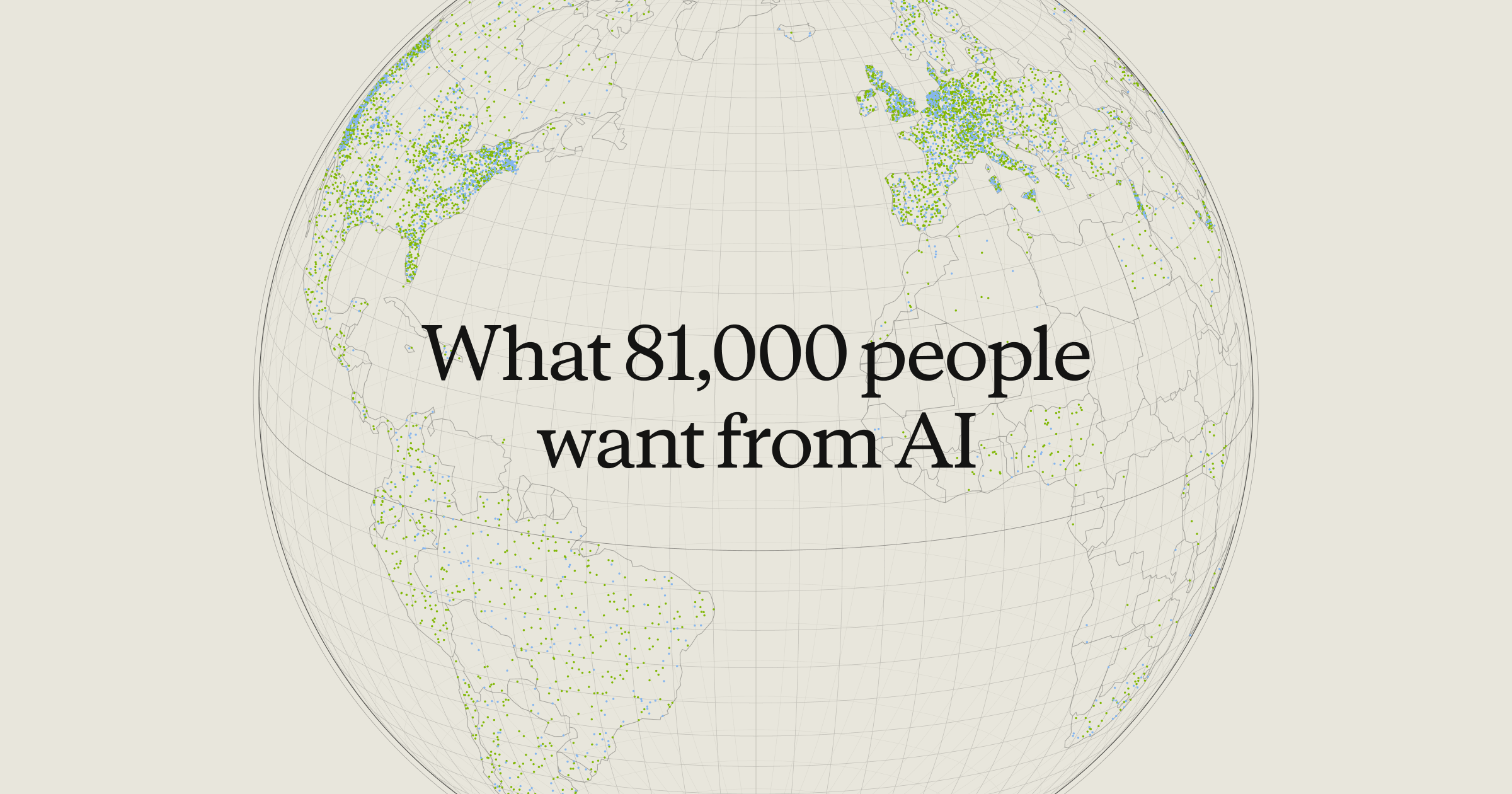
Anthropic published a large qualitative study based on interviews with 80,508 Claude users across 159 countries and 70 languages, asking not what AI might do in theory but what people actually want from it. The most interesting pattern is how ordinary the desired uses are. Users talk about AI as a patient tutor, a thinking partner, a writing and decision aid, and sometimes an emotional support tool, not mainly as an autonomous replacement for work. At the same time, the most common worries are concrete rather than sci-fi: unreliability, job disruption, loss of agency, misinformation, and overdependence. Anthropic says 33% of respondents mentioned learning benefits, while 27% worried AI would simply fail to do what it was supposed to do. The result is a cleaner picture of the current AI moment: people are reaching for help with cognition and everyday life, while fearing exactly the places those same systems still break.
Anthropic collected the responses through an in-product interview tool in December. Because the sample comes from active Claude users, it is not a neutral snapshot of the whole public, but it is unusually large and multilingual for qualitative AI research.