The Iran war crossed another economic threshold on Wednesday as strikes hit energy infrastructure on both sides of the Gulf and Brent crude climbed above $108 a barrel, up roughly 50% since the war began. AP reports that Iran struck oil regions in Saudi Arabia, Kuwait, Bahrain, Qatar, and the UAE while Qatar blamed Israel for an attack on Iran's South Pars gas field, the giant shared field that anchors much of Iran's gas production. Tehran has also kept the Strait of Hormuz close to unusable for many ships, turning what first looked like a regional war into a global price shock. The significance is not just higher gasoline. When the main Gulf producers start hitting one another's facilities and shipping lanes at the same time, markets stop treating the disruption as temporary noise and start pricing in a longer energy emergency.
Roughly one-fifth of the world's oil normally passes through Hormuz. AP says the passage is now effectively closed for many countries even though some ships are still getting through under heavy risk.
Israel says an overnight strike in Tehran killed intelligence minister Esmail Khatib, one of the officials most central to the Islamic Republic's internal repression and foreign intelligence operations. Axios reports that Khatib ran the ministry that monitored protests, pursued dissidents abroad, and helped shape the regime's internal security picture, while AP's wider war coverage places his death inside a broader Israeli campaign to decapitate the remaining senior leadership after the earlier killings of Ali Larijani and other top figures. Iranian President Masoud Pezeshkian publicly condemned the killing, effectively confirming it even as state institutions lagged behind. What matters here is not just another assassination count. Khatib sat at the junction of surveillance, counterintelligence, and regime survival, so his death further weakens Tehran's ability to track unrest at home while fighting a war abroad.
Khatib was not just a spy chief in the narrow sense. Israel and Axios both describe him as a key figure in the machinery used to monitor dissent, arrest protesters, and direct operations against Israeli and American targets.
Cuba went dark again on Tuesday night in what AP describes as the island's third major blackout in the past four months, a sign that the country's energy crisis is no longer a temporary systems failure but a rolling collapse. The immediate cause was another breakdown on Cuba's aging grid, which has deteriorated for years from underinvestment and lack of fuel. But the political context has gotten sharper: AP says the government is also blaming a U.S. energy squeeze after President Trump warned in January that countries selling oil to Cuba could face tariffs, and Washington is now openly seeking a post-Diaz-Canel political outcome. For ordinary Cubans the story is more basic and more brutal. Families are improvising sleeping arrangements, refrigeration fails, and even small comforts like fans have disappeared. A country already running on scarcity is now repeatedly losing the electrical system that holds daily life together.
AP says Cuba's grid is far past its useful life and that a week-old major outage had already left millions without power in the west. The blackout lands amid unusually direct U.S.-Cuba talks over the island's political future.
A federal judge ordered the Trump administration to restore Voice of America after the broadcaster spent the past year operating with only a skeleton staff, a ruling that could send hundreds of journalists back to work and reopen one of the United States' main overseas news outlets. AP reports that Judge Royce Lamberth gave the U.S. Agency for Global Media a week to produce a restoration plan, after earlier ruling that Kari Lake lacked the authority to shut VOA down the way she did. Tuesday's order goes further by treating the shutdown itself as legally indefensible. AP says Lake had effectively sidelined 1,042 of VOA's 1,147 employees. The case matters beyond one newsroom because VOA is chartered by Congress to provide independent journalism abroad; if an administration can simply shelve it for ideological reasons, other legally mandated public-information institutions look far less secure too.
Voice of America has long operated as a government-funded but editorially independent international broadcaster. The shutdown fight became a test of whether that independence survives when political appointees try to reclassify it as just another executive branch messaging arm.
ProPublica reports that federal cyber reviewers repeatedly warned that Microsoft's GCC High cloud product lacked basic documentation showing how sensitive government data was protected in transit, yet the service still received the approval needed to spread across federal agencies. The core dispute was not an obscure paperwork flaw. Reviewers wanted detailed data flow diagrams showing where information was encrypted and decrypted; according to ProPublica, Microsoft resisted, Justice Department officials pressured FedRAMP to move faster, and the product reached the government's trusted marketplace anyway. Ars Technica framed the result more bluntly, but the reporting points to a bigger problem than one vendor. FedRAMP is supposed to be the government's cybersecurity quality gate for cloud services. If political pressure and market momentum can override unresolved security questions at that stage, the whole assurance model starts to look more like branding than hard review.
GCC High is Microsoft's government-oriented cloud environment, and FedRAMP is the federal program meant to vet such services before agencies treat them as safe enough for sensitive work. That is why incomplete review records matter so much here.
Security researchers say a new attack chain called DarkSword lets hackers compromise iPhones simply by getting a target to open a malicious link, turning what looks like ordinary web browsing into a full-device data grab. The Verge reports that the exploit affects phones still running iOS 18.4 through 18.6.2 and has already been used by Russian hackers. According to Google's threat-intelligence team and partner firms cited by The Verge, the chain strings together six Safari-related vulnerabilities to steal text messages, contacts, saved credentials, iCloud files, photos, call logs, location history, and cryptocurrency wallets. The scale is what makes this unusually important: The Verge says as many as 270 million devices may still be on the vulnerable versions. This is not a niche jailbreak trick or a spyware rumor. It is a reminder that falling a few releases behind on mobile security updates can leave an enormous amount of private life exposed through one click.
The Verge says Apple already pushed emergency fixes to older devices last week and folded the patches into iOS 26. The practical takeaway is simple: users still sitting on late iOS 18 builds should assume they are now part of a known target set.
Yang Wei, the engineer most associated with the design of China's J-20 stealth fighter, has been removed from the Chinese Academy of Sciences website after more than a year without any public appearance. SCMP reports that Internet Archive snapshots show Yang's profile disappearing from the academy's membership rolls this week, with no official explanation for either the removal or his long absence. That would be notable for any senior defense technologist, but Yang's career makes it more sensitive: he spent decades at AVIC, helped shape one of China's flagship military aircraft programs, and rose to deputy manager in 2018. In the current context, the most plausible reading is not a routine website cleanup but another sign that Beijing's defense-sector anti-corruption campaign is still reaching high-value technical elites. When someone this central to a prestige weapons program quietly vanishes from official honor rolls, people notice.
The J-20 is one of China's highest-profile military modernization symbols, so personnel moves around its designers carry more political meaning than ordinary academic reshuffles. SCMP places the disappearance inside a broader defense-sector cleanup.
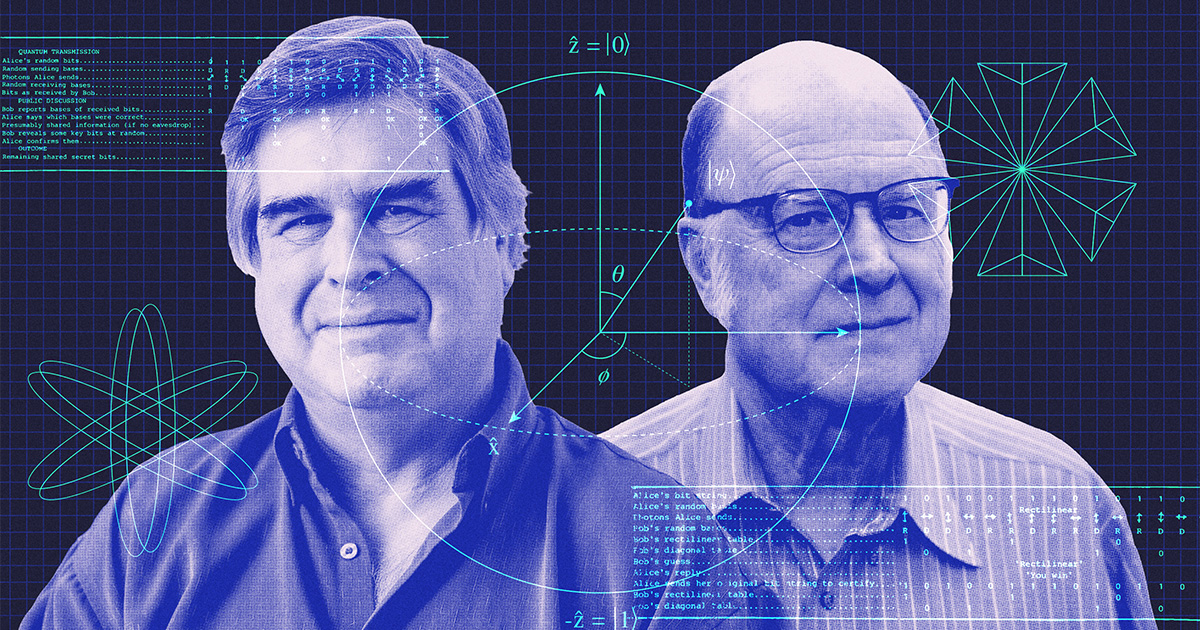
Charles Bennett and Gilles Brassard have won the 2026 Turing Award for work that helped create quantum information science before most of the field even existed. Quanta recounts how the pair's 1983 BB84 protocol showed that two people could use quantum particles of light to establish a shared secret key without meeting in person, turning a weird property of measurement into a practical new model of secure communication. Their later work also helped make quantum teleportation a real information-processing idea rather than science-fiction vocabulary. The award is timely because the field they helped build now sits at the center of two big races at once: the push to build useful quantum computers and the parallel push to secure communications against what those computers might one day break. The strange part is how small and fringe this all looked when they started. The mainstream of computing eventually moved toward them.
Quanta notes that their early experimental quantum key-distribution demo only spanned 30 centimeters in 1989. Similar ideas are now being tested over satellite links and folded into wider debates about post-quantum security.
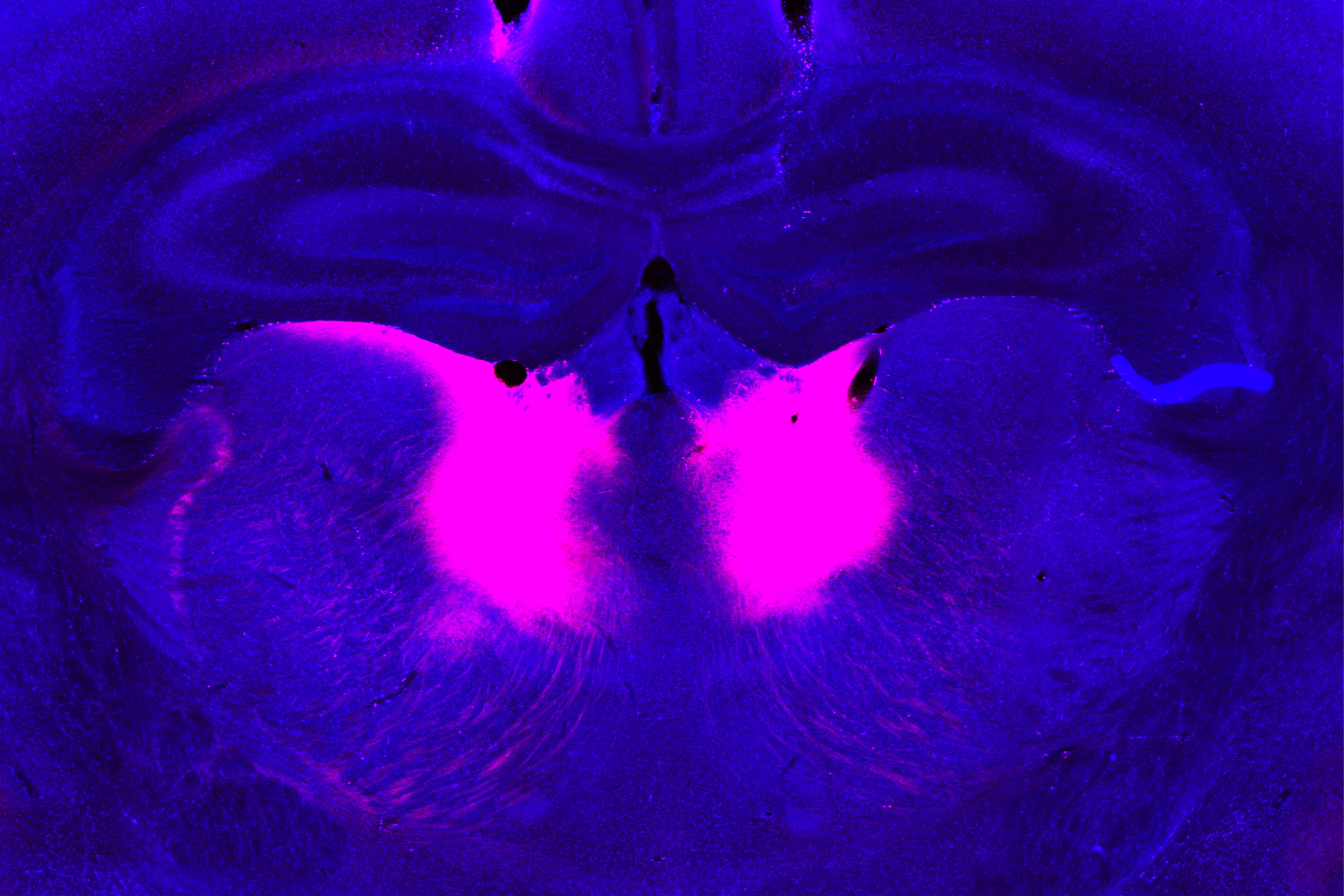
MIT researchers say they have pinned a long-discussed schizophrenia mechanism to a specific brain circuit: mice carrying a high-risk mutation struggled to update their beliefs when new evidence arrived because activity in the mediodorsal thalamus was impaired. The MIT team built mice with a mutation in grin2a, a gene linked to schizophrenia risk, and tested how they adapted when the payoffs from two reward choices slowly changed. Healthy mice adjusted as the incentives shifted, but the mutant mice kept leaning too hard on their earlier expectations, a behavioral pattern the researchers connect to how psychosis can detach belief from reality. The striking part is that the team could partly reverse the abnormal behavior by optogenetically activating the affected thalamus neurons. That does not mean a cure is around the corner, but it gives the field a much sharper circuit-level target than the old vague story about 'too much prior belief' ever did.
For years researchers have argued that psychosis may reflect a broken balance between prior beliefs and current sensory evidence. This study matters because it ties that abstract theory to a defined gene, task, and circuit that can be manipulated experimentally.
Fourth Power, an MIT spinout founded by professor Asegun Henry, says it is building a grid-scale battery that stores electricity not in chemistry but as extreme heat inside massive graphite blocks heated to about 2,400 degrees Celsius. MIT News describes the system as a thermal battery: excess electricity from the grid heats the blocks until they glow white-hot, and thermophotovoltaic cells then convert that light back into electricity when power is needed. Henry argues the point of running the system at such extreme temperatures is cost. Higher temperatures mean more energy can be packed into a simpler, cheaper setup, potentially making long-duration storage less expensive than today's lithium-heavy approaches. This is still a company and not a deployed utility asset, so caution is warranted. But if the engineering holds up, it points to a very different path for storing renewable electricity at the scale required by power grids rather than by consumer electronics.
MIT says Henry's group previously set a record for a liquid pump operating at 1,200C and later demonstrated thermophotovoltaic conversion above 40% efficiency. The current company pitch is to turn those lab advances into utility-scale storage hardware.