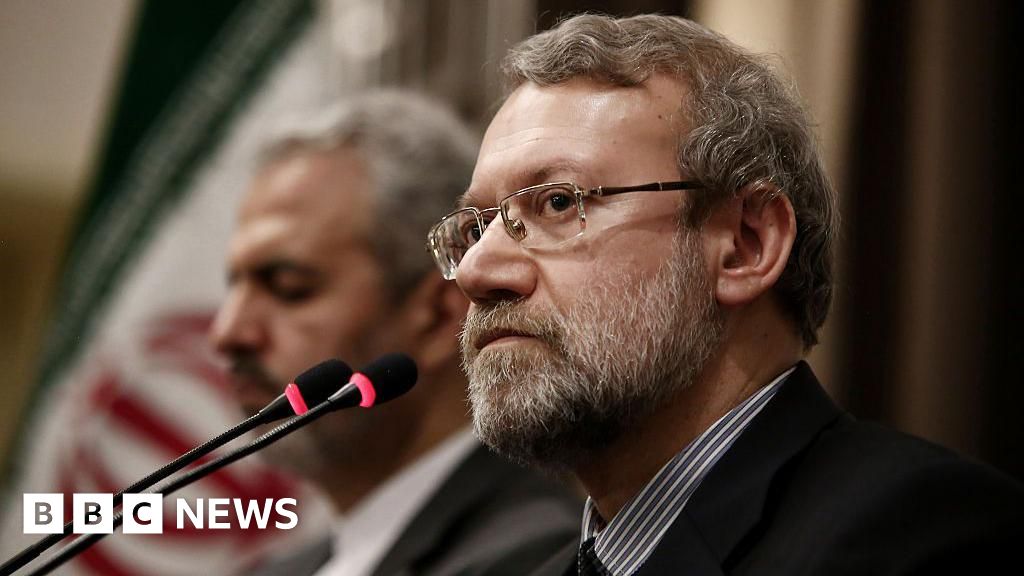
Ali Larijani, one of the Islamic Republic's most influential political operators, was killed in an air strike after weeks of attacks had already decapitated much of Iran's top command. BBC and AP report that state media confirmed his death after earlier rumors, turning what first looked like another wartime claim into a real blow to Tehran's inner circle. Larijani was not a battlefield commander; he was a former parliament speaker, longtime nuclear negotiator, and past secretary of Iran's Supreme National Security Council, which made him valuable precisely because he linked security elites, clerics, and civilian politics. After Ali Khamenei's death on 28 February, he had emerged as one of the system's most recognizable remaining heavyweights. His loss matters because it further hollows out the layer of officials who know how to hold Iran's fragmented power structure together during a war.
Larijani spent decades moving between parliament, nuclear diplomacy, and the security state. Reuters described him as a backroom powerbroker rather than a frontline commander, which is why his death reads less like a tactical setback than a succession crisis.
U.S. District Judge Brian Murphy temporarily blocked Robert F. Kennedy Jr.'s January order shrinking the federal childhood-vaccine schedule and paused a meeting of his remade advisory panel, ruling that medical groups are likely to win their challenge under the Administrative Procedure Act. The order stops the administration from dropping routine recommendations for flu, rotavirus, hepatitis A and B, some meningitis shots, and RSV prevention while the case proceeds. What makes the ruling important is not just the list of vaccines. Murphy also signaled that Kennedy probably could not tear up the normal process for ACIP, the expert committee whose recommendations anchor insurance coverage, school requirements, and pediatric practice. In other words, the judge treated this as an institutional-power case as much as a vaccine case, with national consequences for how federal health guidance gets changed.
The suit was brought by the American Academy of Pediatrics and other medical groups after Kennedy reconstituted ACIP and moved to narrow the childhood schedule. Federal officials have said they plan to appeal.
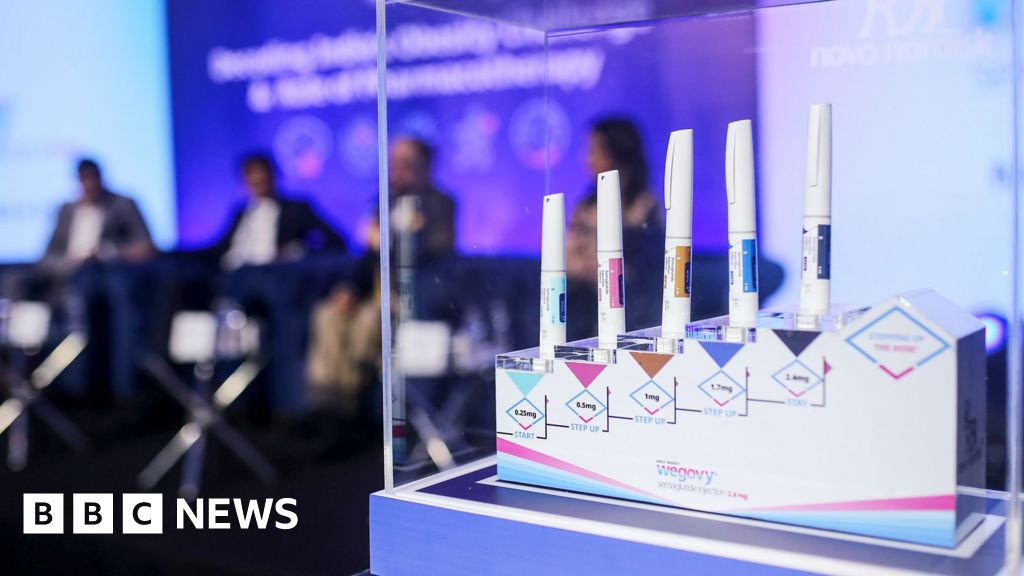
India's patent on semaglutide, the molecule behind Ozempic and Wegovy, expires on 20 March, opening the door for a generics race that could cut prices by more than half and radically widen access to obesity and diabetes treatment. BBC reports that roughly 50 branded copies are expected to hit the market within months, echoing the price-crushing competition India has produced in other off-patent drug categories. Reuters separately reported that Zydus plans to launch its own generic injections immediately after expiry, underscoring how quickly manufacturers are moving. The story matters beyond India because the country is already a global generics powerhouse: once semaglutide becomes cheap and plentiful there, it could reshape who gets access to these drugs in lower- and middle-income markets that have mostly been priced out of the current boom.
India's drug industry already dominates many off-patent medicine categories. If semaglutide follows the same pattern as earlier generics, the main question will shift from whether people can get it to how quickly supply ramps up and what price floor competition creates.
The Pentagon is preparing secure facilities where AI companies could train military-tuned models directly on classified data instead of merely letting existing models answer questions inside classified networks. MIT Technology Review reports that officials want to test whether learning from secret intelligence, surveillance, and battlefield data would make models more useful for tasks like target analysis or operational planning. That would be a real escalation in the government's relationship with AI vendors. Once a model is trained on classified material, the risk is no longer just that a contractor saw sensitive files; the knowledge could become embedded into the model itself, creating hard questions about leakage, auditing, and who is allowed to touch the system. The Defense Department says it will start with evaluations on nonclassified material first, but the direction is clear: the military wants custom AI systems shaped by war-zone data.
Reuters reported in February that the Pentagon was already pushing AI firms deeper into classified networks. Training on secret corpora would go a step beyond inference-time use and bind vendors more tightly to military data pipelines.
Nvidia says it is restarting production of its China-compliant H200 chip after winning export licences and new orders, a sign that the company still sees real money in the market Washington has tried to fence off. Jensen Huang said the supply chain started spinning back up several weeks ago after last year's halt, when tighter rules and uncertainty on both sides of the Pacific made the chip uneconomical to keep building. The timing matters because Nvidia's newer Blackwell and Rubin products are the engines behind its trillion-dollar AI sales pitch, yet China remains too large to abandon. Restarting an older, rule-compliant line shows how the business is adapting to a world where the highest-end accelerators stay restricted but second-tier products can still flow with government permission. It is industrial geopolitics in miniature: export controls are shaping not just who gets chips, but which generations of chips survive.
The H200 is an older Nvidia accelerator built on the Hopper architecture. U.S. export controls have repeatedly forced Nvidia to keep designing downgraded or specially approved variants for Chinese customers.
Three Tennessee teenagers are suing Elon Musk's xAI, alleging that Grok-generated fake nude images of them circulated through Discord and Telegram and were traded for additional child sexual abuse material. Mother Jones reports that two of the plaintiffs are still minors and that the complaint seeks damages for a tool that allegedly 'undressed' real photos without consent and then helped create a secondary market for abuse imagery. The case matters because it pushes the AI-harm debate past abstract worries about deepfakes and into a concrete product-liability fight: plaintiffs are arguing not only that the model could generate illegal sexual content, but that the resulting images became part of actual CSAM distribution networks. That is a much harder problem for AI companies to wave away as misuse by a few bad actors. If the claims hold up, the suit could become a template for future cases against image-generation systems that fail to stop sexualized outputs involving minors.
Grok has already faced scrutiny over AI-generated sexual imagery and child-safety controls. Courts and lawmakers are still working through where responsibility lies when a model creates the content but users distribute it.
Researchers at Shandong University report that they engineered a probiotic E. coli strain to colonize breast tumours in mice and manufacture an anticancer drug from inside the tumour itself, rather than flooding the whole body with chemotherapy. According to the paper in PLOS Biology, the modified bacteria both accumulated inside solid tumours and produced a small-molecule cancer drug there, sharply improving local delivery while reducing systemic toxicity. That is why this is interesting: bacterial cancer therapy has long promised precise targeting, but the hard part has been turning bacteria into reliable drug factories rather than just microscopic couriers. The study is still early and still in mice, so this is not a near-term treatment headline. But if the approach translates, it could point toward a new class of therapies that use living organisms to grow where tumours are and make the medicine on site.
The strain used, E. coli Nissle 1917, is a well-known probiotic rather than a dangerous pathogen. The next question is whether the bacteria can be controlled safely enough, and work consistently enough, to justify human trials.
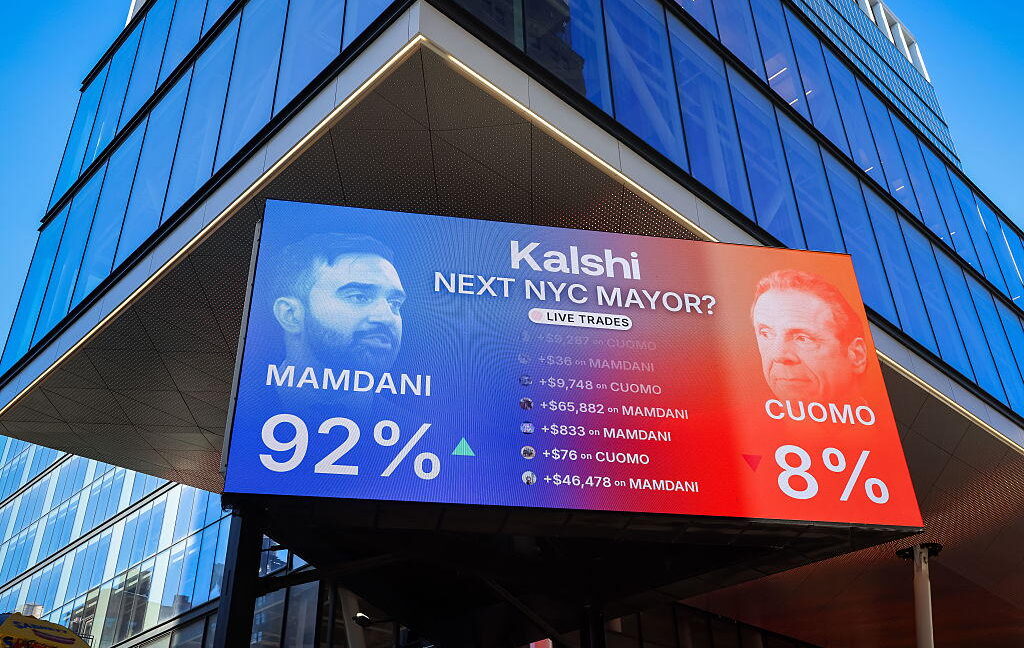
Arizona filed criminal charges against prediction-market company Kalshi, accusing it of running an illegal gambling operation by taking bets on elections and sports-like events without complying with state gambling law. Ars Technica reports that Attorney General Kris Mayes framed the case as a direct challenge to Kalshi's attempt to operate nationwide under the language of financial markets rather than sportsbooks. That distinction is the entire fight. Kalshi says its event contracts are federally regulated derivatives overseen by the CFTC, while states increasingly argue that many of the company's offerings look like ordinary wagering with a finance gloss on top. Arizona is the first state to go criminal rather than just send cease-and-desist letters, which raises the stakes for a business model that has grown quickly around elections, macro events, and sports outcomes. For readers trying to understand modern finance, the case is a useful reminder that 'market' and 'gambling' are often separated less by mechanics than by who regulates the contract.
Kalshi won federal attention by offering contracts on political and economic outcomes, then expanded toward sports. Other states have already challenged those markets; Arizona's indictment is the sharpest escalation yet.
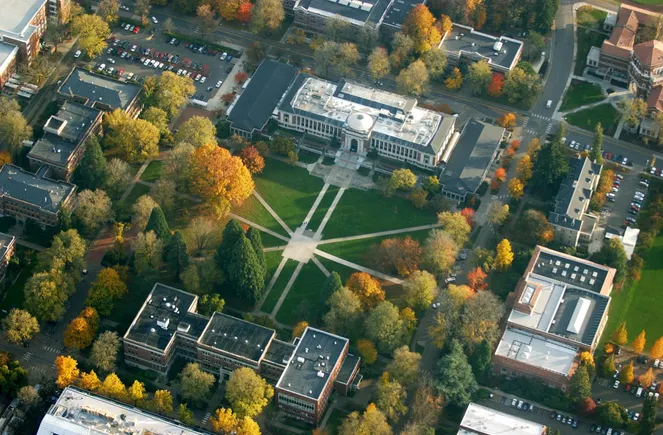
Oregon State approved tuition increases of more than 6 percent for new students after projecting roughly $1 billion in expenses against $986 million in revenue for fiscal 2026, turning a familiar budget squeeze into a blunt price signal for students. Higher Ed Dive reports that resident undergraduates at the main campus will pay $15,246 next year, while nonresidents will pay $40,392. The immediate gap is about $14 million, but the broader story is that Oregon State already had the second-highest tuition among the state's public universities and has been raising prices at an average annual pace near 4.7 percent. That makes this more than a one-year patch. Research universities keep trying to avoid across-the-board staffing cuts, but when state support and other revenues do not close the gap, tuition becomes the easiest lever left. For students, especially out-of-state ones, the result is another reminder that public-university pricing increasingly behaves like a private market.
Last year Oregon State said it wanted strategic cuts rather than blanket reductions. The new increase suggests that cost controls alone were not enough to absorb inflation, labor costs, and other university spending pressures.
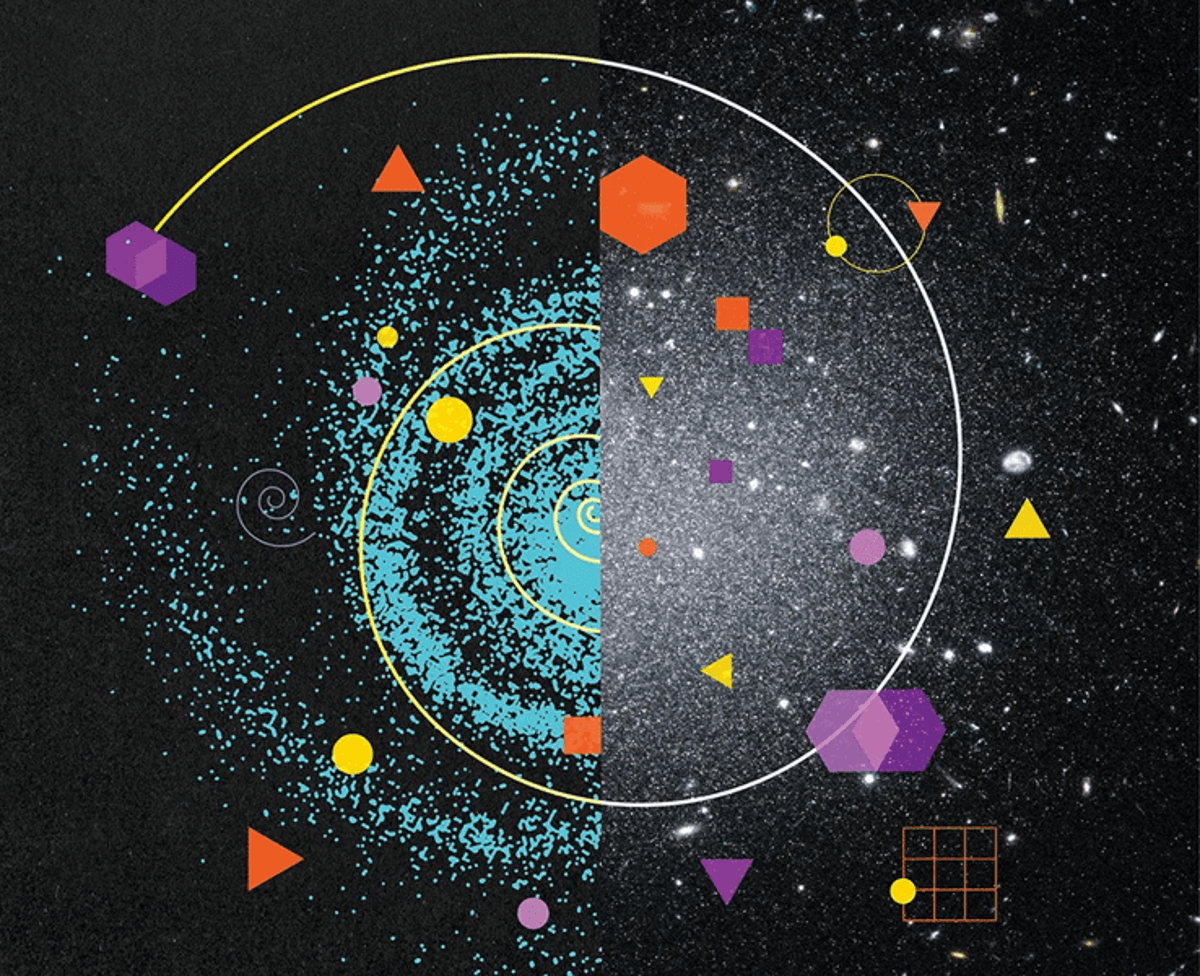
A growing collection of dwarf galaxies appears to contain little or no dark matter, and astronomers still do not have a satisfying explanation for how such objects form, survive, or avoid being torn apart. Scientific American traces the mystery back to the 2018 discovery of DF2, the first famous case, but the reason the story keeps getting stronger is that it is no longer just one weird galaxy. Follow-up observations have turned up additional candidates, which makes it harder to dismiss the whole thing as a measurement error or a bad assumption about distance. The problem is basic: standard galaxy-formation models treat dark matter as the gravitational scaffold that lets galaxies assemble and stay intact, especially small diffuse ones. If some galaxies truly lack that scaffold, then either rare but real formation pathways are being missed or part of the broader picture needs revision. It is exactly the kind of astronomy puzzle that becomes more interesting as the evidence refuses to go away.
Dark matter is the invisible mass inferred from gravity rather than light. Dwarf galaxies are usually thought to be especially dark-matter-rich, which is why the apparent exceptions are so unsettling.