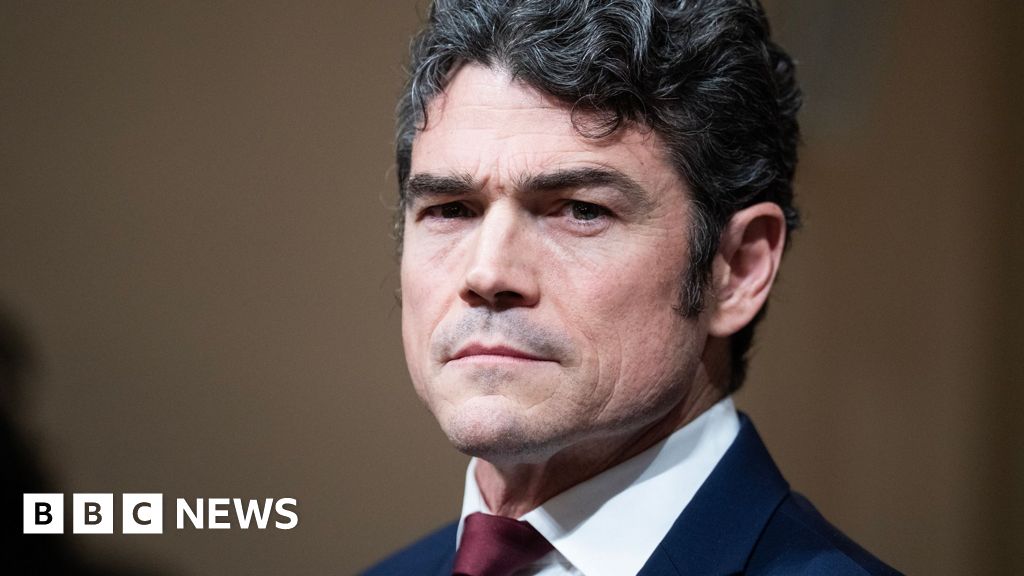
Joe Kent, the Trump administration's director of the National Counterterrorism Center, resigned on Tuesday and publicly urged the president to "reverse course" on the war with Iran. In a letter posted to X, Kent argued that Iran posed "no imminent threat" to the United States and said the war began because of pressure from Israel and its allies in Washington. Trump dismissed him in the Oval Office as "weak on security" and said the letter proved it was "a good thing he's out." Kent is the first senior administration official to break publicly with the White House over the conflict, turning what had mostly been outside criticism into an internal rebellion story. The resignation also matters because it comes from the official overseeing U.S. counterterrorism assessments, not from a pundit or congressional dissenter.
The Iran war has already driven oil-shipping disruptions, alliance friction, and sharp political blowback inside Trump's coalition. Kent, a longtime Trump loyalist and decorated veteran, is the highest-ranking internal critic to quit over it so far.
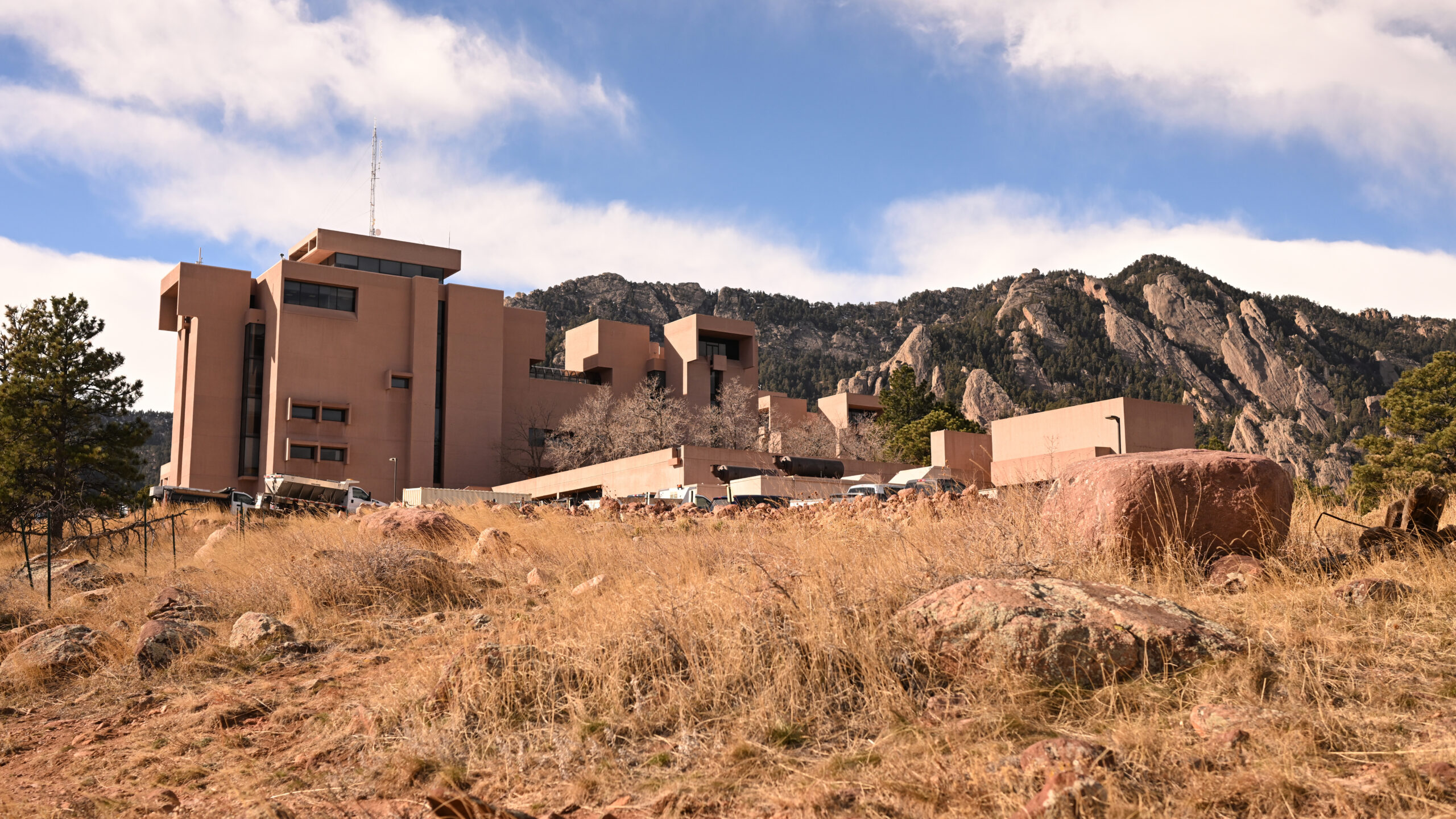
UCAR, the nonprofit consortium that runs the National Center for Atmospheric Research, sued the Trump administration to stop plans to dismantle one of the country's main hubs for weather and climate science. The lawsuit says NCAR is being targeted without a lawful rationale after the White House budget office branded it "woke" and a source of "climate alarmism" in December. UCAR argues that federal agencies cannot simply reassign NCAR's supercomputing center, aircraft, research programs, and Boulder facilities in defiance of existing agreements, and it also says staff were effectively gagged from discussing the shutdown. This is not a niche lab fight: NCAR underpins academic forecasting, climate modeling, and atmospheric research across the United States, so breaking it apart would hit universities, graduate students, and operational science well beyond Colorado.
NCAR is managed by UCAR, a consortium representing more than 130 institutions. Its computing resources, aircraft, and shared facilities support everything from day-to-day weather work to longer-term climate and space-weather research.
Moldova cut water supplies to Balti, its third-largest city, after oil contamination in the Dniester river was traced to a Russian strike on Ukraine's Dniester hydroelectric plant. Ukrainian officials said the leak began after the 7 March attack, and oil slicks reached the river several days later, affecting both Moldova and parts of southwestern Ukraine. Chisinau imposed a 15-day state of alert in the Dniester basin, summoned Russia's ambassador in protest, and said water would stay off until pollution drops below 0.1 milligrams per litre. The episode matters because it turns a Russian attack inside Ukraine into a cross-border environmental and infrastructure problem for a neighboring state. It also shows how easily wartime damage to energy sites can spill into water systems serving civilian populations well outside the immediate strike zone.
The Dniester is a major water source for both Moldova and southwestern Ukraine. Balti is Moldova's second-largest urban area after the capital region, so a prolonged cutoff would quickly become a national political issue.
Congress is running out of time to stabilize the Pell Grant program, which the Congressional Budget Office says could face a nearly $17 billion shortfall by September 2027 if annual appropriations stay flat at roughly $22.5 billion. Higher-ed advocates are now pushing lawmakers to allocate about $39.4 billion for the coming fiscal year, arguing that recent expansions in eligibility and benefit levels were never matched by enough new funding. If Congress does not plug the hole, the main alternatives are politically ugly: lower maximum awards, tighter eligibility rules, or cuts elsewhere in the Education Department. The warning is bigger than a budgeting squabble. Pell is the federal government's flagship need-based aid program, so a funding collapse would land directly on lower-income students just as tuition pressure and enrollment uncertainty are already making college access harder.
Congress simplified Pell access and increased the maximum award over the past few years, but appropriations did not rise enough to cover the broader program. CBO now projects the longer-run deficit could exceed $100 billion over a decade.
A Chinese research team says a rare-earth alloy called EuCo2Al9 can cool to 106 millikelvin, close to absolute zero, using a solid-state technique that avoids helium-3, one of the scarcest and most strategically sensitive ingredients in today's ultracold refrigeration systems. According to the Chinese Academy of Sciences and a paper highlighted by SCMP, the material works through adiabatic demagnetization refrigeration and conducts heat far better than older magnetic cooling materials, solving a bottleneck that has limited practical use. The timing is part of the story: DARPA put out a call in late January for modular helium-3-free cooling systems for quantum and defense technologies, and the Chinese result landed within weeks. If the performance scales beyond the lab, this would matter for quantum computing, ultrasensitive detectors, and any country trying to reduce dependence on a supply chain tied to nuclear programs abroad.
Most sub-kelvin systems still rely on bulky dilution refrigerators and helium-3. A smaller helium-3-free module would be attractive for compact quantum hardware, portable sensing systems, and some space applications.
A Brussels court ruled that former Belgian diplomat Etienne Davignon can stand trial over the 1961 killing of Patrice Lumumba, the first prime minister of independent Congo and one of Africa's most prominent anti-colonial leaders. Davignon, now 93, is accused not of pulling the trigger himself but of involvement in Lumumba's unlawful detention, transfer, and degrading treatment before his execution by firing squad. He is the only surviving Belgian among 10 men named in a case filed by Lumumba's family in 2011. The decision is important partly because Belgium has already acknowledged moral responsibility and apologized, but criminal accountability has remained elusive for decades. A trial would push the case from symbolic regret toward a concrete judicial reckoning with how a former colonial power handled the removal of a leader it viewed as a threat to its influence.
Lumumba led Congo at independence in 1960 and was killed months later during a chaotic power struggle involving Belgian interests and Cold War rivalries. His family's criminal complaint has spent years moving slowly through the Belgian courts.
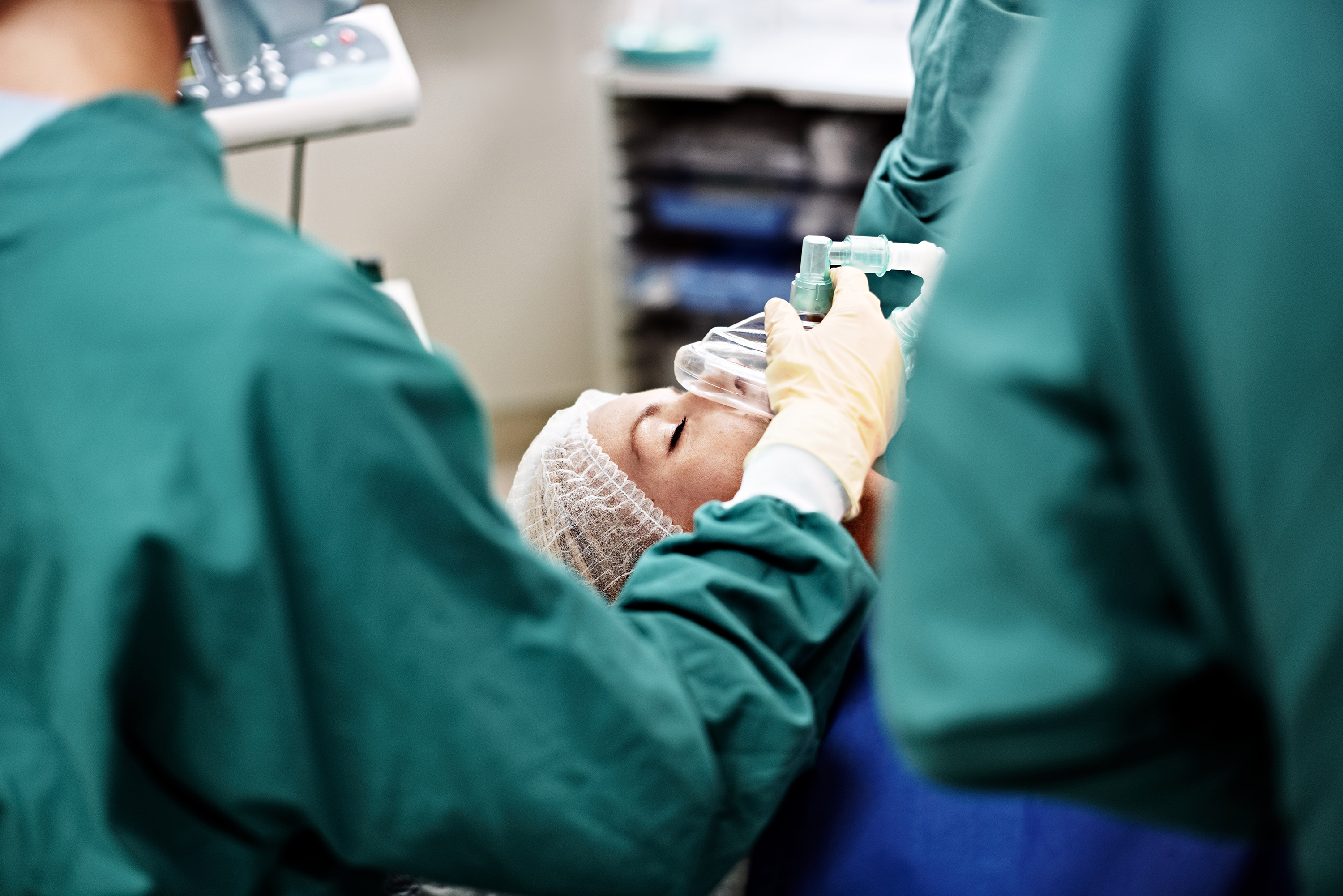
MIT researchers report that three different anesthesia drugs, despite acting on the brain through different molecular pathways, all seem to push neural activity toward the same unstable state before consciousness disappears. The group says the shared mechanism is a breakdown in the brain's balance between stability and excitability, a finding that could make anesthesia easier to monitor with a single EEG-based signal instead of drug-specific heuristics. That is the practical hook here: if doctors can track one common marker of unconsciousness, automated dosing systems become more realistic and the risk of giving too little or too much anesthesia could fall. The study also matters scientifically because anesthesia has long been a useful window into what consciousness requires. Instead of each drug knocking the brain out in its own idiosyncratic way, the paper suggests there may be a common systems-level route into unconsciousness.
MIT's Earl Miller, Ila Fiete, and Emery Brown have been building toward an automated anesthesia-control system. A universal neural marker would be valuable because operating rooms often use different drug combinations across patients and procedures.
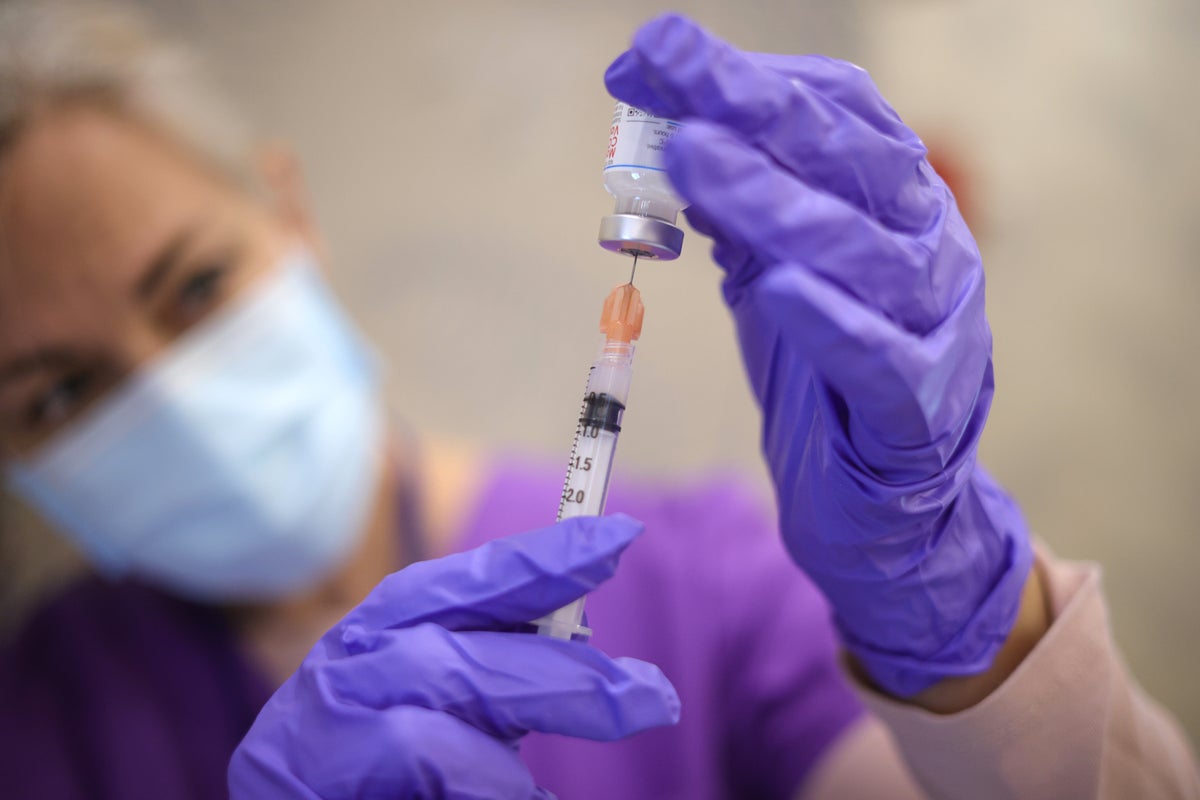
Just 60 percent of Americans now say they trust the federal government's childhood-vaccine recommendations, down from 71 percent in June 2025, according to a new Ipsos/Axios poll highlighted by Scientific American. The biggest decline came among Democrats, but trust also fell among Republicans and independents. About one-third of respondents now say they place more confidence in guidance from the American Academy of Pediatrics than from the CDC, while only 8 percent prefer the CDC over the pediatricians' group. The numbers give a measurable readout of the institutional damage from the Trump administration's vaccine policy upheaval, including recommendation rollbacks and Robert F. Kennedy Jr.'s overhaul of the advisory system. The poll also arrived a day after medical groups won a court order blocking major parts of that overhaul, which suggests the legal fight may slow policy changes without immediately restoring public trust.
The American Academy of Pediatrics has become a rival source of vaccine guidance after breaking with federal policy changes under Kennedy. That kind of split is unusual in U.S. public health, where CDC recommendations normally anchor the system.
Security researchers disclosed nine vulnerabilities across IP KVM devices from four manufacturers, including bugs that can let unauthenticated attackers gain root access or run malicious code. These little boxes are a favorite of administrators because they can remotely control a machine at the BIOS or UEFI level, before the operating system even loads. That convenience is exactly what makes the flaws serious: compromise the KVM, and you may get something close to physical access to every computer attached to it. Ars also notes that a fresh internet scan found more than 1,300 such devices exposed online, up from roughly 1,000 last year. The story is a reminder that some of the most dangerous security holes are not glamorous cloud zero-days but cheap management hardware deployed with weak defaults and connected to systems that assume the person on the other end is trusted.
IP KVMs are remote keyboard-video-mouse devices used for out-of-band administration. Because they sit below the operating system, they can bypass many normal security assumptions if they are internet-facing or quietly attached by an insider.
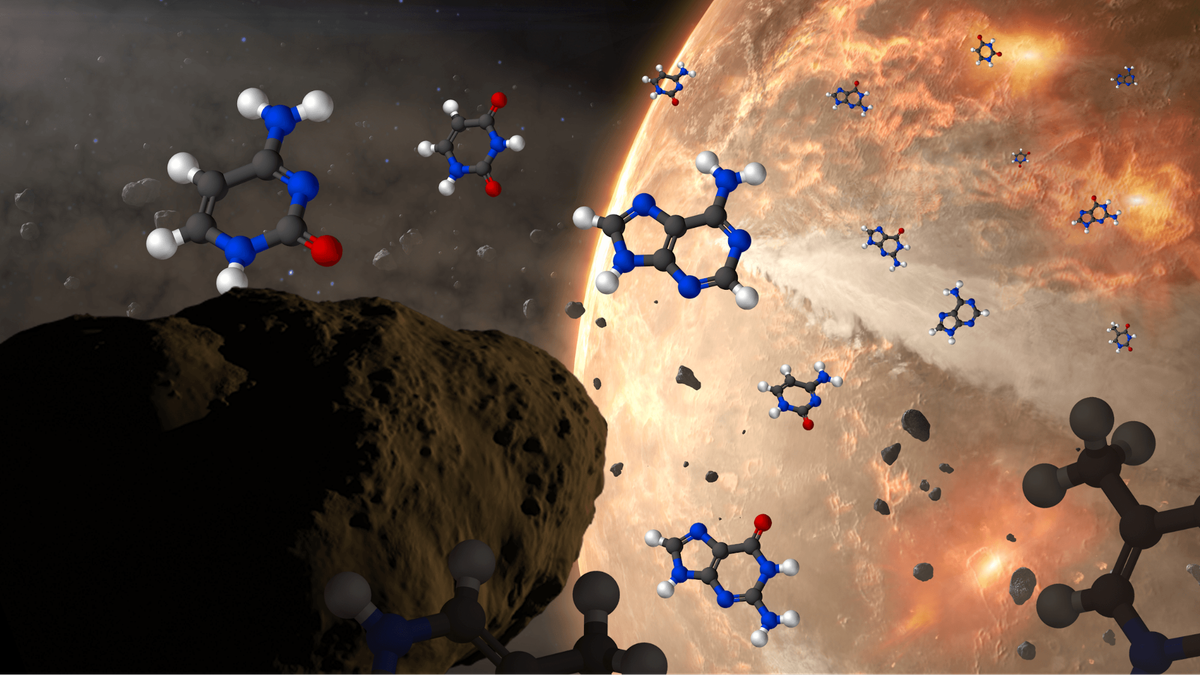
Scientists studying pristine samples from asteroid Ryugu say they have now identified all five nucleobases used in DNA and RNA: adenine, guanine, cytosine, thymine, and uracil. The result, reported in Nature Astronomy and summarized by 404 Media, matters less as a "life from space" headline than as a chemistry result: it suggests the molecular building blocks of genetics may be widespread in carbon-rich asteroids. The Ryugu finding also reinforces earlier work on material returned from Bennu by NASA's OSIRIS-REx mission, which found the same complete set in a different asteroid sample. That cross-check is what makes this harder to dismiss as contamination or a one-off curiosity. None of this proves life is common in the universe, but it does strengthen the case that young planets can be seeded with some of life's starter ingredients by ordinary Solar System debris.
Meteorites on Earth can be chemically altered after landing, which is why spacecraft-returned samples matter so much. Ryugu material came back via Japan's Hayabusa2 mission; Bennu samples came back via NASA's OSIRIS-REx.