Nato officials pushed back Friday against reports that the US is weighing suspension of Spain from the military alliance over its refusal to allow air base use for strikes on Iran. An internal Pentagon email reportedly suggested reviewing American diplomatic support for European territorial claims, including the Falkland Islands, as leverage against allies deemed insufficiently cooperative. Spanish Prime Minister Pedro Sánchez dismissed the threat, noting that his government works from official documents, not leaked emails. The episode underscores mounting friction between Washington and European capitals over the Iran war, with US Defense Secretary Pete Hegseth publicly criticizing allies for what he called "free riding" on American security guarantees. The EU's Italian Prime Minister Giorgia Meloni urged alliance unity at a summit in Cyprus.
Spain hosts two major US military installations: Naval Station Rota and Morón Air Base. The US and Israel attacked Iran on February 28, 2026, prompting Tehran to restrict shipping through the Strait of Hormuz, a critical global oil route.
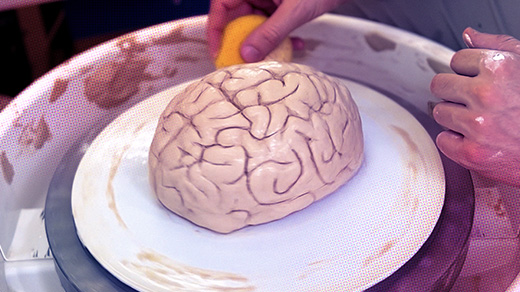
Neuroscientists have identified a novel form of learning in the hippocampus that operates across several seconds, long enough to encode a complete behavioral experience in one go. Called behavioral timescale synaptic plasticity (BTSP), the mechanism involves an electrical change that affects multiple neurons simultaneously rather than strengthening individual connections through repeated firing. Researchers at Brandeis University and Columbia University suspect BTSP explains how the brain forms immediate memories from single events, something the classic "neurons that fire together, wire together" framework cannot account for. The discovery, reviewed in recent papers in The Journal of Neuroscience and Nature Neuroscience, may reshape understanding of how learning occurs across different timescales.
The hippocampus is the brain's memory hub, critical for forming new memories and spatial navigation. Traditional synaptic plasticity theory, dating to Donald Hebb in 1949, posits that co-active neurons strengthen their connections.
Liam Price, a 23-year-old with no advanced mathematics training, used ChatGPT Pro to solve a 60-year-old conjecture by Paul Erdős about primitive sets—collections of whole numbers where no member divides another. The AI produced a proof that the lowest possible Erdős sum for such sets approaches exactly one, a limit that mathematician Jared Lichtman had failed to establish in his 2022 doctoral thesis. Terence Tao of UCLA noted that humans had collectively taken a "wrong turn at move one" on this problem. The solution method appears genuinely novel and may have broader applications, distinguishing it from recent AI mathematical claims that proved less original than initially appeared.
Paul Erdős was a prolific 20th-century mathematician who posed thousands of problems. Primitive sets generalize the concept of prime numbers to collections. The Erdős sum measures a set's density-weighted reciprocal sum.
Measurements of interstellar comet 3I/ATLAS show it carries roughly 30 times more heavy water than any known solar system comet, suggesting its home planetary system formed in dramatically colder conditions than ours. Using the ALMA telescope array in Chile, University of Michigan researchers detected an excess of deuterium-laced water molecules in the comet's atmosphere last October. The finding, published in Nature Astronomy, aligns with other data indicating 3I/ATLAS may be older than our solar system itself—possibly more than 10 billion years versus our sun's 4.5 billion. NASA's James Webb Space Telescope later confirmed the deuterium detection. The results imply that our solar system's chemistry, long treated as a baseline for understanding planet formation, may actually be unusual.
Heavy water contains deuterium, a hydrogen isotope with one neutron. The deuterium-to-hydrogen ratio in water acts as a thermometer for a planetary system's formation temperature. 3I/ATLAS was discovered in 2025 and is only the third confirmed interstellar object to visit our solar system.
Beijing is intensifying tax enforcement against retailers in sectors like gold jewelry, alcohol, and refined oil, using the crackdown to shore up local government finances battered by the prolonged property crisis. The State Taxation Administration detailed eight violation cases this month involving tactics such as channeling sales into personal accounts and exploiting regional tax-policy differences through shell companies. The largest single penalty reached 40 million yuan (about $5.85 million). Unlike US sales taxes, China's consumption tax targets specific goods to regulate behavior rather than generate revenue, with all proceeds flowing to the central government. In 2025, consumption tax revenue hit 1.69 trillion yuan ($247.3 billion), comprising 9.6% of national tax receipts.
China's property sector crisis has squeezed local government finances, which previously relied heavily on land sales. The State Taxation Administration is the central government agency responsible for tax policy and collection.
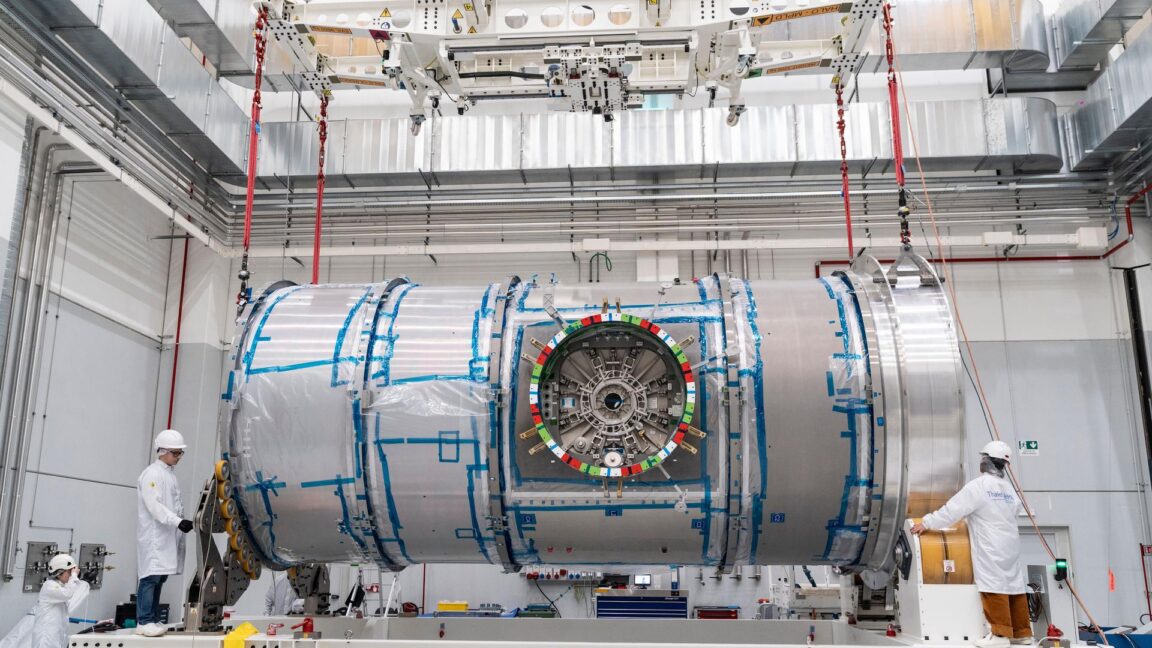
NASA Administrator Jared Isaacman confirmed during congressional testimony that both habitable modules of the planned Lunar Gateway space station arrived with significant corrosion, a revelation that helps explain the project's recent cancellation. The HALO module, built by Northrop Grumman with primary structure from European contractor Thales Alenia Space, and Europe's I-HAB module both showed corrosion damage. Northrop attributed the issue to a "manufacturing irregularity" and stated repairs would complete by Q3 2026. The corrosion would have delayed Gateway operations beyond 2030 even if funding had continued. NASA paused the lunar-orbiting station in March to focus on surface missions, a decision Isaacman defended as necessary to avoid watching Chinese astronauts operate on the Moon while American crews remained in orbit.
The Lunar Gateway was conceived as a space station orbiting the Moon to support Artemis program missions. HALO (Habitation and Logistics Outpost) and I-HAB (International Habitation Module) were to provide crew living quarters. Thales Alenia Space is a major European aerospace contractor that built several International Space Station modules.
The Turkana Rift in Kenya and Ethiopia is further along in the process of splitting Africa into two continents than geologists previously recognized, according to new research published in Nature Communications. Using high-resolution seismic reflection, Columbia University researchers found the crust at the rift's center has thinned to just 13 kilometers—far below the 35-kilometer depth typical of stable continental areas. This "necking" indicates the rift has reached a critical threshold in its progression toward eventual separation. The process, which began roughly 45 million years ago, will still take millions more years to complete, but the accelerated timeline challenges traditional models of how continents break apart. The rift zone has yielded significant human fossil discoveries including the famous Turkana Boy specimen.
The East African Rift System is a massive trench system where three tectonic plates meet and diverge. Continental rifting eventually creates new ocean basins; a similar process split South America from Africa beginning about 140 million years ago.
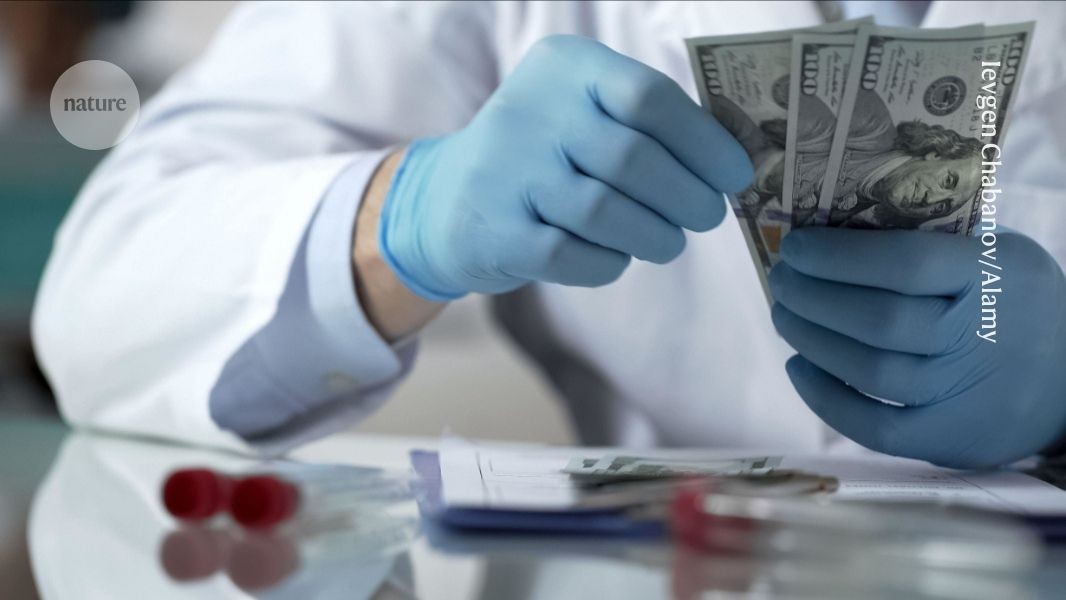
Researchers have compiled over 18,700 advertisements from seven paper mills—businesses selling fake or low-quality research authorships—creating the largest dataset of its kind to illuminate the global marketplace for academic fraud. The ads, posted between March 2020 and April 2026 on platforms including Telegram and dedicated websites, show first-author slots selling for a median of nearly $800, with prices ranging from $57 to over $5,600. Operations based in India, Iraq, Uzbekistan, Russia, Latvia, Kazakhstan, and Ukraine targeted academics in the Middle East, Central Asia, Eastern Europe, and India. Nature's news team matched 53 advertised paper titles to published articles, including four in Springer Nature journals and five in Wiley publications; only five have been retracted.
Paper mills are commercial operations that produce fraudulent or substandard research manuscripts and sell authorship positions to researchers seeking to pad their publication records. The practice undermines scientific integrity and has proven difficult to detect at scale.
A ZipRecruiter survey of 3,000 recent and rising graduates finds 20% believe they are overqualified for their current positions, while 18% intentionally applied below their level just to gain workforce entry. Only 26% report being on their ideal career path; 51% view their job as a stepping stone. The data, collected January through March 2026, shows graduates applying to more positions but receiving fewer offers than peers did a year prior. Nearly half predict AI will reduce entry-level opportunities, yet only 29% of rising graduates received extensive AI training from their institutions. A gender gap persists: women report median starting pay of $48,000 versus $60,000 for men, and women are less likely to receive professional AI training versus risk-focused instruction.
ZipRecruiter is an online employment marketplace. The survey period coincided with ongoing labor market tightening and rapid AI adoption across industries.
by Steve Hayes, Jonah Goldberg, David French, and Kevin Williamson via The Dispatch
The Dispatch's podcast panel examines whether the Trump administration's negotiating approach with Iran reflects strategic patience or impulsive pressure tactics that may undermine objectives. The discussion connects current Iran war developments to broader patterns in the administration's foreign policy decision-making, including the reported suspension threat against Spain and public criticism of European allies. The hosts also address recent reports about FBI Director Kash Patel's conduct and Justice Clarence Thomas's speech at the University of Texas on progressivism. The episode represents center-right analytical perspective on executive branch management of ongoing military engagement and alliance relationships.
The Dispatch is a center-right media outlet founded by former National Review and Weekly Standard writers. Steve Hayes is CEO and editor; Jonah Goldberg is editor-in-chief; Kevin Williamson is national correspondent; David French is a New York Times columnist and former Dispatch senior editor.