Chinese AI firm DeepSeek released V4 on Friday, its most significant model since R1 stunned the industry in January 2025. The open-source release comes in two variants: V4-Pro for coding and complex agent tasks at $1.74 per million input tokens, and V4-Flash at roughly $0.14 per million tokens for faster, cheaper inference. Both offer reasoning modes that show step-by-step problem solving. DeepSeek claims V4-Pro matches Claude-Opus-4.6, GPT-5.4, and Gemini-3.1 on major benchmarks while exceeding other open-source alternatives on coding and STEM tasks. The release follows months of scrutiny including personnel departures and government pressure from both Washington and Beijing. V4 is unlikely to replicate R1's shock effect, but it solidifies DeepSeek's position as a credible open-weight alternative to closed frontier models.
DeepSeek's R1 reasoning model in January 2025 demonstrated that strong AI performance was possible with limited compute resources, triggering a wave of open-weight releases from Chinese labs and pressuring Western AI companies on pricing. The company has since faced headwinds including delays and staff turnover.
Researchers at MIT CSAIL, KAUST, and HUMAIN have assembled MathNet, the largest dataset of competition mathematics ever created. The collection contains over 30,000 proof-based problems and solutions spanning 47 countries, 17 languages, and 143 competitions across four decades. Unlike prior datasets drawn heavily from US and Chinese competitions, MathNet captures diverse mathematical traditions globally. The problems come from official national competition booklets rather than community forums, featuring expert-written, peer-reviewed solutions that often run multiple pages. A grading group of 30 human evaluators from countries including Armenia, Russia, Ukraine, Vietnam, and Poland verified thousands of solutions. The dataset, five times larger than any comparable collection, will be presented at ICLR in Brazil.
Lead author Shaden Alshammari, a former IMO competitor, noted that many students worldwide train for competitions without institutional support. The dataset aims to give them centralized access to high-quality problems. Co-author Navid Safaei contributed a personal archive of competition booklets collected since 2006.
A survey of 4,003 researchers by Ithaka S+R found that 10% of faculty in states with speech restrictions are actively seeking jobs elsewhere, and 6% are trying to leave academia entirely. An additional 4% of all respondents sought foreign employment due to research restrictions. The 21 states with divisive concepts laws include Florida, Texas, Tennessee, and Ohio. In those states, 48% of faculty reported that recent laws limit their research or creative activity, and 29% said they have avoided certain research topics. Federal funding cuts compound the pressure: 8% had grants canceled in 2025, and 40% reported overall funding declines. Agriculture researchers faced the steepest cuts at 57%, while business professors saw only 16% reporting declines. Several respondents cited early retirement as their planned escape from the political climate.
France's Choose France for Science recruitment campaign specifically targeted American researchers in health, climate, space, digital, and agriculture fields. Some faculty noted that even blue states are cutting humanities programs, limiting exit options.
The era of subsidized AI pricing is ending as compute demand outstrips supply. GitHub paused new Copilot signups and tightened usage limits. Anthropic restricted Claude Code access and tested removing it from the $20 monthly plan entirely. OpenAI shut down Sora citing insufficient compute, while CFO Sarah Friar has repeatedly warned of capacity constraints. Software with embedded AI tools has raised prices 20-37%, including Microsoft 365, Notion, Salesforce, and Google Workspace. The crunch extends beyond software: consumer SSD prices have tripled since late 2024, with a 2TB external drive jumping from $159 to $575. Apple reports difficulty securing chipmaking capacity for upcoming iPhones. Electricity costs have spiked in states with heavy data center concentration, prompting towns to reject new facilities. The pattern resembles Uber's growth strategy: subsidize to capture market, then raise prices when investor patience expires.
Meta announced 10% layoffs to redirect savings toward AI infrastructure. RAM, graphics cards, and storage shortages stem from manufacturers prioritizing AI chip production over consumer components.
Meta has deployed software called MCI on US employee computers that captures mouse movements, clicks, keystrokes, and occasional screen snapshots. The Model Capability Initiative aims to train AI agents to perform computer tasks by observing human workflows. CTO Andrew Bosworth described a future where agents do the work while employees direct and review them. Employees raised concerns about capturing personal data on Gmail; Bosworth responded that Gmail is approved context and suggested avoiding personal email on work devices. No opt-out exists for US employees, though European privacy laws block the program there. The move coincides with 10% workforce layoffs as Meta redirects spending toward AI infrastructure. The initiative represents a shift from treating contractors as training data sources to subjecting full-time knowledge workers to the same surveillance logic.
Meta has used similar monitoring for content moderators and data labelers since 2019. The MCI program reflects Taylorist principles of breaking skilled labor into measurable, optimizable components.
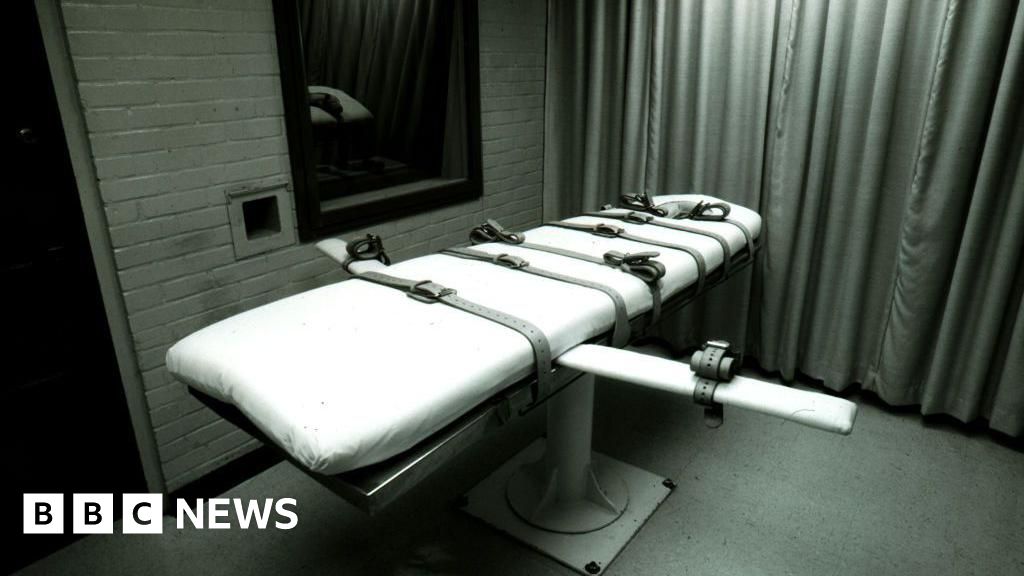
The Department of Justice directed federal prisons to add firing squads, nitrogen gas asphyxiation, and electrocution as execution methods alongside lethal injection. A 48-page memo released Friday argues this will strengthen deterrence and deliver justice for victims. The Biden administration had placed a moratorium on federal executions and granted clemency to 37 of 40 federal death row prisoners before leaving office. President Trump directed the DOJ to resume seeking executions on his first day in office in January 2025. The memo defends pentobarbital as the gold standard of lethal injection drugs while noting that alternative methods ensure executions can proceed if specific drugs become unavailable. Five states already authorize firing squads; Alabama became the first state to use nitrogen gas in 2024, with four others since adopting the method.
Thirteen federal executions occurred during Trump's first term, ending a 20-year moratorium. Democratic Senator Dick Durbin called the expansion cruel, immoral, and discriminatory.
Shoplifting imposes real costs that ripple far beyond retailers. Locked product cases now cover shelves at chains like Walgreens and CVS, requiring labor to unlock and driving customers to Amazon. A 2024 Numerator survey found 61% of shoppers report seeing more locked merchandise, with 27% switching retailers or abandoning purchases rather than wait for assistance. The anti-theft infrastructure represents capital and labor diverted from productive use. Retailers, as profit-maximizing entities with extensive data capabilities, would not install these barriers without evidence of significant theft losses. The costs flow somewhere: higher prices for consumers, reduced wages or hours for workers, store closures in less profitable areas, or shareholder returns. The burden falls heaviest on poor neighborhoods where a single Walgreens closure removes both jobs and essential access to goods.
Mozilla has quietly integrated adblock-rust, the open-source blocking engine from Brave, into Firefox 149. The Rust-based engine handles network request blocking, cosmetic filtering, and supports uBlock Origin-compatible filter syntax. Mozilla engineer Benjamin VanderSloot implemented the feature via Bugzilla ticket 2013888, keeping it disabled by default with no user interface or filter lists included. Users can activate it through about:config by enabling privacy.trackingprotection.content.protection.enabled and adding filter list URLs. Waterfox, a Firefox fork, has already built directly on Firefox's implementation. The addition follows Firefox's March release of a built-in VPN and Linux XDG portal file picker, representing Mozilla's continued push to differentiate through privacy features rather than chase Chrome on performance metrics.
The integration is prototype-stage and requires manual configuration. It does not replace Firefox's existing Enhanced Tracking Protection but offers a more robust content blocking foundation for future development.
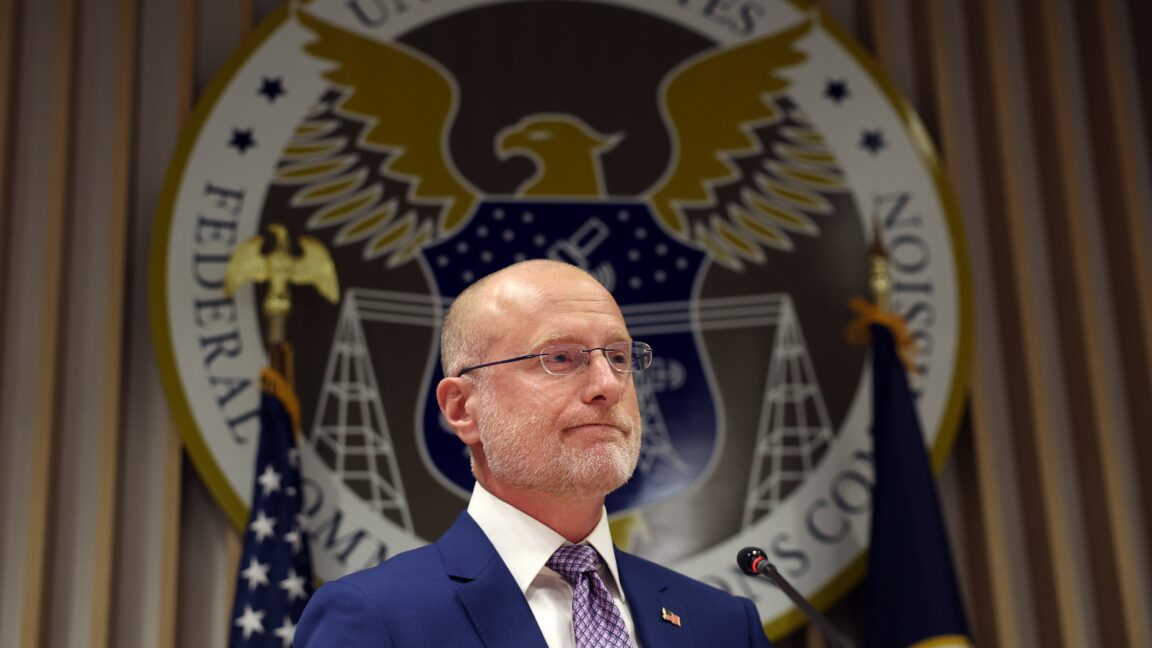
The FCC confirmed this week that its ban on foreign-made consumer routers extends to portable MiFi and hotspot devices for residential use. The clarification, added to an agency FAQ, excludes mobile phones with hotspot features. The ban stems from a Trump administration directive on reducing foreign technology use for national security. Consumer-grade equipment including self-installable routers, LTE/5G CPE devices, residential gateways, and professional-installed residential routers all fall under the restriction. Industrial, enterprise, and military equipment are exempt. Netgear became the first major vendor to obtain an exemption last week; Amazon-owned Eero received approval this week. The Global Electronics Association noted that virtually all routers contain components from Taiwan, South Korea, Japan, and China, meaning even US-headquartered manufacturers need exemptions for future devices.
The FCC will not approve new device models with foreign manufacturing unless the Department of Defense or Homeland Security determines no national security risks exist. Previously approved devices can continue to be sold.
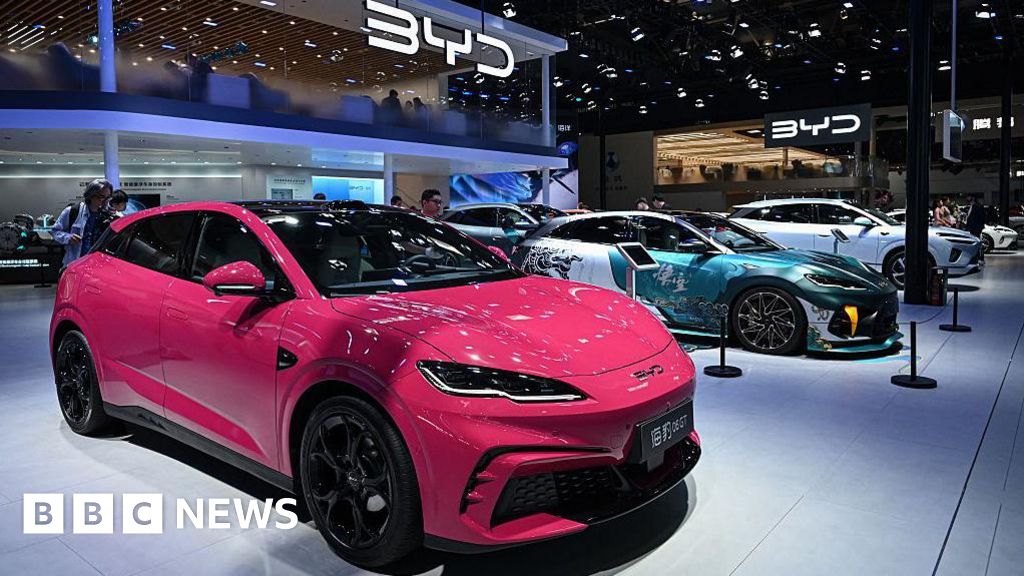
BYD, which overtook Tesla as the world's largest EV seller in 2025, says it succeeds without US market access. Executive Vice President Stella Li told the BBC at the Beijing Auto Show that the company faces insufficient production capacity to meet demand in Brazil, the UK, and Europe. Rising fuel prices from the Iran war have accelerated global EV interest. BYD is betting on flash charging technology that adds hundreds of kilometers of range in minutes to overcome charging anxiety. The company describes itself as an ecosystem spanning batteries, solar panels, buses, trucks, and smartphone components. Chinese EV makers face tariffs and scrutiny in the US over subsidies and data security concerns, but are gaining technology recognition in other markets. Domestic Chinese sales have fallen for seven consecutive months amid intense price competition, while European sales rose 156% in Q1 2026.
At the Beijing Auto Show, X-Peng unveiled a six-seater electric SUV and announced humanoid robots for 2026 with flying car manufacturing planned for 2027. Foreign automakers including Volkswagen, Toyota, and BMW are partnering with Chinese firms to remain competitive.