China's Ministry of Industry and Information Technology (工信部) disclosed that domestic AI computing capacity has reached 1,882 exaflops — roughly 6,000 times the aggregate power reported by Western supercomputer rankings. The figure, announced Tuesday, captures distributed cloud infrastructure and commercial data centers that never submit to the Top500 benchmark, which relies on voluntary participation and measures only monolithic supercomputers. Western analysts have long suspected Beijing maintains substantial "dark" compute outside public view. The disclosure arrives as Washington debates tightening semiconductor export controls. Unlike the US, where private cloud providers dominate AI infrastructure and report no unified national figure, China's state-coordinated system allows such aggregation. The gap between disclosed and actual capacity matters for assessing China's AI training potential, particularly for large language models and military applications that scale with total available FLOPs.
The Top500 list has historically undercounted Chinese capacity because many systems decline to submit benchmark results. Western estimates suggest the US holds 50-75% of global AI compute, but Beijing's new figure challenges that assumption if verified.
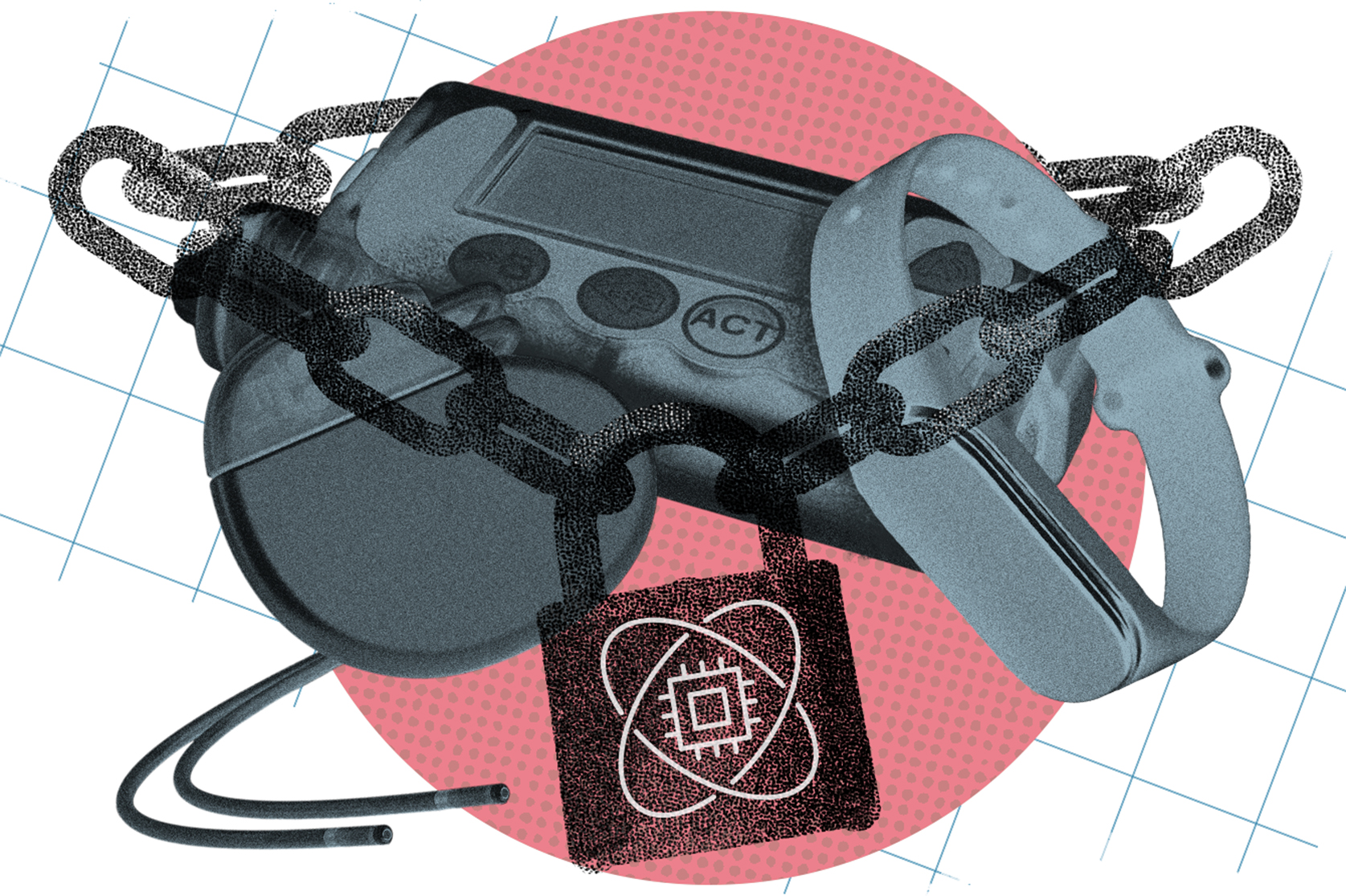
MIT engineers have fabricated an ultra-efficient microchip that brings post-quantum cryptography to power-constrained biomedical devices. The ASIC, roughly the size of a needle tip, runs quantum-resistant encryption while consuming an order of magnitude less energy than prior designs. It also blocks physical side-channel attacks that bypass software protections. Lead author Seoyoon Jang and senior author Anantha Chandrakasan targeted devices like pacemakers and insulin pumps, which currently lack strong security due to battery constraints. NIST is phasing out traditional cryptography for post-quantum standards, but implementing these algorithms typically increases power draw two-hundredfold. The chip's customized hardware architecture collapses that overhead, enabling compliance without sacrificing device lifetime. The same design could secure industrial sensors and smart inventory tags. The work appeared this week at the IEEE Custom Integrated Circuits Conference.
Quantum computers threaten current encryption schemes like RSA by efficiently solving the mathematical problems underlying them. Medical devices are particularly vulnerable targets because they often remain implanted for years, long past when quantum-safe upgrades become mandatory.
MIT researchers have traced AI overconfidence to a flaw in reinforcement learning training and developed a fix that improves calibration without sacrificing accuracy. The method, RLCR, adds a Brier score penalty to the reward function, forcing models to estimate their own uncertainty alongside each answer. Standard RL rewards correct answers and penalizes wrong ones equally, regardless of whether the model reasoned carefully or guessed. This trains systems to express high confidence universally. RLCR reduced calibration error by up to 90% across multiple benchmarks while maintaining or improving task performance. The technique outperformed post-hoc confidence classifiers. Co-lead authors Mehul Damani and Isha Puri, both MIT PhD students, will present the work at ICLR this month. The finding has practical stakes: a model claiming 95% confidence while correct only half the time misleads decision-makers in medicine, law, and finance more than one that simply errs.
Overconfidence in large language models has persisted despite growing capability. Users often cannot distinguish when a model is reasoning from when it is hallucinating, making calibrated confidence essential for high-stakes deployment.
Researchers at FingerprintJS discovered a privacy flaw in all Firefox-based browsers that allows websites to fingerprint and track users across origins and private sessions. The vulnerability exploits the ordering of entries returned by IndexedDB, a browser storage API. Because the ordering reflects process-scoped state rather than origin-scoped state, unrelated sites can derive a shared identifier from the same browser instance. In Firefox Private Browsing, the identifier persists after private windows close if the process remains running. In Tor Browser, it survives the "New Identity" reset designed to sever linkability between sessions. Mozilla patched the issue in Firefox 150 and ESR 140.10.0 after responsible disclosure. The underlying cause — inherited from Gecko — affects all Firefox derivatives. The fix canonicalizes result ordering, removing the entropy source. The finding illustrates how seemingly neutral API behaviors can become cross-site tracking vectors when they leak implementation details.
Browser fingerprinting extracts identifying characteristics from hardware and software configurations. Unlike cookies, fingerprints resist deletion and work across sessions, making them a persistent threat to anonymity systems like Tor.
Scammers posing as Iranian authorities have targeted commercial vessels stranded near the Strait of Hormuz, demanding cryptocurrency "transit fees" for safe passage. Greek maritime risk firm MARISKS warned on April 20 that fake messages requested bitcoin or tether payments. At least one ship, the Liberian-flagged Epaminondas, was fired upon by Iranian forces on April 22 after reportedly receiving fraudulent permission to transit. The vessel, operated by MSC and owned by Technomar, turned back under fire. Authorities are investigating whether the message granting passage was spoofed. Roughly 2,000 ships and 20,000 mariners remain stranded near the strait, which normally carries one-fifth of global oil and LNG supply. The UKMTO has logged 22 confirmed attacks and 13 suspicious incidents since February. The US Navy began blockading Iranian ports on April 13, seizing vessels and turning back traffic. Iran has retaliated by attacking commercial shipping, creating conditions scammers exploit.
Iran has demanded actual cryptocurrency payments from some tankers since asserting control over the strait, making fraudulent demands plausible. The chaos of overlapping US and Iranian naval operations has degraded maritime situational awareness.
The death of Ayatollah Ali Khamenei in February has accelerated a long-predicted power shift from Iran's clerical establishment to the Islamic Revolutionary Guard Corps, though the transition is more fragmented than simple military coup narratives suggest. Mojtaba Khamenei, the new supreme leader, was reportedly injured in the war and has not appeared publicly in six weeks; Mohammad Bagher Ghalibaf, parliament speaker and former Guards commander, now effectively directs the war effort. The IRGC's roughly 200,000 members operate through decentralized networks — construction conglomerates, front businesses, the Basij volunteer force — rather than as a unified hierarchy. This structure survived the killings of top commanders Hossein Salami and Mohammad Pakpour. The article argues against treating the Guards as a monolithic actor capable of straightforward seizure of power. Their influence has grown, but internal competition and the network's distributed nature make Iran's trajectory unpredictable even as military figures displace clergy in day-to-day governance.
Analysts have forecast IRGC ascendancy since at least 2017. The younger Khamenei's dependency on Guards networks, forged through years of security cooperation, has realized that scenario faster than expected after his father's death.
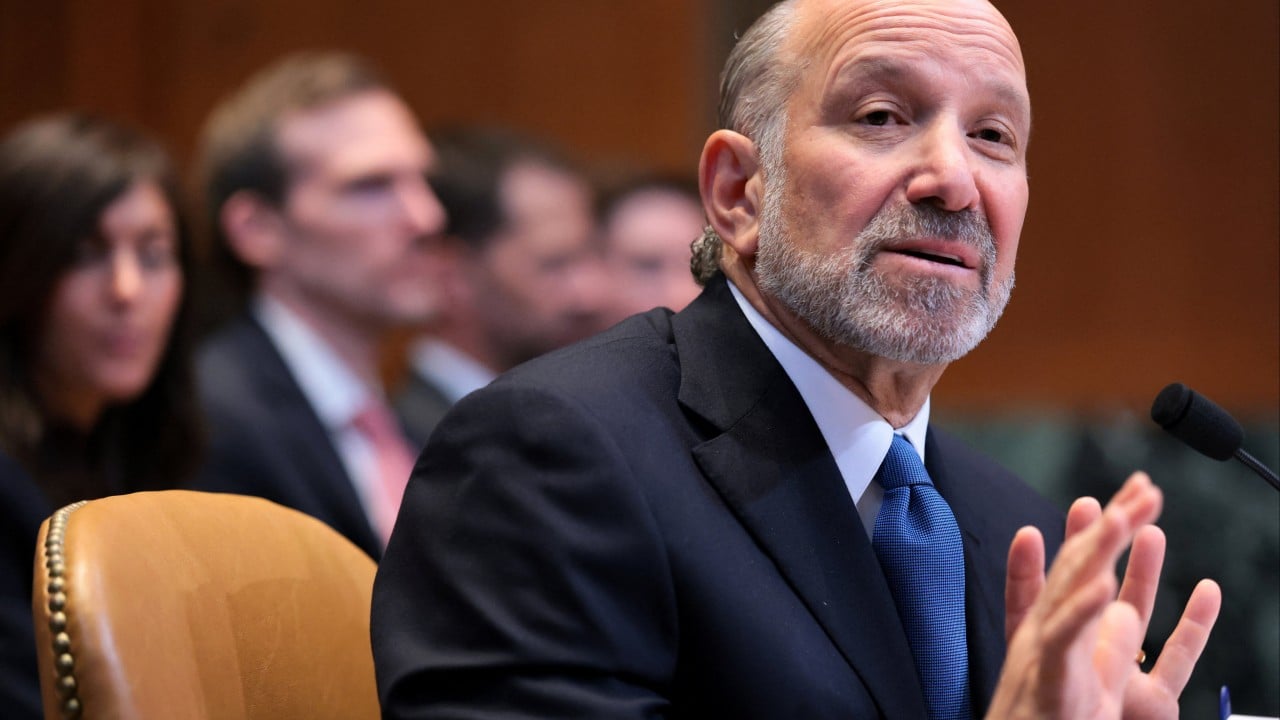
US Commerce Secretary Howard Lutnick told the Senate Appropriations Committee on Wednesday that China has purchased no H200 chips "as of today," seeking to defuse concerns that advanced US semiconductors are reaching Chinese military programs. Lutnick described President Trump's stance as a "delicate balance" given his relationship with Xi Jinping, while insisting "we are not selling our best chips to China under any circumstances." The testimony followed reports of tension within the administration over enforcement of export controls. Gregory Meeks, ranking Democrat on the House Foreign Affairs Committee, criticized what he called lax enforcement. Nvidia designed the H200 as a reduced-capability variant for the Chinese market after earlier restrictions blocked flagship products. Lutnick's claim of zero sales suggests either successful containment or accounting timing; the H200 was approved for export specifically to maintain American market share against Chinese alternatives like Huawei's Ascend line.
The Trump administration has oscillated between hardline technology restrictions and transactional trade approaches. Lutnick's testimony attempts to square the circle: maintaining personal diplomacy with Xi while asserting technical containment.
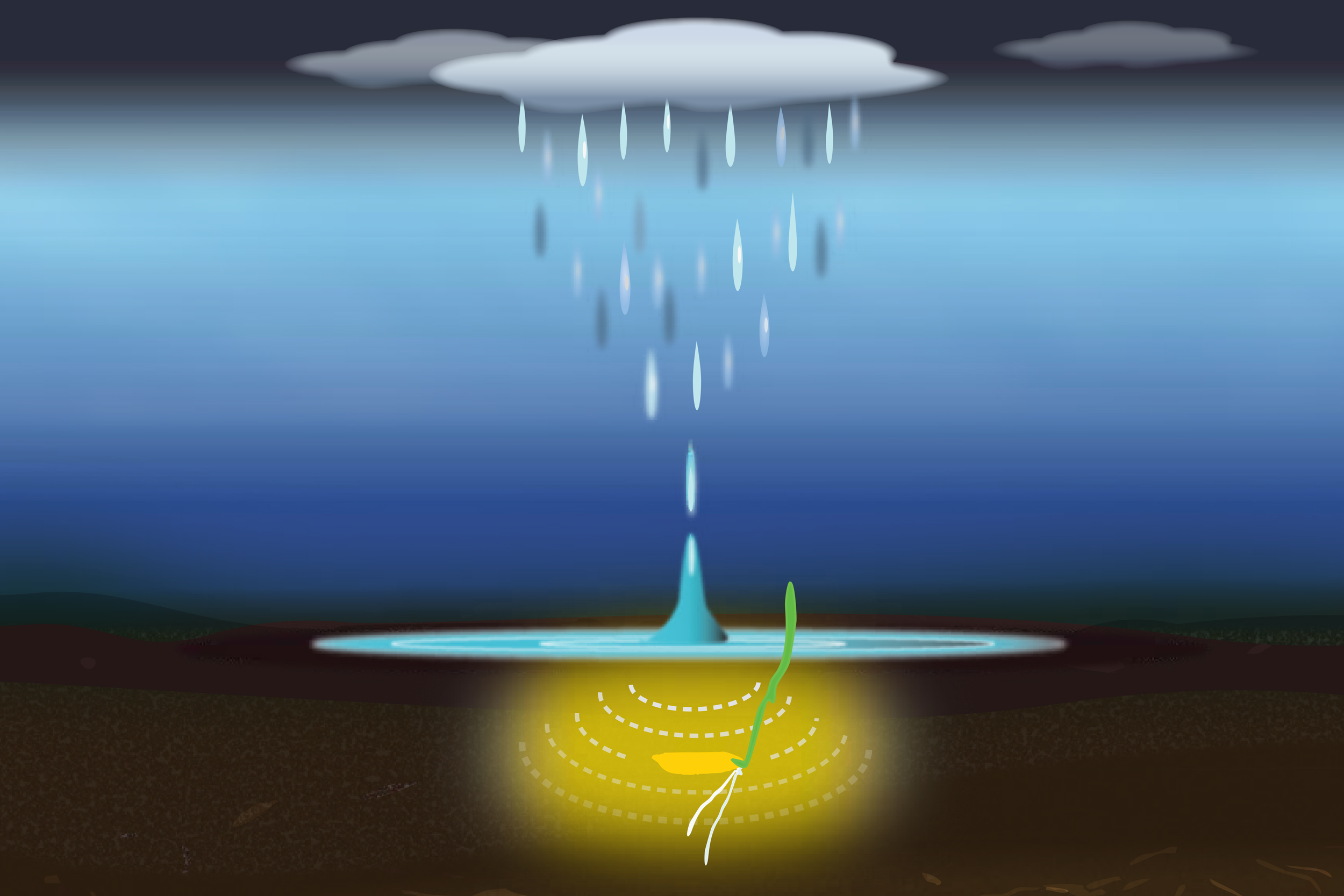
MIT engineers have demonstrated that rice seeds detect and respond to the sound of rain, germinating faster when exposed to droplet-generated vibrations. The study, published in Scientific Reports, provides the first direct evidence of acoustic sensing in plant seeds. Researchers submerged seeds in shallow water and found that raindrop impacts create pressure waves strong enough to dislodge statoliths — dense, gravity-sensing organelles inside plant cells. This mechanical signal triggers growth responses. The effect is stronger underwater because water's density amplifies sound energy compared to air. Mechanical engineering professor Nicholas Makris and former graduate student Cadine Navarro suspect similar acoustic sensitivity exists in other seed types and plan to investigate wind and other natural vibrations. The finding suggests an evolutionary adaptation: rain sounds predict favorable germination conditions, allowing seeds to accelerate growth timing. The mechanism parallels known plant responses to light, touch, and chemical signals, extending the sensory repertoire documented in botanical research.
Plants have evolved diverse sensory mechanisms — phototropism toward light, thigmotropism in response to touch, chemical detection of threats. Acoustic sensing had been hypothesized but not experimentally isolated until this work.
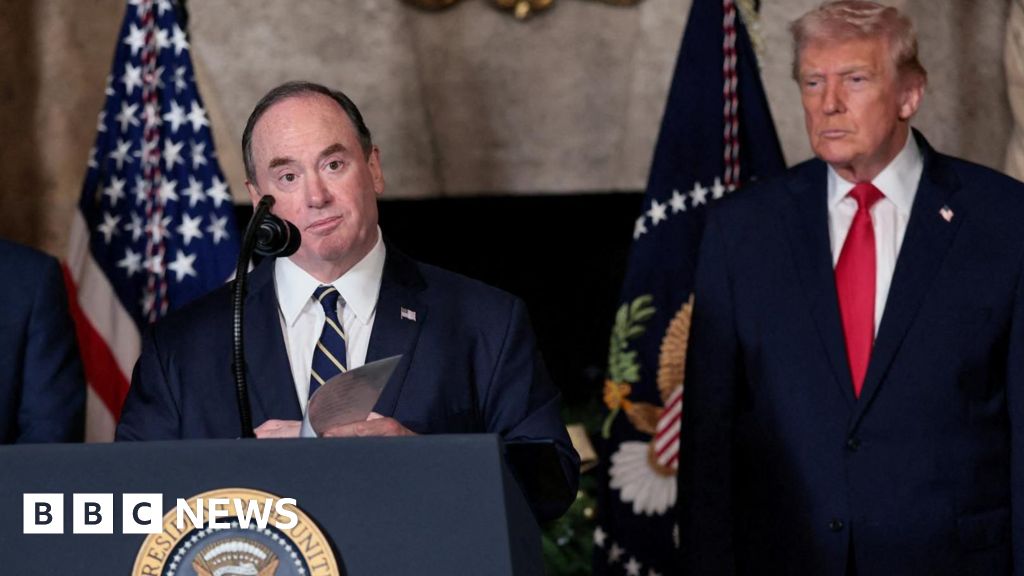
Navy Secretary John Phelan left the Trump administration Wednesday, with Undersecretary Hung Cao stepping in as acting chief. The Pentagon announced the departure without explanation, though unconfirmed reports cite tension over shipbuilding priorities. Phelan, a civilian businessman and major Trump donor with no prior military service, had backed the president's "Golden Fleet" battleship initiative announced at Mar-a-Lago in December. His exit follows Defense Secretary Pete Hegseth's removal of Army Chief of Staff Randy George and more than a dozen senior officers since February. Cao, a 25-year Navy veteran who lost a 2024 Virginia Senate bid, has criticized military DEI programs and advocated for aggressive recruiting rhetoric. The leadership shakeup continues as the US maintains its blockade of Iranian ports and clashes persist in the Strait of Hormuz. Iranian negotiator Mohammad Bagher Ghalibaf stated Wednesday that reopening the strait is "not possible" given ceasefire violations by the US and Israel.
The Navy Secretary role is administrative — handling policy, recruitment, budgeting, and fleet logistics — but Phelan's departure amid wartime operations raises questions about civilian-military coordination. Hegseth has systematically replaced senior officers across services.
A pending legal challenge targets the corporate personhood doctrine underlying Citizens United v. FEC, potentially threatening the legal foundation for unlimited corporate political spending. While public attention focuses on the 2010 Supreme Court ruling, a second doctrine — that corporations possess First Amendment rights equivalent to individuals — has never been directly tested at the high court. Justice Department officials historically declined to challenge it. The article argues that weaponizing Citizens United's own precedents against corporate personhood could disrupt the super PAC and dark money system that now dominates federal elections, where independent expenditures exceeded candidate spending in 2024 and $2 billion in untraceable funding flowed through anonymous channels. The mechanism matters: corporate personhood was judicially constructed through incremental statutory interpretation rather than constitutional text, making it vulnerable to re-examination. The piece frames this as the most consequential anti-corruption litigation in years, unfolding with minimal press coverage.
Corporate political spending has escalated dramatically since Citizens United. Super PACs now outspend campaigns directly, with AI and cryptocurrency industries pouring early money into the 2026 cycle seeking policy influence.