The Trump administration moved state-licensed medical marijuana from Schedule I to Schedule III under the Controlled Substances Act on Thursday. This change removes the drug from the same category as heroin and LSD, placing it alongside ketamine and anabolic steroids. The reclassification does not legalize medical or recreational cannabis federally, but it eliminates major research barriers. Schedule I classification required researchers to navigate extensive paperwork and costly safety protocols. Schedule III carries far fewer restrictions, which scientists say could accelerate studies into marijuana's therapeutic applications. Acting attorney general Todd Blanche framed the move as fulfilling President Trump's promise to expand medical treatment options. The administration indicated this is the first step toward broader rescheduling of cannabis, which has held Schedule I status for over 55 years.
The Controlled Substances Act categorizes drugs by abuse potential and medical utility. Schedule I denotes no accepted medical use; Schedule III indicates moderate to low dependence potential.
A viral social media trend called "Chinamaxxing" has Western creators adopting Chinese wellness habits: drinking hot water, wearing indoor slippers, practicing morning exercises. The aesthetic packages these routines as ancient secrets to longevity and soft living. Some observers see this as evidence of China's long-awaited cultural wave, comparable to South Korea's deliberate global ascent. The reality is more complicated. Most Chinamaxxing content lacks actual Chinese products or cultural exports. It resembles "Americaminning" — a fascination with Chinese aesthetics that says more about Western dissatisfaction with hustle culture than about genuine Chinese cultural influence. The trend may reflect American soft power erosion more than Chinese soft power growth. China's closed political system still constrains artistic ferment and global cultural exchange through censorship and the Great Firewall.
Soft power refers to a nation's ability to influence others through cultural appeal rather than coercion. South Korea engineered its global cultural rise through government investment in K-pop and entertainment.
Planetary scientists have overturned a 50-year assumption about how the solar system's first solid materials formed. A study published in Nature suggests that calcium-aluminum-rich inclusions, the oldest known solids, condensed rapidly from a turbulent protoplanetary disk rather than slowly cooling over millions of years. Researchers led by Sébastien Charnoz at the Paris Institute of Planetary Physics ran computer simulations showing that chaotic temperature shifts in the early solar disk could produce the three distinct families of primitive meteorites, called chondrites, without requiring chemically separate formation regions. The equilibrium condensation model, dominant since the 1960s, could not explain why chondrites vary in oxidation levels. Rapid condensation from a chemically uniform but turbulent disk offers a unified explanation. This reframes how Earth and other planets acquired their building blocks.
Chondrites are stony meteorites containing small spherical grains called chondrules. They represent the most primitive solar system material available for study.
Netflix released Tales From '85, an animated Stranger Things spinoff set between seasons 2 and 3, to muted response. The series strips away the stakes that made the original compelling: viewers know which characters survive, so nothing significant can happen. This follows a pattern. Squid Game spawned only a reality competition and mobile game, both tonally mismatched with the show's nihilism. The Witcher prequel Blood Origin landed flat despite Michelle Yeoh's presence. Only Bridgerton's Queen Charlotte prequel succeeded. Netflix excels at launching hits but struggles to expand them into sustainable franchises. The problem appears to be a fundamental misunderstanding of what made these stories resonate. Tales From '85 mistakes nostalgia, references to She-Ra and Ghostbusters, for substance. The streamer wants franchises, yet its follow-ups consistently drain the original works of what made them distinctive.
Netflix has prioritized franchise-building as subscriber growth slows. The company spent years developing shared universes from its biggest original series.
Google searches for "MP3 Player" tripled since last fall. A Reddit community for digital audio players now draws 90,000 weekly visitors. Teenagers have begun seeking out discontinued iPods. Startup Sleevenote aims to serve this renewed appetite for owned music over streaming. Founder Tom Kell and his team built a square 4-inch device centered on album art, not databases. Users browse liner notes like physical media, then play albums start to finish. No playlists, no algorithms, no shuffle. The device supports DRM-free downloads from Bandcamp, Beatport, and Amazon Music. Sleevenote plans a limited June release after manufacturing 100 early units in China. The bet is that streaming fatigue, particularly among artists and dedicated listeners, creates durable demand for music ownership. Bandcamp alone sells 15 million digital albums annually, with over $1.7 billion paid to artists since launch.
Apple discontinued its last iPod model in 2022. Chinese manufacturers have flooded the market with Android-based alternatives, but critics find their interfaces poorly designed.
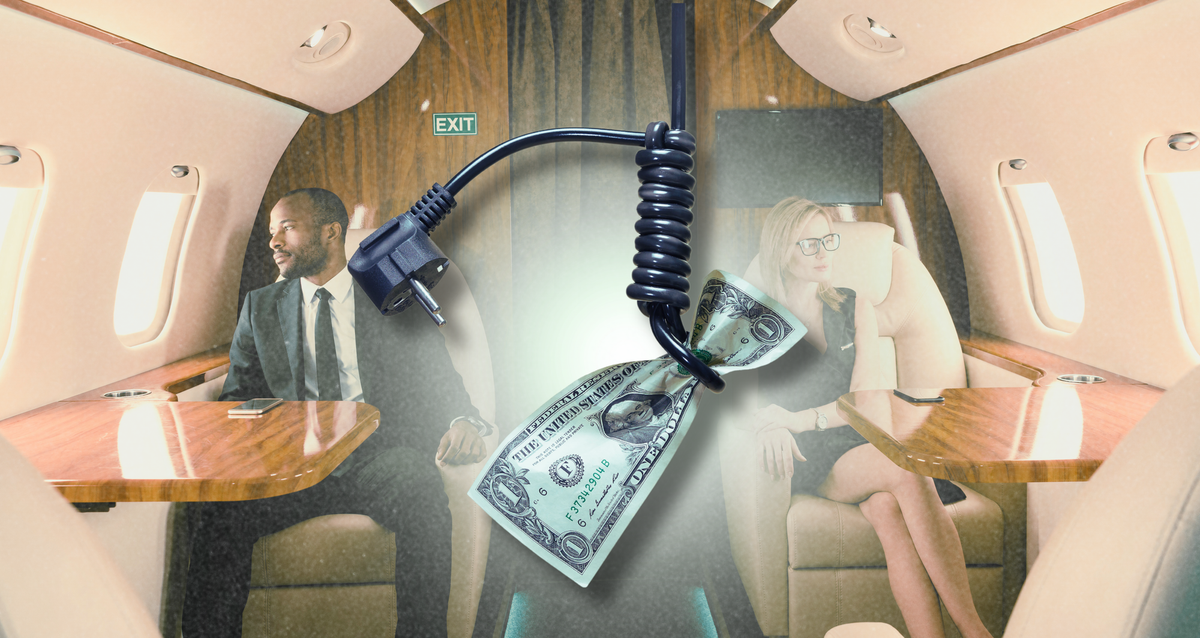
US gas and electric utility CEOs received $626 million in total compensation last year, according to a new Energy and Policy Institute report. The 10 highest-paid executives alone collected over $220 million. Average CEO pay at these companies has risen 47 percent since 2017, outpacing inflation and general wage growth, with a 15 percent jump in the past year alone. This surge came as consumers absorbed $31 billion in rate hikes. Perks included private jets for personal use, justified as security measures, plus sporting and concert tickets. One company provided a corporate condominium for executive access. The report highlights a disconnect between executive reward and consumer burden in a sector where ratepayers have limited alternatives. Investor-owned utilities operate as regulated monopolies in most service territories, meaning customers cannot switch providers when prices rise.
Investor-owned utilities are for-profit companies operating under state regulatory oversight. They typically hold exclusive franchises to serve specific geographic territories.
California Democrats killed CalCare, the state's latest single-payer health care bill, last week. Tom Steyer, now a candidate for governor, claims he can succeed where the legislature failed. Steyer ran ads against single-payer during his 2020 presidential campaign. He also supports higher taxes on the wealthy, stronger environmental protections, and abolishing ICE. The self-financed billionaire campaign enters a chaotic primary where Republicans currently lead polling. Steyer's pitch rests on the argument that his business background and progressive conversion make him uniquely positioned to overcome institutional obstacles that have blocked single-payer for 18 years. California Democrats passed a single-payer bill in 2008, which Republican governor Arnold Schwarzenegger vetoed. No Democratic governor since has made it a priority.
CalCare would have established a state-run single-payer system replacing private insurance. California's legislature has repeatedly considered and rejected various forms of universal health care legislation.