MIT scientists have constructed an exact mathematical bridge between classical and quantum mechanics using the principle of 'least action' from everyday physics. In a paper published in Proceedings of the Royal Society, Winfried Lohmiller and Jean-Jacques Slotine show that quantum phenomena like the double-slit experiment and quantum tunneling can be calculated through classical formulations rather than Schrödinger's equation alone. The researchers, who normally work on robotics and control systems, stumbled upon the connection while applying the Hamilton-Jacobi equation to classical problems. Their formulation holds at all scales, offering a unified computational approach to mechanics that could simplify how physicists model systems across quantum, classical, and relativistic domains.
The Hamilton-Jacobi equation, developed in the 19th century, reformulates Newton's laws through a quantity called 'action' — essentially the difference between kinetic and potential energy accumulated over a path. The Schrödinger equation has been the dominant framework for quantum mechanics since 1926.
A research team led by Artuk et al. has pushed perovskite-silicon tandem solar cells past 30% efficiency in laboratory conditions, breaking through the practical ceiling of conventional silicon cells. The 'triple junction' design stacks two layers of perovskite semiconductors atop a silicon base, capturing a broader spectrum of sunlight than single-material cells. Conventional silicon cells max out around 28-29% efficiency; this architecture points toward substantially higher theoretical limits. The work, published in Nature, addresses carrier and photon management challenges that had previously limited multi-junction cell performance. If manufacturing scalability follows, the technology could accelerate solar deployment without requiring proportional increases in land area or installation infrastructure.
Perovskites are a class of crystalline materials with a specific atomic structure that can be engineered to absorb different wavelengths of light. Tandem or multi-junction cells stack materials with complementary absorption profiles to harvest more of the solar spectrum.
China's State Council released a blueprint Tuesday targeting a 100-trillion-yuan ($14.7 trillion) service sector by 2030, with a sharp pivot toward 'producer services' — technical logistics, IT, R&D, and specialized support for manufacturing. The plan aims to prevent premature deindustrialization by embedding advanced services directly into industrial production, pushing manufacturers from pure hardware suppliers toward 'product-plus-service' models. Analysts note this marks a strategic upgrade: previous policy emphasized consumer services like retail and dining. The framework explicitly targets deeper integration between modern services and advanced manufacturing through pilot programs in key sectors. Beijing's calculus appears to be that manufacturing competitiveness now depends on software and technical integration rather than labor costs alone.
Producer services facilitate production activities rather than direct consumption — encompassing wholesale, logistics, IT, finance, and R&D. China's manufacturing sector faces pressure from rising wages and competition from lower-cost economies.
The Pentagon's FY2027 budget proposal includes $53.6 billion for drone procurement, operator training, logistics networks, and counter-drone systems — a sum exceeding the entire military budgets of Ukraine, South Korea, or Israel. The funding flows through the Defense Autonomous Warfare Group (DAWG), established in late 2025, which would see its budget explode from $226 million to this new level. An additional $20.6 billion would purchase one-way attack drones and Collaborative Combat Aircraft designed to team with human-piloted fighters. Pentagon officials emphasized this money targets existing technologies rather than developmental programs, reflecting lessons from Ukraine where inexpensive quadcopters and Shahed-style drones have reshaped battlefield dynamics. The spending signals a doctrinal shift: autonomous systems are moving from supplementary tools to central components of US force structure.
The Russo-Ukraran War has demonstrated how small, cheap drones can overwhelm air defenses and destroy expensive equipment. Iran's Shahed drones, costing roughly $20,000 each, have proven effective against Ukrainian infrastructure.
A Democracy Foundation survey released Monday found 57% of Taiwanese respondents do not believe the US would send troops to defend Taiwan in a cross-strait conflict, with only 24% expressing confidence. Skepticism extends to equipment: 49% lack faith in US weapons effectiveness, while 55.6% doubt timely military assistance would materialize. The poll suggests a pragmatic public mood favoring dialogue over confrontation. The findings arrive as the Trump administration's transactional approach to alliances fuels uncertainty across the Asia-Pacific. Taiwan's security calculus has long assumed US intervention as a backstop; widespread public doubt about that commitment could reshape domestic political debates about defense spending, conscription, and cross-strait engagement strategies.
The Democracy Foundation is a Taipei-based think tank that regularly surveys Taiwanese public opinion on security and cross-strait issues. US policy toward Taiwan has historically been governed by the Taiwan Relations Act of 1979, which commits to helping Taiwan maintain self-defense capability without explicitly guaranteeing military intervention.
National Review argues that recent policy shifts and court decisions have exposed foundational weaknesses in transgender advocacy positions, particularly regarding youth medical transition. The piece contends that activist claims about the settled science of gender-affirming care have collided with emerging evidence, regulatory scrutiny, and judicial skepticism. The author points to European countries tightening restrictions on puberty blockers and cross-sex hormones for minors as evidence that the medical consensus was less stable than portrayed. The essay frames these developments as a reckoning that activist communities have resisted acknowledging, asking whether opponents will now concede error or continue defending positions the author considers increasingly untenable.
Multiple European countries including the UK, Sweden, and Finland have in recent years restricted medical transition for minors, citing insufficient evidence of long-term benefits. US federal courts have issued conflicting rulings on state bans and federal funding restrictions.
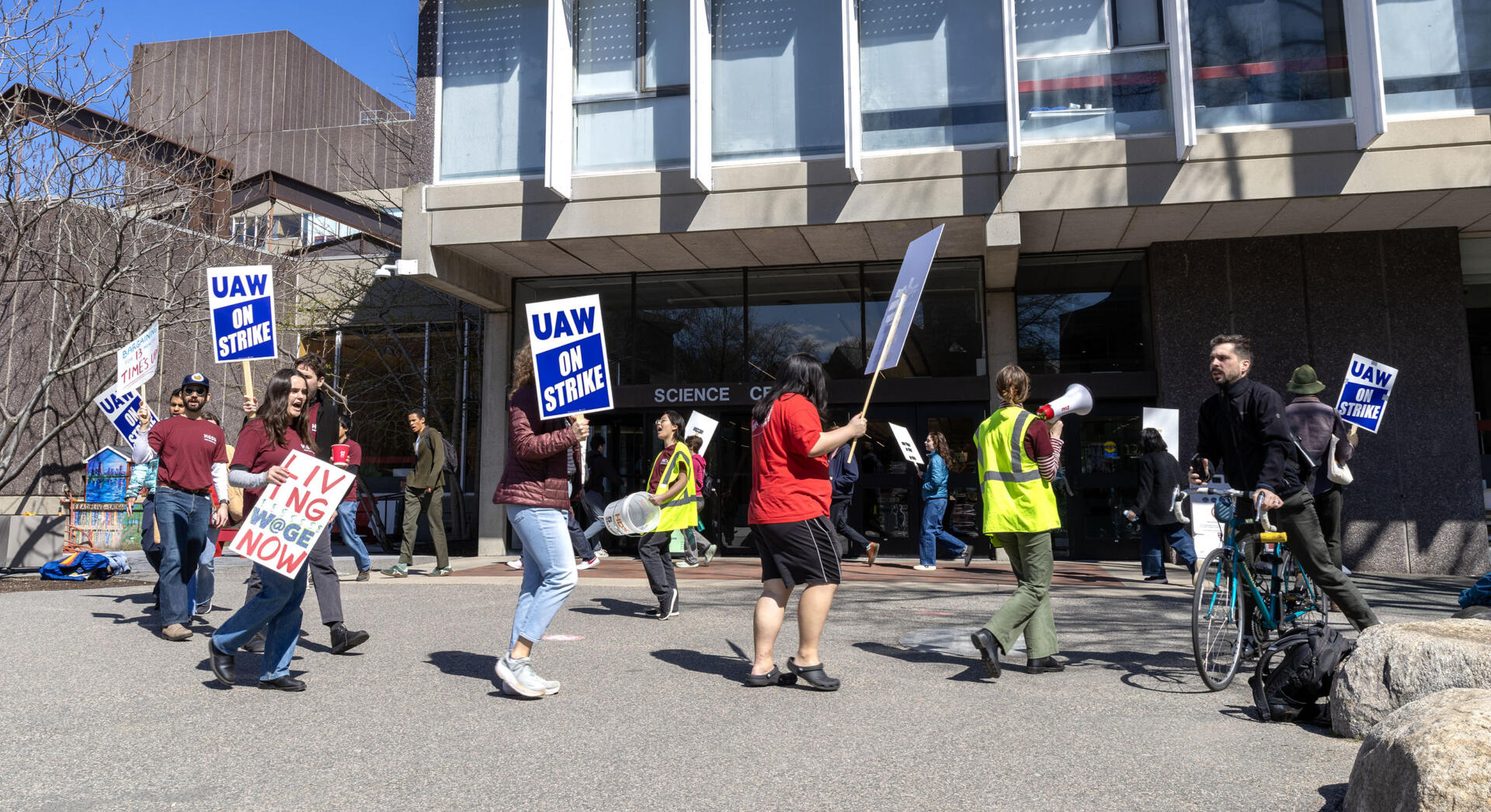
Approximately 4,000 Harvard graduate student workers began striking Tuesday, demanding $55,000 minimum salaries, enhanced protections for international students, and third-party arbitration for harassment grievances. Current pay ranges from roughly $26,300 for teaching fellows to $40,000 for research assistants. The union also seeks $25 hourly minimums and emergency legal funds for immigration issues. Negotiations have dragged since February 2025 with the prior contract expiring in June. Harvard's administration offered 10% raises over four years while noting total PhD support packages exceed $50,000 annually including benefits. The strike coincides with final week of spring classes, forcing some course cancellations. The next bargaining session is scheduled for April 29.
Harvard's graduate student union, affiliated with the United Auto Workers, represents teaching fellows, research assistants, and other academic workers. The strike occurs amid broader tensions in US higher education over graduate student unionization, international student visa security, and endowment spending priorities.
US District Judge Mustafa T. Kasubhai issued a permanent injunction Saturday blocking Health and Human Services Secretary Robert F. Kennedy Jr. from cutting federal funding to providers of gender-affirming care for transgender youth. The judge described Kennedy as 'unserious' and 'unsafe,' citing his December declaration that such treatments 'fail to meet professionally recognized standards' — a claim contrary to mainstream medical consensus. The ruling covers 21 states and Washington, DC, and prohibits HHS from enacting any policy superseding established standards of care. Kasubhai noted the administration's pattern of 'evading or flouting' prior court orders justified the breadth of the injunction. The decision blocks a proposed regulation that would have stripped Medicaid and Medicare funding from hospitals providing puberty blockers or cross-sex hormones to minors.
Kennedy's December declaration triggered referrals of over a dozen children's hospitals for potential defunding. The proposed HHS regulation, described by a former Trump aide as a 'nuclear weapon,' would have forced hospitals nationwide to choose between providing trans youth care and receiving federal funding.
A cohort of AI-native startups is openly celebrating monthly AI compute bills exceeding what human salaries would cost for equivalent output. Swan AI CEO Amos Bar-Joseph posted a $113,000 monthly Claude usage bill for his four-person team, calling it a 'headcount budget allocated differently.' The 'tokenmaxxing' trend treats AI token consumption as a vanity metric signaling productivity and growth. Meta reportedly tracks employee 'Claudenomics' on internal dashboards. The underlying bet: AI agents can replace human workers entirely rather than merely augment them. Some founders project $10 million annual recurring revenue with sub-10-person teams, zero sales staff, and zero paid marketing — redirecting all growth spending toward API calls to large language models.
Salesforce has reportedly developed 'Agentic Work Units' to measure whether AI spending translates to actual productive output, suggesting concern that token consumption may not correlate with business results. Verizon's CEO predicted AI-driven mass unemployment this week.
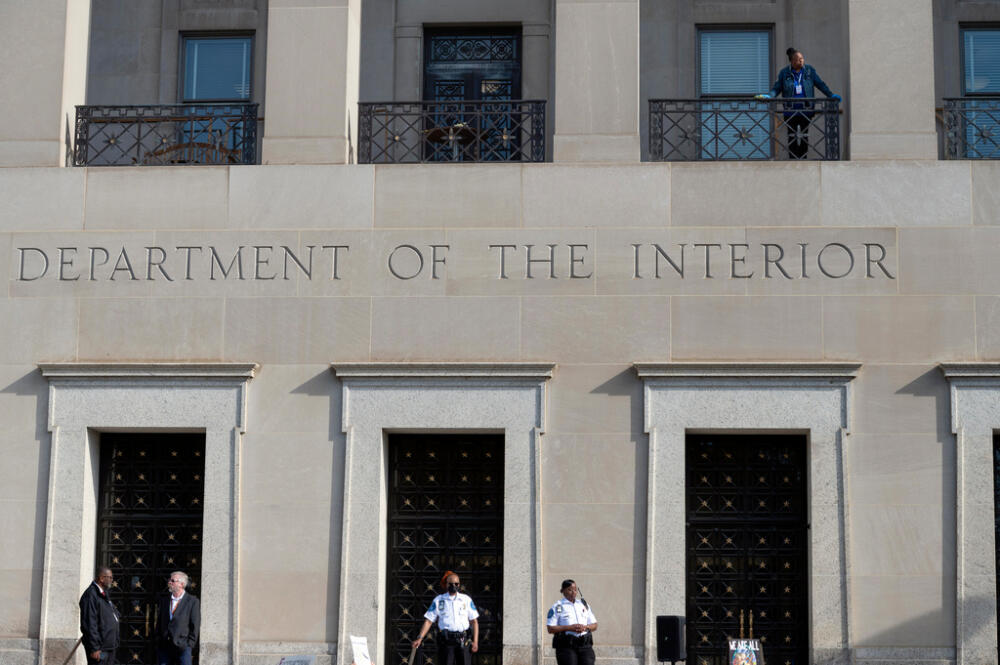
Chief Judge Denise J. Casper of the US District Court for Massachusetts issued a preliminary injunction Tuesday halting Trump administration policies that slowed renewable energy development, including a requirement that Interior Secretary Doug Burgum personally approve all solar and wind projects on federal lands and waters. The ruling found that wind and solar developers were likely to prove the policies violate federal statute and cause irreparable harm. The administration had imposed 'elevated review' procedures that plaintiffs argued placed renewables in 'second-class status' while fast-tracking fossil fuel permits. The decision comes as Congress phases out renewable tax credits and Trump issues executive orders restricting 'Green New Scam' subsidies. Plaintiffs called the ruling a first step toward restarting stalled projects nationwide.
The Interior Department's July 2025 order required Burgum's personal sign-off on all renewable project leases, rights-of-way, construction plans, and biological opinions — a layer of oversight not applied to oil and gas development. A 2025 Republican law phases out clean energy tax credits while enhancing support for fossil fuels.