Amazon has invested an additional $5 billion in Anthropic, bringing its total commitment to $13 billion with a potential $20 billion more if commercial milestones are met. The deal gives Anthropic access to up to 5 gigawatts of Amazon's custom AI chips—Trainium2 through Trainium4 and Graviton processors—to train and run its Claude models. Anthropic has struggled with reliability issues as consumer demand surged this year. The company expects "meaningful compute in the next three months" and nearly 1 gigawatt total before 2027. The arrangement exemplifies circular financing in the AI boom: Amazon funds Anthropic, which then commits over $100 billion over ten years to purchase AWS services and chips. Anthropic maintains a multicloud strategy, having received similar investments from Google, Microsoft, and Nvidia.
Anthropic develops the Claude family of large language models, competing with OpenAI's GPT and Google's Gemini. The company was founded in 2021 by former OpenAI researchers including Dario and Daniela Amodei. Amazon's custom Trainium chips compete with Nvidia's dominant GPUs in the AI training market.
President Donald Trump claimed Tuesday that US forces intercepted a ship carrying cargo from China to Iran, describing it as a "gift" that "wasn't very nice." The statement came as a two-week ceasefire between Israel and Iran neared expiration. Trump said he had believed he had an "understanding" with Chinese President Xi Jinping and expressed surprise at the shipment. The claim originated with former UN ambassador Nikki Haley. Trump cast doubt on his own assertion, adding "perhaps, I don't know." The Chinese embassy in Washington did not respond to requests for comment. The president framed the interception as part of US efforts to "restock" during the weeks of ceasefire, stating America now has "so much ammo."
The Israel-Iran ceasefire, brokered in early April 2026, paused weeks of direct military exchanges. Trump has pursued a transactional foreign policy approach with China, mixing tariff threats with claims of personal diplomatic understandings with Xi Jinping. The US maintains sanctions restricting arms flows to Iran.
Japan's cabinet approved a historic shift in defense policy Tuesday, scrapping post-war restrictions that had limited arms exports to five non-combat categories. The new rules permit sales of lethal weapons to 17 countries with technology transfer agreements, including the United States, Australia, Britain, and Asian nations with territorial disputes against China—India, Malaysia, the Philippines, and Vietnam. Beijing responded with "serious concern," warning the move undermines Japan's pacifist constitution and threatens regional stability. The change marks a decisive break from Japan's Three Principles on Transfer of Defence Equipment and Technology, in place since 1967. Prime Minister Shigeru Ishiba's government has accelerated defense reforms amid perceived threats from China and North Korea, and to support domestic arms industry growth.
Japan's post-war constitution, drafted under US occupation, renounces war and has been interpreted to restrict military activities. Recent governments have reinterpreted these constraints, allowing collective self-defense and now offensive arms exports. The policy shift aligns with US efforts to strengthen regional alliances against China.
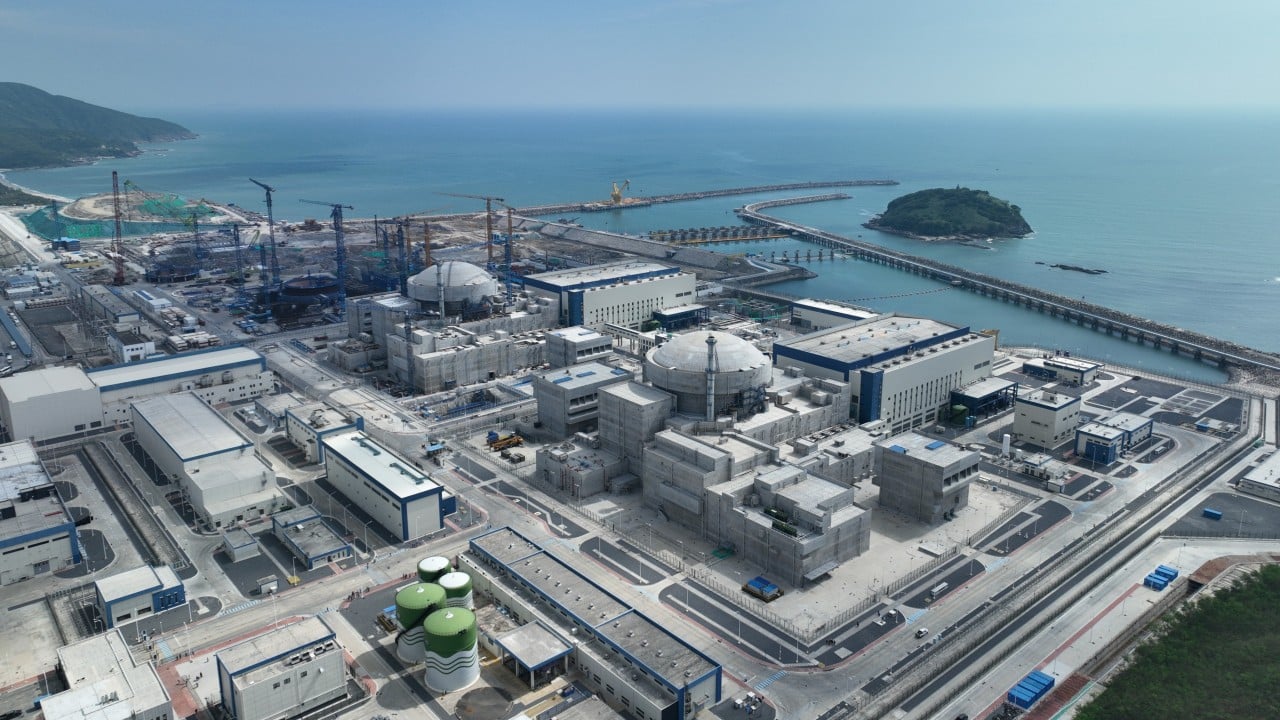
China now has the industrial capacity to construct 50 nuclear reactors simultaneously, according to a report released Friday by the China Nuclear Energy Association (CNEA). The country currently operates 60 reactors commercially with 36 more under construction—more than half the global total. Chinese authorities have approved 16 additional reactors for future builds. When completed, installed capacity will reach 125 gigawatts; by 2040, the CNEA projects 200 gigawatts. The association stated China's nuclear technology has moved from "following" to "keeping pace" and in some areas "leading" global standards. Beijing aims to become a "strong country" in nuclear power by 2030, surpassing US total installed capacity. The expansion supports China's climate goals while reducing dependence on imported energy.
China's nuclear program began in the 1970s but accelerated dramatically after 2005. State-owned enterprises China National Nuclear Corporation and China General Nuclear Power Group dominate the sector. The country has developed indigenous reactor designs including Hualong One, now exported to Pakistan and Argentina.
Chinese battery giant CATL unveiled its third-generation Shenxing lithium-iron-phosphate battery Tuesday, achieving charging speeds that approach refueling times for gasoline. The battery charges from 10 to 98 percent in 6 minutes 27 seconds; the standard 10-80 percent window takes 3 minutes 44 seconds. Even at -22°F (-30°C), charging from 10 to 98 percent requires only 9 minutes—faster than competitor BYD's Blade Battery 2.0 at room temperature. CATL attributes cold-weather performance to precise cell temperature control, pulsed self-heating, and extremely low internal resistance of 0.25 milliohms. The company claims over 90 percent capacity retention after 1,000 fast-charging cycles. The announcement intensifies competition between China's two dominant battery manufacturers as they target the premium EV market.
CATL (Contemporary Amperex Technology Co. Limited) is the world's largest battery manufacturer, supplying Tesla, BMW, and numerous Chinese automakers. LFP (lithium iron phosphate) batteries trade some energy density for safety, longevity, and cost advantages over nickel-based alternatives. Fast charging has been a primary obstacle to EV adoption.
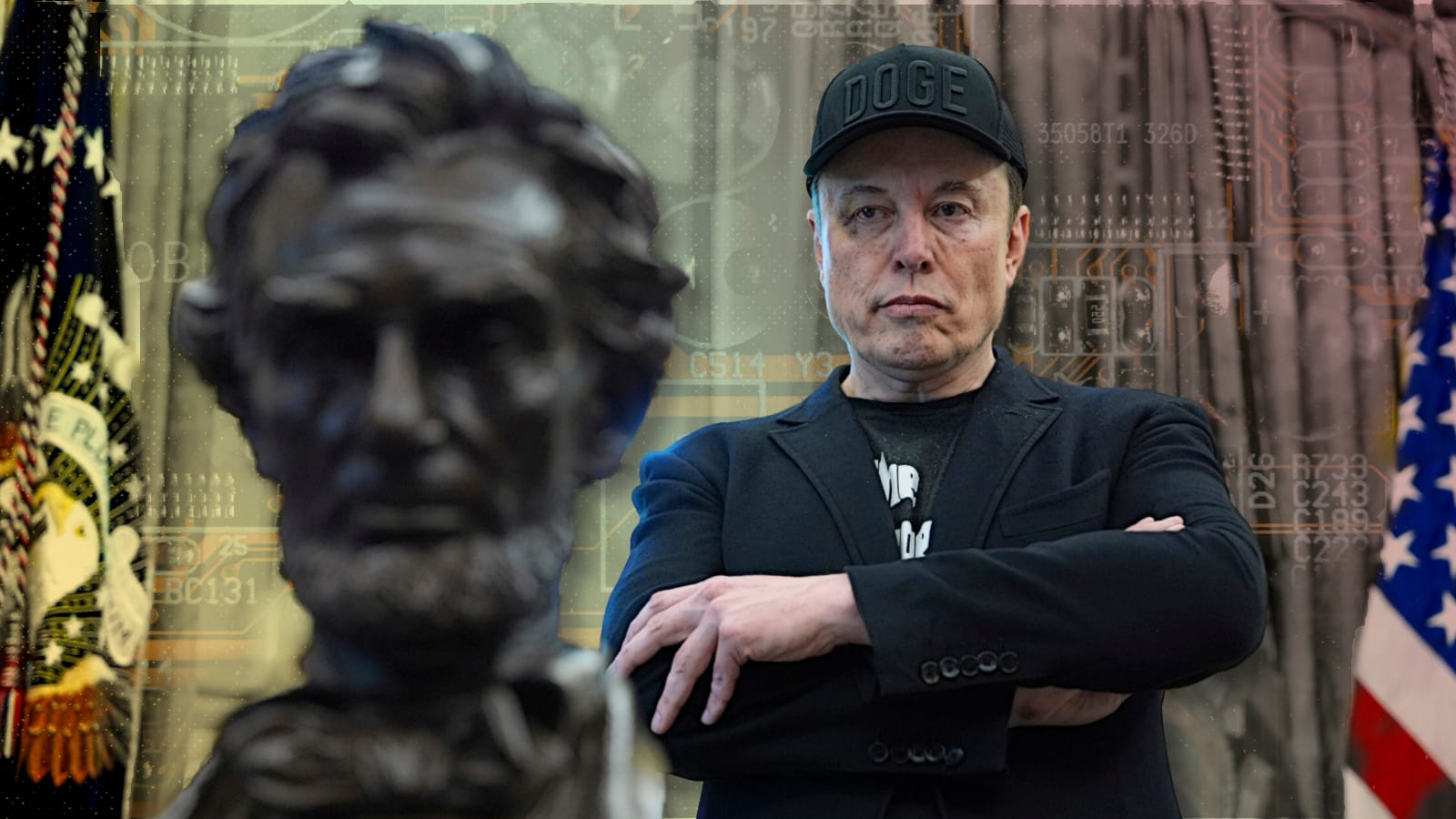
Trump administration officials developed an AI tool called "SweetREX" to identify, eliminate, and rewrite federal regulations according to a pro-business agenda, documents obtained by Democracy Forward reveal. Created by a developer linked to Elon Musk, the system was programmed to target rules imposing costs on private enterprise, limiting innovation, or using race-based classifications. The tool could process over 100,000 public comments in under 30 minutes. SweetREX was pitched to government employees with capabilities including "regulation extermination" and automated statute drafting. The documents show how the AI was trained to apply specific ideological criteria when evaluating which regulations to cut. The revelation follows broader Trump administration efforts to reduce federal regulatory oversight across environmental, labor, and consumer protection domains.
Elon Musk has been a prominent Trump supporter and leads the Department of Government Efficiency (DOGE), tasked with federal cost reduction. The use of AI for regulatory analysis raises questions about transparency and accountability in administrative decision-making. Democracy Forward is a legal advocacy organization that obtained the documents through Freedom of Information Act requests.
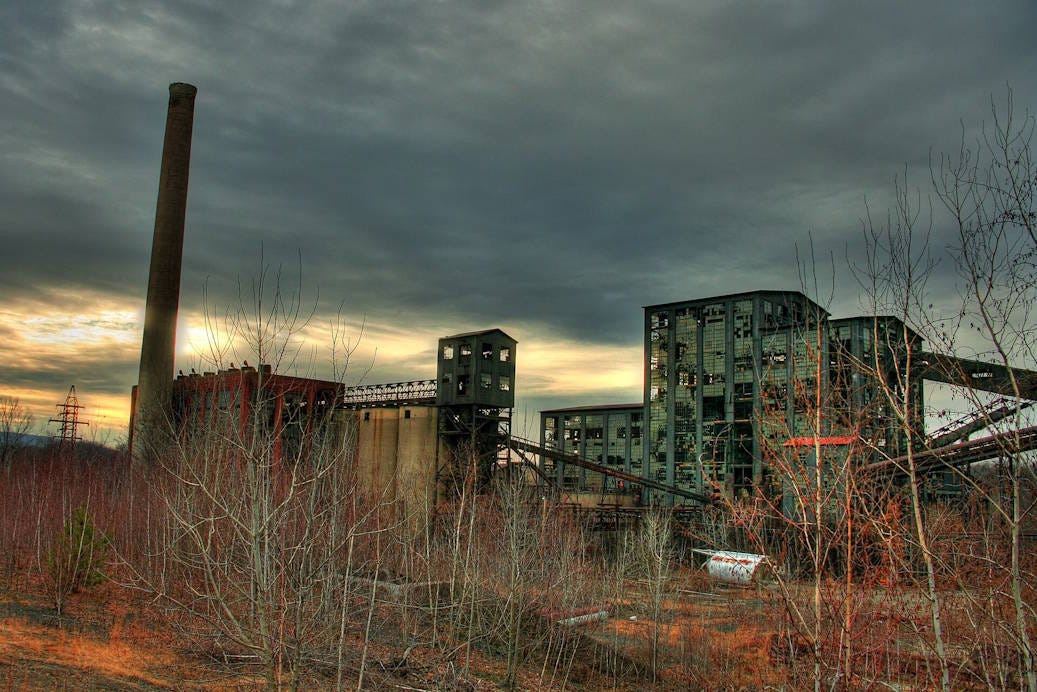
Economist Noah Smith challenges a Wall Street Journal narrative claiming America is experiencing a "stealth manufacturing boom" driven by AI demand offsetting tariff impacts. Smith examines multiple inflation-adjusted data series—manufacturing shipments, industrial production, and gross manufacturing output—and finds no evidence of acceleration since January 2025. What growth exists appears as continuation of decades-long stagnation since 2008, not a revival. The WSJ analysis relied on nominal shipment values without inflation adjustment and conflated AI infrastructure investment with broader manufacturing health. Smith argues tariffs are canceling out tailwinds rather than being overcome by them. The piece illustrates how selective data presentation can create misleading economic narratives, particularly when political interests align with optimistic interpretations.
Manufacturing employment in the US peaked in 1979 and has declined as a share of total employment for decades. Recent policy debates have centered on whether reshoring production is achievable or desirable given labor cost differentials and automation trends. Trump administration tariffs have increased input costs for many domestic manufacturers.
Physicists at Los Alamos National Laboratory have developed a theoretical method to reverse the arrow of time in quantum systems, publishing their findings in Physical Review X. The technique uses precisely calibrated external fields—called a Hamiltonian control sequence—to revert quantum measurements to their pre-measurement states, effectively making events run backward. The approach draws on James Clerk Maxwell's 19th-century "demon" thought experiment about sorting molecules to violate thermodynamic entropy increase. In quantum systems, measurement collapses superposition into definite states; the new method reconstructs the original superposition. Researchers believe experimental verification is feasible. If realized, the technique could reduce information loss in quantum computers, addressing a fundamental obstacle to quantum technology development.
The arrow of time—the asymmetry between past and future—remains unexplained at the fundamental level. While thermodynamics provides a statistical arrow through entropy increase, quantum mechanics is time-symmetric in its equations. Reconciling these perspectives is a central problem in foundational physics.
The European Court of Justice ruled Tuesday that Hungary's 2021 anti-LGBTQ laws violate EU rules and infringe founding treaty values of equality and minority rights—an unprecedented finding under Article 2. Viktor Orbán's government had banned "promotion" of homosexuality or gender change to minors, associating LGBTQ identity with paedophilia. The court found the law stigmatized and marginalized transgender and non-heterosexual people, interfering with rights to non-discrimination, private life, and free expression. The ruling comes nine days after Hungarians voted to end Orbán's 16-year rule, electing Péter Magyar's Tisza party. Magyar has promised a pro-European approach and must now repeal the legislation to unlock frozen EU funding. The decision establishes that EU member states cannot negotiate away minority rights, with potential implications for rule-of-law disputes in Poland and elsewhere.
Hungary's anti-LGBTQ law was passed in 2021 using Fidesz's parliamentary supermajority. The European Commission launched infringement proceedings and withheld cohesion funds. Article 2 of the EU Treaty lists values including human dignity, freedom, democracy, equality, and rule of law. This is the first time the ECJ has found a member state in violation of these foundational values.
Tennessee Governor Bill Lee signed legislation requiring public colleges to treat tenured and non-tenured faculty identically in disciplinary proceedings, eliminating separate due process protections for tenured professors. Under House Bill 2194, termination or suspension for alleged misconduct requires only written notice and an opportunity to be heard by the chief academic or executive officer—no faculty committee review. Supporters argued tenure had shielded misconduct; critics contend the law weakens academic freedom protections and institutional neutrality. The bill also mandates policies preserving "free expression of all viewpoints" and requires public posting. Tennessee follows Texas and Florida in modifying tenure systems, part of a broader Republican-led effort to reshape higher education governance. The changes take effect for the 2026-27 academic year.
Tenure in US higher education originated in the early 20th century to protect academic freedom and insulate research from political pressure. Disciplinary procedures traditionally involve peer review committees. Recent state-level challenges to tenure have emerged amid political disputes over curriculum content, particularly regarding race, gender, and American history.