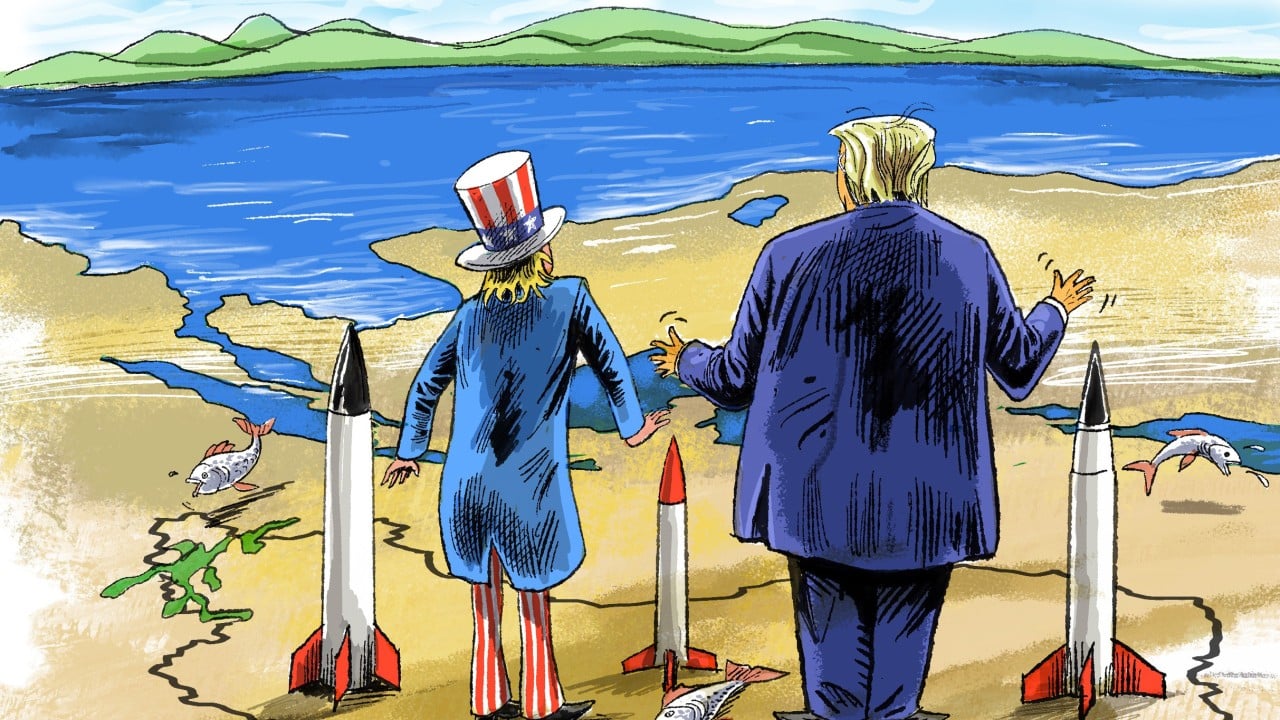
President Trump posted on Truth Social Sunday that the US will "knock out every single Power Plant, and every single Bridge, in Iran" if Tehran does not accept a "fair and reasonable DEAL" on the Strait of Hormuz. The threat came hours after Iran re-closed the strait, overturning a 24-hour-old pledge to reopen it during the Israel-Lebanon ceasefire. Iran's Revolutionary Guard warned that vessels attempting passage would be treated as "cooperation with the enemy." Two ships were reportedly hit Saturday, both Indian-owned according to New Delhi. The US-Iran ceasefire expires this week. Trump said US negotiators will arrive in Pakistan Monday for talks, though Iran has not confirmed participation. International law experts classify strikes on energy infrastructure as war crimes due to disproportionate civilian harm.
The US and Iran agreed to a two-week ceasefire in early April after US-Israeli strikes on Iran began February 28. Iran has retaliated against Israel, US Gulf bases, and civilian energy sites in Arab states. The Strait of Hormuz carries roughly 20% of global oil and LNG.
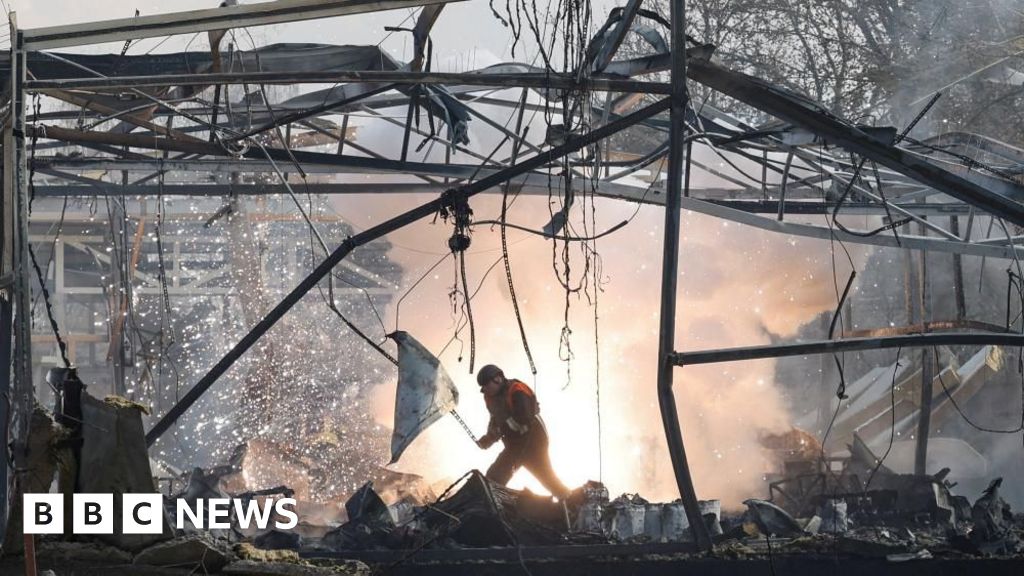
Ukrainian President Volodymyr Zelensky criticized Washington's decision to extend until May 16 the waiver allowing countries to buy Russian oil already loaded on tankers. The US says the measure eases energy supply disruptions caused by the Iran war and closed Hormuz strait. Zelensky countered that "every dollar paid for Russian oil is money for the war," estimating Moscow stands to gain $10 billion from 12 million tons of oil aboard 110 shadow-fleet tankers. He tied the revenue directly to Russia's recent escalation: over 2,360 attack drones, 1,320 guided bombs, and 60 missiles launched at Ukraine in the past week, including a April 15 strike that killed at least 18. The waiver extension follows a March 13 easing of sanctions that European allies also opposed.
Western sanctions on Russian energy have been in place since the 2022 full-scale invasion. Russia uses a "shadow fleet" of tankers with obscured ownership to bypass restrictions. US-led negotiations to end the Ukraine war paused when the Iran conflict began.
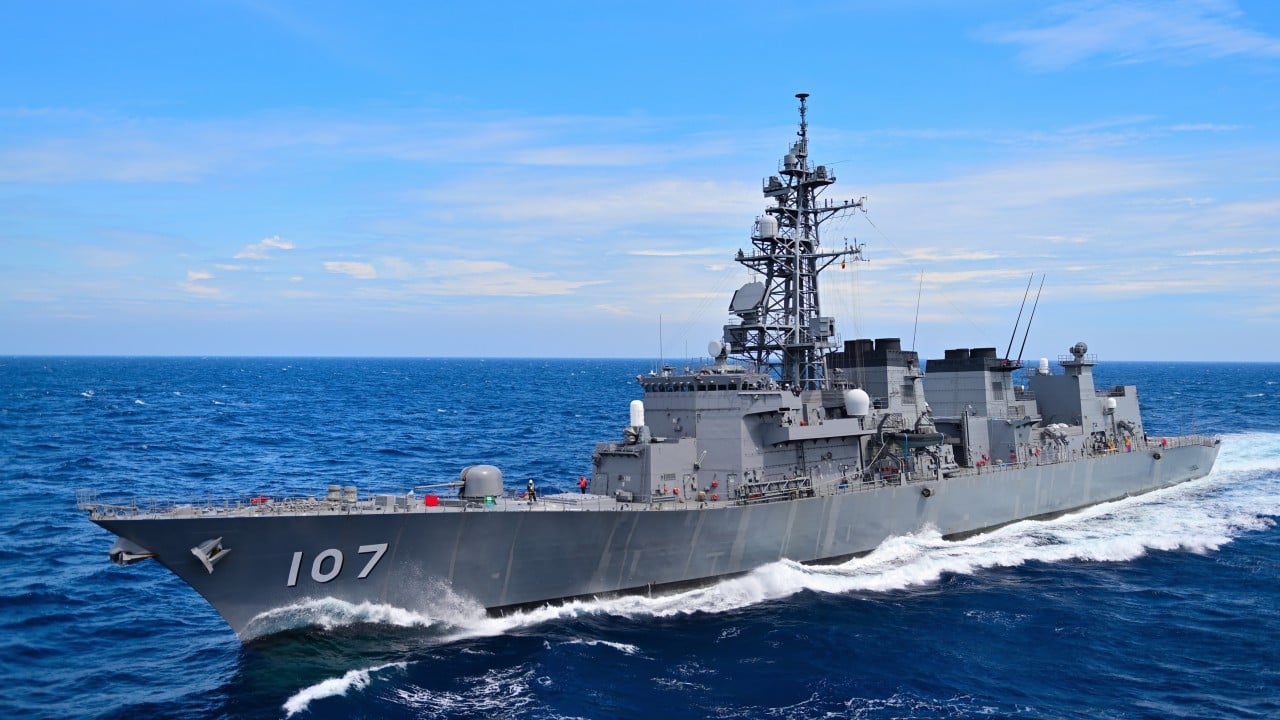
The Japanese destroyer JS Ikazuchi spent 14 hours navigating the Taiwan Strait on Friday, April 17 — the 131st anniversary of the Treaty of Shimonoseki that ended the First Sino-Japanese War and ceded Taiwan to Japan. PLA Eastern Theatre Command forces monitored the transit and released drone footage of the encounter. The PLA Daily accused Tokyo of deliberately "harming the feelings of the Chinese people" by timing the passage to coincide with what Chinese historiography calls the Treaty of Maguan. The transit marks a rare Japanese naval presence in the sensitive waterway and comes amid elevated US-China tensions over Taiwan. China maintains the strait falls within its territorial waters; the US and allies treat it as international waters open to freedom of navigation operations.
The 1895 Treaty of Shimonoseki ended the First Sino-Japanese War and forced the Qing dynasty to cede Taiwan to Japan. Taiwan remained under Japanese rule until 1945. The Taiwan Strait lies between mainland China and Taiwan, with China claiming sovereignty over the entire waterway.
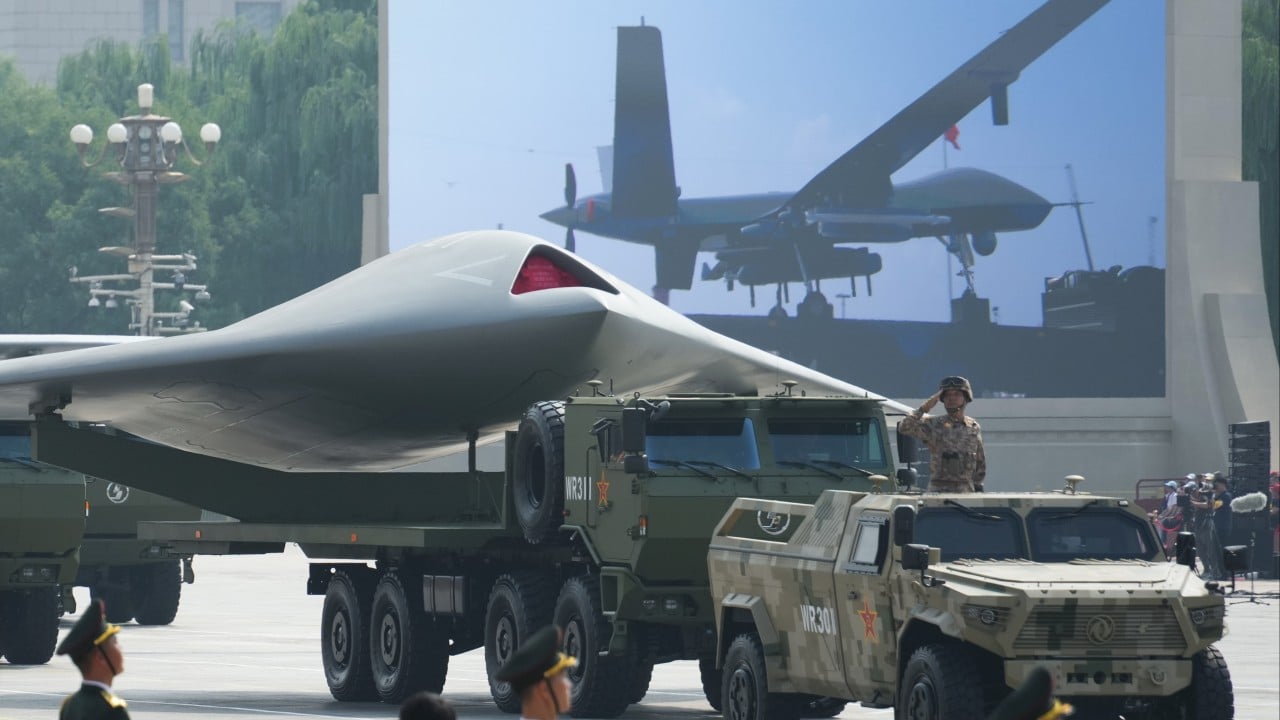
Researchers at Xidian University have demonstrated a ground-based microwave system that wirelessly transmits power to drones in flight, potentially enabling indefinite airborne operation. Published March 25 in Aeronautical Science & Technology, the study describes a vehicle-mounted emitter that beams energy to an antenna array on the drone's underside. The team solved the alignment problem by integrating GPS positioning, dynamic tracking, and onboard flight controls. In tests, fixed-wing drones stayed aloft for 3.1 hours at 15 meters altitude while receiving power. Military analysts have likened the concept to a "land-based aircraft carrier" — a mobile command and energy node that could launch and sustain drone swarms for persistent surveillance, strike, or electronic warfare missions. The technology remains early-stage but points toward a new class of sustained aerial operations.
Xidian University in Xi'an is a leading Chinese institution for military technology research. Wireless power transmission via microwave has been studied for decades but practical implementation requires solving precise beam alignment with moving targets.
ASEAN foreign ministers issued a March 4 statement expressing "serious concern" over the US-Israel strikes on Iran and Iran's retaliations, adopting a balanced tone that avoided siding with Washington despite several members being US treaty allies. This neutrality signals a shift: Southeast Asian states are hedging against over-reliance on American security guarantees as US credibility frays in simultaneous wars. China has gained ground in regional influence, though ASEAN surveys show persistent concerns about Beijing's territorial claims. The question is whether Beijing can convert strategic opportunity into durable partnerships, or whether its own assertiveness limits gains. The piece draws a parallel to Russia's eroded position in Central Asia after its Ukraine invasion — a warning that military overreach can accelerate diplomatic losses even where power seems ascendant.
ASEAN includes ten Southeast Asian states; five are US treaty allies (Thailand, Philippines, Singapore, Indonesia via cooperation agreement, and historically Vietnam). The bloc officially pursues non-alignment. China is the region's largest trading partner; the US remains the primary security partner for several members.
A 15th-century puzzle about dividing stakes in an interrupted coin-tossing game led Blaise Pascal and Pierre de Fermat to invent modern probability theory. The "problem of points" asks how to fairly split a pot when one player leads 8-6 in a race to 10 points but must stop. Luca Pacioli proposed dividing by points already scored, but this failed at extremes — a 1-0 lead would claim the entire pot. Niccolò Tartaglia improved the method but doubted a perfect solution existed. In their 1654 correspondence, Pascal and Fermat developed the expected-value framework: calculate each player's probability of winning from the current state and divide accordingly. Their solution underpins contemporary risk assessment in insurance, finance, and decision science.
Blaise Pascal and Pierre de Fermat were 17th-century French mathematicians. Their 1654 letters on the problem of points, prompted by a gambler's query to Pascal, established foundational concepts: probability as measurable uncertainty, expected value, and recursive calculation of winning chances.
Cloud deployment platform Vercel reported Sunday that unauthorized actors accessed internal systems, affecting a "limited subset of customers." The company has engaged external incident responders and notified law enforcement. Details remain sparse, but Vercel advised customers to review activity logs and rotate environmental variables as precaution. The firm also recommended using its "sensitive environmental variables" feature, which stores API keys and credentials in unreadable format. Online reports link the intrusion to ShinyHunters, a threat group known for social engineering, vulnerability exploitation, and extortion demands. Vercel serves developers and enterprises with hosting and serverless functions, and has recently expanded offerings for AI agent workloads. The company did not specify which systems were compromised or how many customers were affected.
Vercel is a cloud platform for frontend frameworks and serverless functions, popular with Next.js developers. ShinyHunters is a cybercrime group active since 2020, known for data breaches at major companies and selling compromised access on criminal forums.
Multiple competitors launched free offerings targeting Adobe's core products this week. Maxon relaunched Autograph — After Effects-style motion software — as free for individual users after acquiring it last year; it previously cost $1,795 perpetual or $59 monthly. Canva made Cavalry motion graphics free after its February acquisition, following last year's move to combine Affinity Designer, Photo, and Publisher into a single free app. Blackmagic's DaVinci Resolve 21 update added photo editing tools and Affinity file support, strengthening its position as a free Premiere Pro alternative. Apple's $12.99 monthly Creator Studio undercuts Adobe's $69.99 Creative Cloud Pro. The coordinated pressure targets Adobe's subscription pricing and AI integration, which have alienated professional users.
Adobe shifted from perpetual licenses to subscription-only Creative Cloud in 2013, generating reliable revenue but persistent user resentment. Recent generative AI features and price increases have accelerated defections to alternatives like Affinity, Procreate, Blender, and DaVinci Resolve.
President Trump signed an executive order Saturday directing federal agencies to accelerate research on psychedelic drugs as treatments for depression, PTSD, and addiction. Podcaster Joe Rogan stood beside him and received credit from Trump for pushing the initiative. Rogan has promoted ibogaine — a psychoactive compound used outside the US for addiction and trauma — on his show for years. The order drew support from investors including Peter Thiel, who has backed psilocybin developer Compass Pathways and hallucinogen firm Atai Life Sciences. Both stocks rose Thursday on anticipation of the move. Texas announced $50 million for state ibogaine trials in March. The Mercer Family Foundation, major Trump donors, has contributed over $1 million to psychedelic PTSD treatment for veterans. Trump asked at the signing: "Can I have some, please?"
Ibogaine is a psychoactive compound derived from an African shrub, used in some countries to treat opioid addiction and PTSD but classified as Schedule I in the US. Psychedelic therapy research has gained bipartisan interest, driven by veteran mental health advocacy and investor interest in commercialization.
MIT associate professor Richard Linares leads research on space traffic management as low-Earth orbit grows crowded with over 10,000 active satellites, 5,000 dead ones, and more than 100 million debris fragments. His Astrodynamics, Space Robotics, and Controls Lab develops tracking tools and predictive models for satellite mega-constellations. Linares is also studying how space weather and climate change on Earth may limit sustainable orbital capacity. The lab applies artificial intelligence to help satellites autonomously navigate and resolve onboard problems without ground control delays. The work addresses a pressing engineering question: at what point does adding more satellites compromise the services they provide and the spacecraft themselves?
Low-Earth orbit has seen explosive growth since 2019, driven by SpaceX's Starlink and competitor constellations. The Kessler Syndrome — a cascade of collisions generating ever more debris — remains a theoretical risk that traffic management aims to prevent. Current tracking relies on ground radar and optical systems with limited resolution for small objects.