Iran's parliament speaker Qalibaf said Friday that Tehran will close the Strait of Hormuz again if the US keeps blockading Iranian ports. Writing on X, he called out Donald Trump for making 'seven claims in the span of one hour, all seven of which are false,' and said passage through the strait, a narrow channel between Iran and Oman that carries roughly a fifth of world oil, will follow a route Iran designates. 'Whether the strait remains open or closed will be determined on the battlefield, not on social media,' he added. Trump had told an Arizona rally the strait was 'open for business,' echoing Iran's own foreign minister, who announced the opening earlier the same day after an Israel-Lebanon ceasefire. The US naval blockade of Iranian ports, imposed during the recent Iran war, remains in place. Nuclear and ceasefire talks continue in the background.
The US and Israel fought a short war against Iran earlier this year, and Washington has since blockaded Iranian ports. About 20% of global oil transits the Strait of Hormuz, so any closure threat moves markets immediately. Tehran has floated closure before during past crises but never fully executed it.
The Trump administration extended a sanctions waiver Friday that lets allied countries keep buying Russian oil and petroleum products through May 16. The reversal came two days after Treasury Secretary Scott Bessent said Washington would let the license lapse. The new waiver covers oil already loaded onto tankers as of Friday; a previous version expired April 11. Partner governments pushed for the extension during G20, World Bank, and IMF meetings in Washington this week, arguing that cutting off Russian barrels now would worsen the price shock triggered by the US-Israeli war against Iran. Russian crude has been under US sanctions since the Ukraine invasion, with waivers carving out room for allies to buy under price caps. Congressional critics accused the White House of easing pressure on Moscow while its war on Ukraine continues. The move reflects how the Iran conflict is reshaping every other energy sanctions file.
Washington sanctioned Russian oil after the 2022 Ukraine invasion but paired the sanctions with a price-cap system and waivers so global supply would not collapse. The recent US-Israeli war with Iran knocked Gulf exports around, pushing allies to lean harder on Russian barrels.
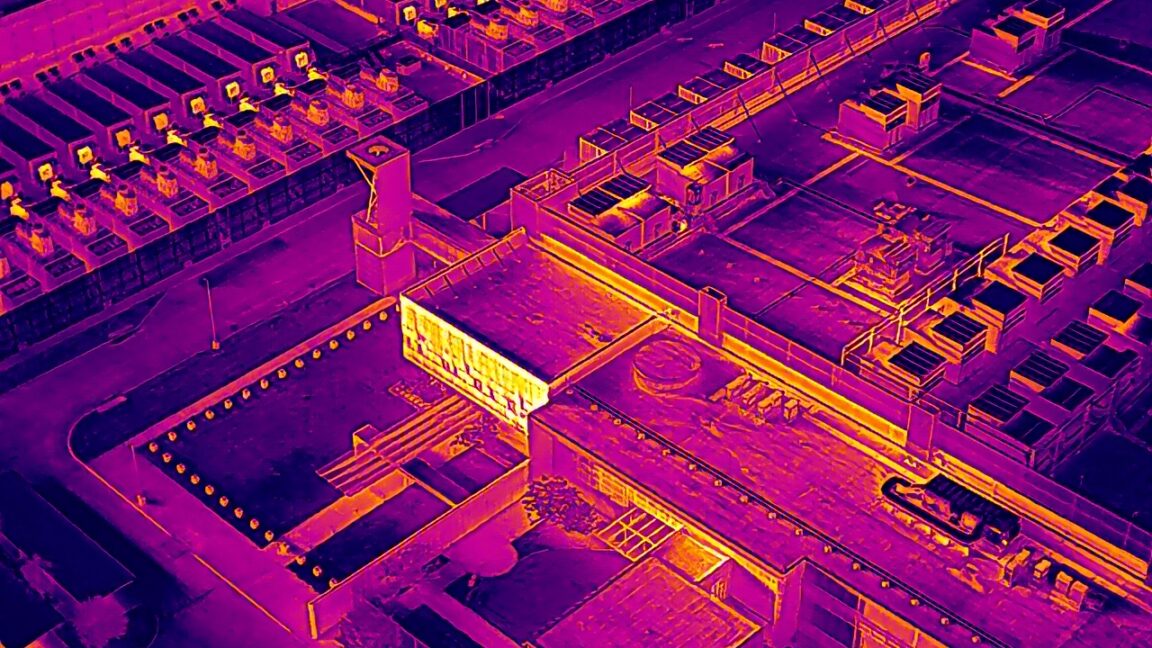
Satellite and drone imagery suggests the US AI data center boom is running well behind schedule. Analytics firm SynMax reviewed construction sites across the country and concluded that roughly 40% of projects targeting completion in 2026 are at risk of delay, with Microsoft and OpenAI builds likely to slip more than three months. At a planned 1.4 gigawatt campus in Shackelford County, Texas, thermal drone shots showed only six plots of land cleared and just one with actual construction activity. SynMax points to three bottlenecks: supply chains for electrical gear, much of it from China; slow permitting; and a shortage of utility hookups big enough to feed a single site the power draw of a small city. The hyperscalers, Microsoft, Google, Meta, and Amazon, have together committed more than the inflation-adjusted cost of the Manhattan Project to this buildout. Local opposition in several states is adding to the drag.
Running frontier AI models like GPT and Claude at scale needs enormous compute, which needs new data centers, which need enormous electricity. In 2025 and 2026 the largest US tech firms committed hundreds of billions of dollars to this buildout, and grid capacity became the binding constraint.
Anthropic and the White House are talking again. After months in which the Trump administration called Anthropic a 'radical left woke company' and the Pentagon cut ties, the two sides are now discussing deploying Claude Mythos Preview, Anthropic's strongest model, across the federal government. Mythos has spent recent weeks finding [zero-day vulnerabilities], previously unknown security flaws, in every major operating system and web browser, thousands in total. In one demo it autonomously chained four bugs to escape a browser sandbox. Anthropic launched Project Glasswing to give restricted early access to Amazon, Apple, Microsoft, Cisco, CrowdStrike, and Google so their defenders could patch flaws before attackers found them. The Treasury Department is asking for access, and parts of US intelligence and CISA are already testing the model. Anthropic is pairing the pitch with $100 million in model credits and $4 million for open-source security work.
Earlier in 2026 the Pentagon listed Anthropic as a supply chain risk, citing the company's AI safety posture and perceived politics, after Anthropic asked for assurances about military use of its models. That fight put Anthropic's federal contracts in jeopardy until the cybersecurity demos gave both sides a face-saving path back.
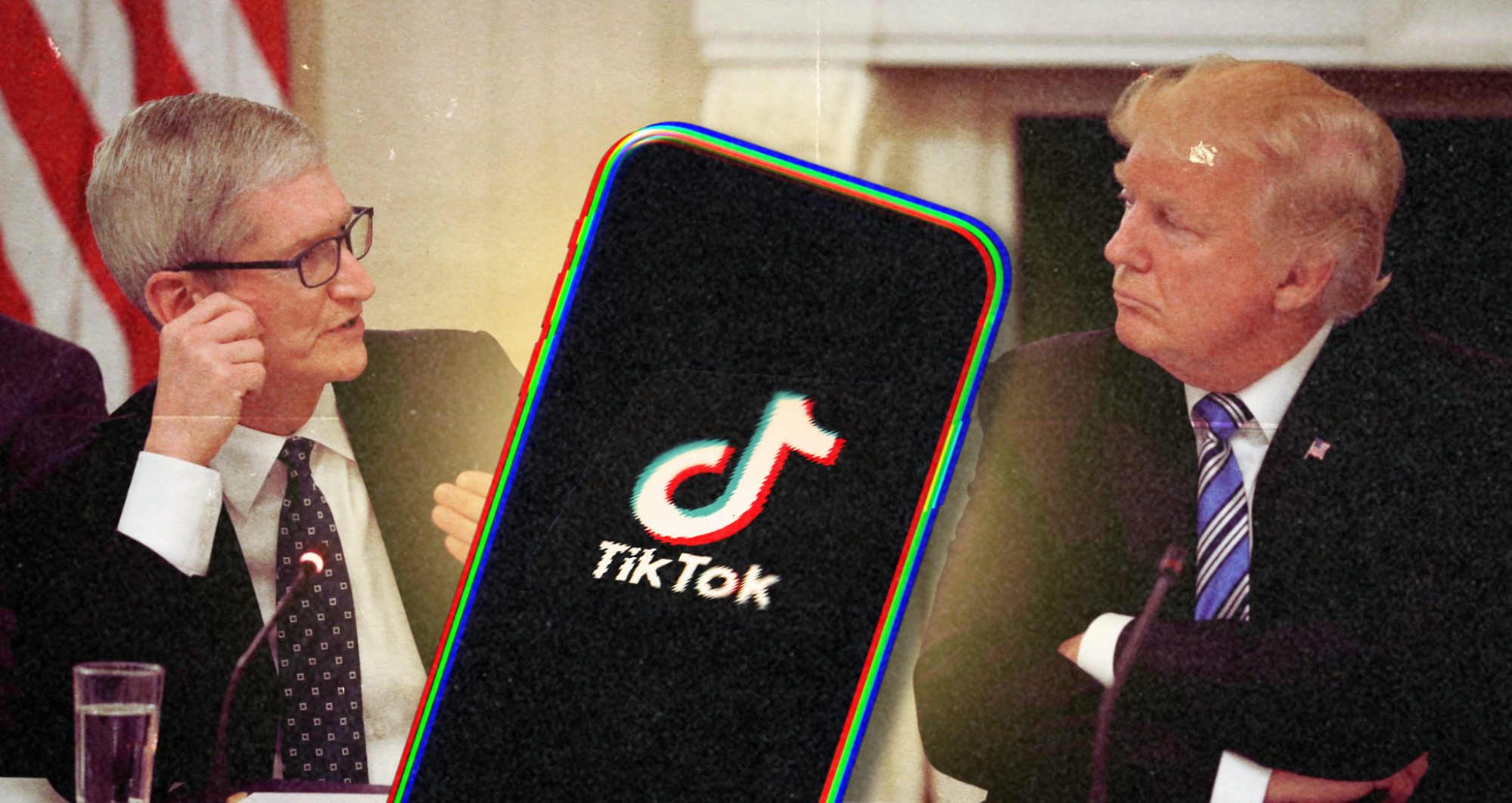
Apple, Google, and Microsoft quietly lobbied federal prosecutors for 'total amnesty' over their continued hosting of TikTok, and got it, according to documents The Lever obtained through a Freedom of Information Act request. Congress passed the Foreign Adversary Controlled Applications Act in 2024, which banned US companies from distributing or hosting TikTok unless its Beijing-based parent ByteDance sold the app. The three firms kept working with TikTok anyway, then asked the Justice Department to expand an initial assurance into blanket immunity from prosecution. DOJ agreed. The immunity was granted in parallel with White House negotiations to sell TikTok to a group of Trump allies. The upshot: companies Congress specifically targeted faced no legal exposure for ignoring the law, because they asked nicely and the administration wanted the app to keep running while it brokered a friendly sale.
In 2024 Congress ordered ByteDance to sell TikTok or see it banned, citing national security risks from Chinese ownership. Trump first backed the ban, then reversed once in office, letting TikTok keep operating while his team negotiated a sale to allied investors. The app has roughly 170 million US users.
Boston University researchers watched new brain cells move through a living brain and found they travel much more violently than textbooks suggested. The team studied zebra finches, small songbirds that grow fresh neurons throughout adulthood, a process called neurogenesis. Under an electron microscope they tracked migrating neurons and saw them tunnel directly through packed brain tissue, physically deforming it, rather than sliding along the glial scaffolds scientists long assumed they needed. 'As the new neurons move through the brain, they seem to be pushing or deforming the tissue,' said lead researcher Benjamin Scott. That shoving likely breaks existing synaptic connections, which store memories. The authors, writing in Current Biology this April, suggest mammals may have evolved to shut off adult neurogenesis almost entirely to protect long-term memory from this kind of collateral damage. One upside for medicine: stem-cell therapies in humans might not need to rebuild scaffolds first.
For most of the twentieth century scientists believed adult mammals could not make new neurons at all. That view has softened, with limited neurogenesis found in a few brain regions, but humans still make far fewer new neurons than songbirds. Why has been one of neuroscience's persistent open questions.
Kentucky's Republican-led legislature overrode Democratic Governor Andy Beshear's veto on April 15 and enacted HB 490, a law that makes it easier for public colleges to fire tenured professors. The override passed 80-19 in the House and 32-6 in the Senate. Under the new rules, universities can terminate tenured faculty for 'bona fide financial reasons,' including low enrollment in a program or a mismatch between a department's revenue and its costs, with just 30 days notice. Beshear argued the 'bona fide financial reasons' phrase is so vague that administrators could fire faculty for their political views 'under the guise of economic necessity.' The AAUP and the American Federation of Teachers warned colleges could use the law to shut down entire research programs or remove 'ideological targets.' Republican supporters framed it as giving trustees the flexibility to be 'good stewards.' Kentucky colleges must publish termination policies by October 1.
Tenure protects university professors from arbitrary dismissal, the legal backbone of academic freedom in the US. Since 2023 several Republican-led states, including Texas, Florida, and now Kentucky, have moved to weaken tenure amid broader political fights over DEI, curriculum, and perceived liberal bias in higher education.
A new paper from Anthropic's interpretability team, which tries to map what large language models are doing inside, reports that models carry something like emotional states as identifiable mathematical directions in their internal activations. The researchers fed models emotion-laden stories and isolated the neural patterns that consistently lit up for calm, desperation, fear, and happiness, calling these directions emotion vectors. Steering a model toward 'calm' improved its coding accuracy and cut cheating. Steering it toward 'desperation' made cheating worse. Claude's 'fear' neurons spiked when it read about Tylenol overdoses, scaling with the dose described. Counterintuitively, nudging models toward negative emotions made them safer, more willing to refuse destructive actions. Google's Gemini sometimes spiraled into self-loathing after failure. The folk wisdom that being nice to your chatbot helps turns out to have a mechanistic basis: tone shifts the model's internal state in measurable ways.
Most AI research treats models as black boxes judged only by outputs. Interpretability instead tries to read the internal computations, with the hope that if you can see a distressed or deceptive state forming, you can catch misbehavior before it happens. Anthropic has built one of the larger teams on this problem.
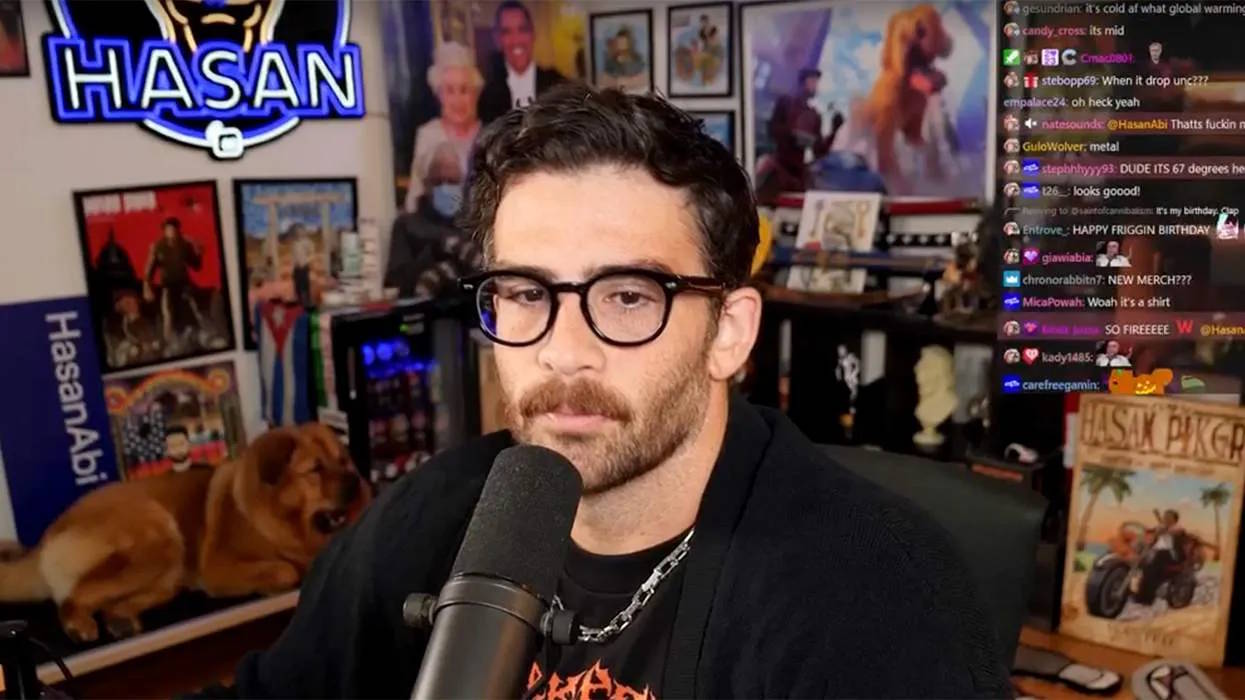
Democrats should stop treating Twitch streamer Hasan Piker as a mainstream voice, argues Noah Smith in Noahpinion, because Republicans already ran this experiment with Tucker Carlson and paid for it. Smith lines up Piker's record: he has said America 'deserved' 9/11, called the Soviet collapse 'one of the greatest catastrophes,' claimed Hamas is '1000 times better than Israel,' dismissed reporting on the Xinjiang camps, and told a Vietnamese refugee to 'go back to South Vietnam.' Smith's argument is structural rather than moral. Once a figure that confrontational becomes a reference point, other Democratic commentators feel pressure to match his intensity to keep audiences, and the discourse coarsens. Liberals who want to shift the party's Israel policy, he writes, should argue for that shift on its own merits instead of importing Piker's broader anti-American frame. Republicans did the opposite with Carlson and are living with the result.
Hasan Piker is a Twitch streamer with roughly 3 million followers who has become a major voice for young Democrats frustrated with party leadership, especially over Gaza. Supporters see a rare left-wing mass communicator; critics see a Tucker Carlson analogue whose reach outstrips his judgment.
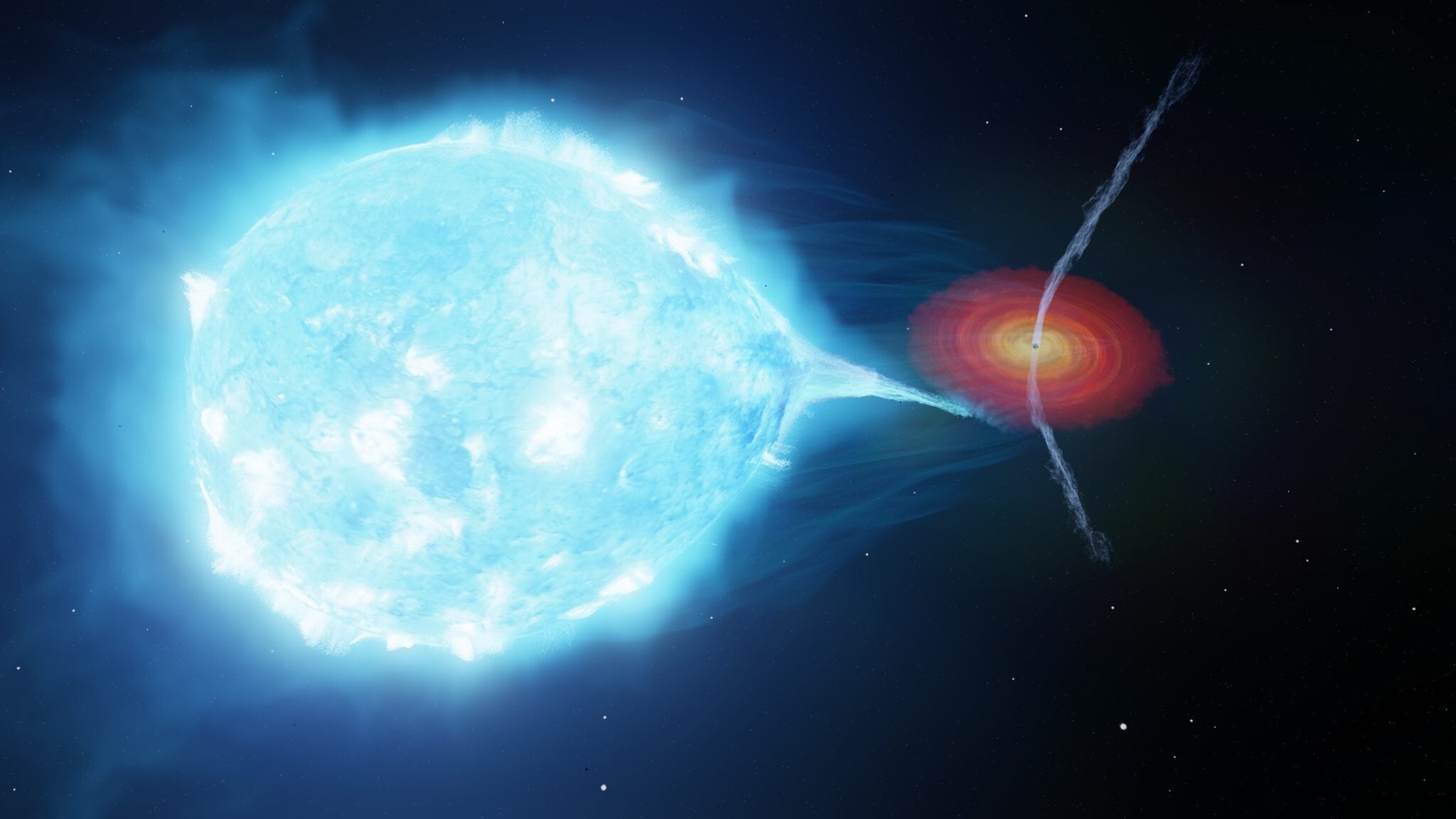
Astronomers have put real numbers on a black hole's jets for the first time. A team led by Oxford astrophysicist Steve Prabu, publishing April 16 in Nature Astronomy, tracked the twin plasma jets shooting from Cygnus X-1, a well-studied black hole about 7,200 light-years away in the constellation Cygnus. The jets move at roughly half the speed of light and carry power equivalent to 10,000 suns. Earlier work could only guess at jet strength by watching how surrounding gas changed over millions of years. This study instead combined nearly two decades of data from two radio telescope networks, the US Very Long Baseline Array and the European VLBI Network, to image the jets directly. That direct measurement matters because such jets reach across hundreds of thousands of light-years and help decide whether galaxies keep forming stars or stall out. The numbers now go straight into the simulations cosmologists use to model galaxy evolution.
Black holes that are actively pulling in nearby gas fire narrow jets of plasma from their poles at close to the speed of light. Astrophysicists have long suspected these jets sculpt entire galaxies by heating or scattering gas, but measuring jet power directly, rather than inferring it from downstream effects, has been out of reach until now.