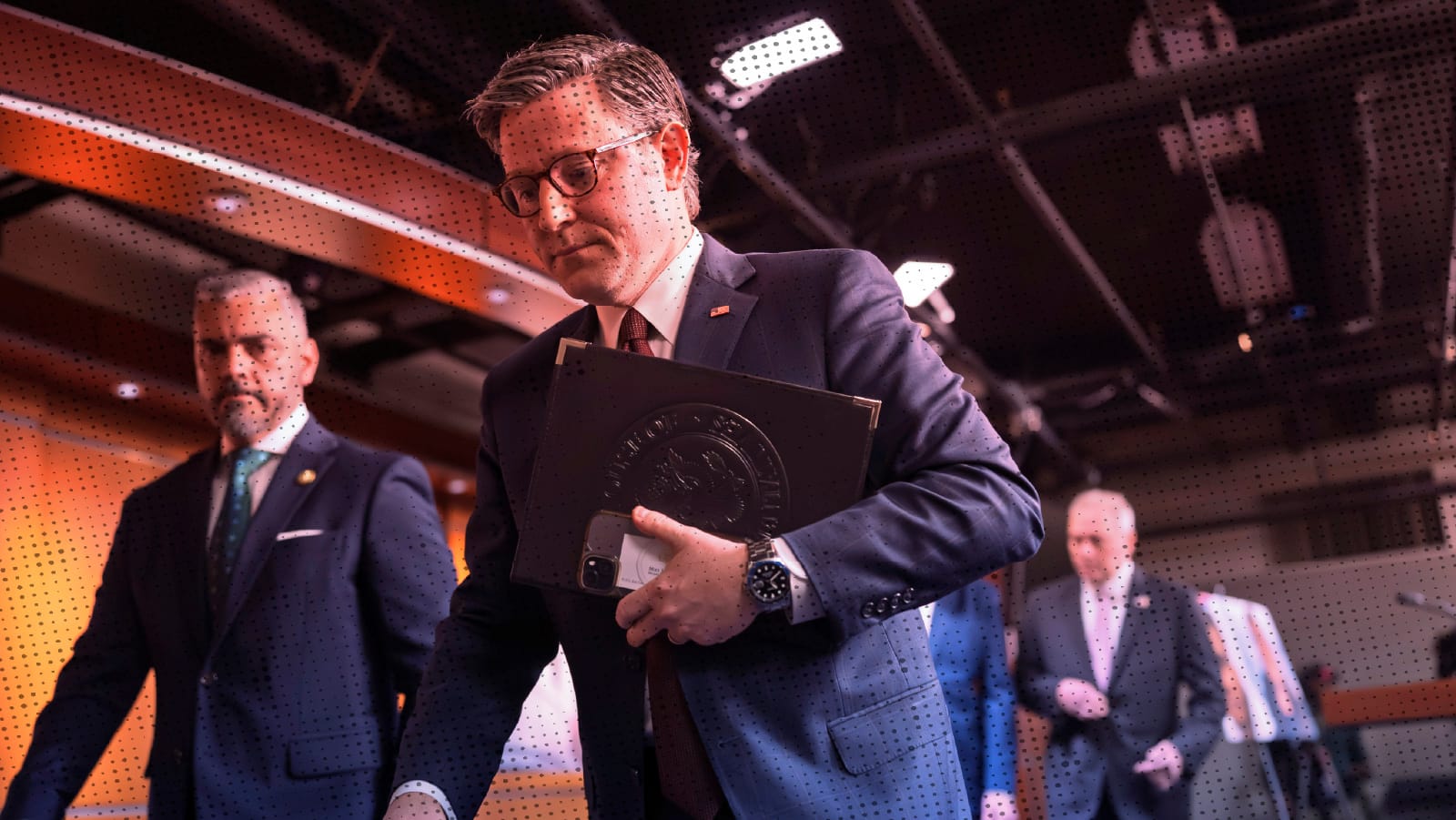
Oil prices fell more than 10% on April 17 after Iran's foreign minister said the Strait of Hormuz is "completely open" to commercial traffic for the rest of the current ceasefire. The strait, a narrow stretch of water between Iran and Oman, carries about a fifth of the world's seaborne oil. Iran shut it in late February when the US and Israel opened an air campaign and killed supreme leader Ali Khamenei, leaving roughly 2,000 ships stranded inside the Persian Gulf as traffic dropped from 150 transits a day to four or five. The global oil benchmark Brent crude slid on the news. Trump says Iran agreed never to close the strait again and to suspend its nuclear program indefinitely, though analysts doubt either commitment will hold in practice. A separate 10-day ceasefire between Israel and Lebanon took effect on the same day; Trump stressed the two deals are not linked.
Iran sealed the Strait of Hormuz in February 2026 at the start of a US-Israeli air war that killed its supreme leader. With a fifth of seaborne oil stuck behind the blockade, Brent briefly approached $100 a barrel. The strait is the single most important chokepoint in the global oil trade.
Trump told Fox Business he will fire Jerome Powell, chair of the Federal Reserve, if Powell does not step down by May 15, when his term as chair ends. Powell's separate seat as a Fed governor runs to January 2028, so he could keep a vote on the board even after losing the chairmanship, and he says he intends to stay until a Justice Department probe into Fed renovation spending concludes. Federal prosecutors recently showed up unannounced at the Fed's Washington building. The Federal Reserve Act of 1913 lets the president remove board members only for cause, a legal standard meaning serious misconduct rather than policy disagreement. The Supreme Court is hearing two cases on whether presidents can fire heads of independent agencies, including a push to remove Fed governor Lisa Cook. A ruling for Trump would weaken Powell's legal footing and open the central bank's rate-setting machinery to direct White House pressure.
The Federal Reserve sets US interest rates independently of the White House, a design meant to stop politicians from juicing the economy before elections. Trump has spent months demanding cuts to the federal funds rate; Powell has kept rates where the Fed's own committee thinks inflation requires.
The US military handed its last base in Syria to the Syrian army on April 17, closing out a decade-long deployment that began in 2015 when American troops arrived to fight ISIS alongside Kurdish rebels. ISIS lost its last patch of territory in 2019, but the troops stayed; a former US envoy later admitted the Pentagon used "shell games" to hide actual troop counts from Congress. The political ground shifted in December 2024, when a Syrian revolution put Ahmad al-Sharaa, a former al-Qaeda commander turned US-friendly politician, in power. A year later, a Syrian police officer killed three American soldiers in Palmyra. In January 2026, talks between the new Syrian government and Kurdish authorities collapsed, and Syrian forces crushed the Kurdish militias that had been Washington's main local partner. With no partner force left to protect, the US may keep an advisory role with the Syrian army, but permanent bases are gone.
American troops entered Syria in 2015 to fight ISIS with Kurdish partners. Critics argued the mission lost its rationale once ISIS collapsed in 2019, but the presence continued under both Trump and Biden. Trump promised withdrawal twice in his first term and reversed himself each time.
Human oversight of AI weapons is largely theater, argues Uri Maoz, a cognitive and computational neuroscientist at Chapman University with appointments at UCLA and Caltech, in MIT Technology Review. Modern AI systems are opaque black boxes; even their designers cannot inspect a decision before it is made. So when an operator signs off on an AI-chosen target, Maoz writes, the operator has no real access to the reasoning they are supposedly checking. He calls this the "intention gap." In the current US-Israel war on Iran, AI now generates targets in real time, runs missile interception, and steers lethal drone swarms, well past its earlier role as an intelligence aide. Pentagon ethical guidelines assume human supervisors can understand the systems under them; Maoz says that assumption is false, and competitive pressure between militaries will push everyone toward more autonomous weapons regardless. The piece lands during a legal fight between Anthropic and the Pentagon over military use of Claude.
Policy debates over AI weapons have long leaned on the phrase "human in the loop" as the safeguard that keeps a person responsible for every lethal decision. The current US-Israel war on Iran has pushed AI's combat role well past intelligence analysis into live targeting and autonomous drone control.
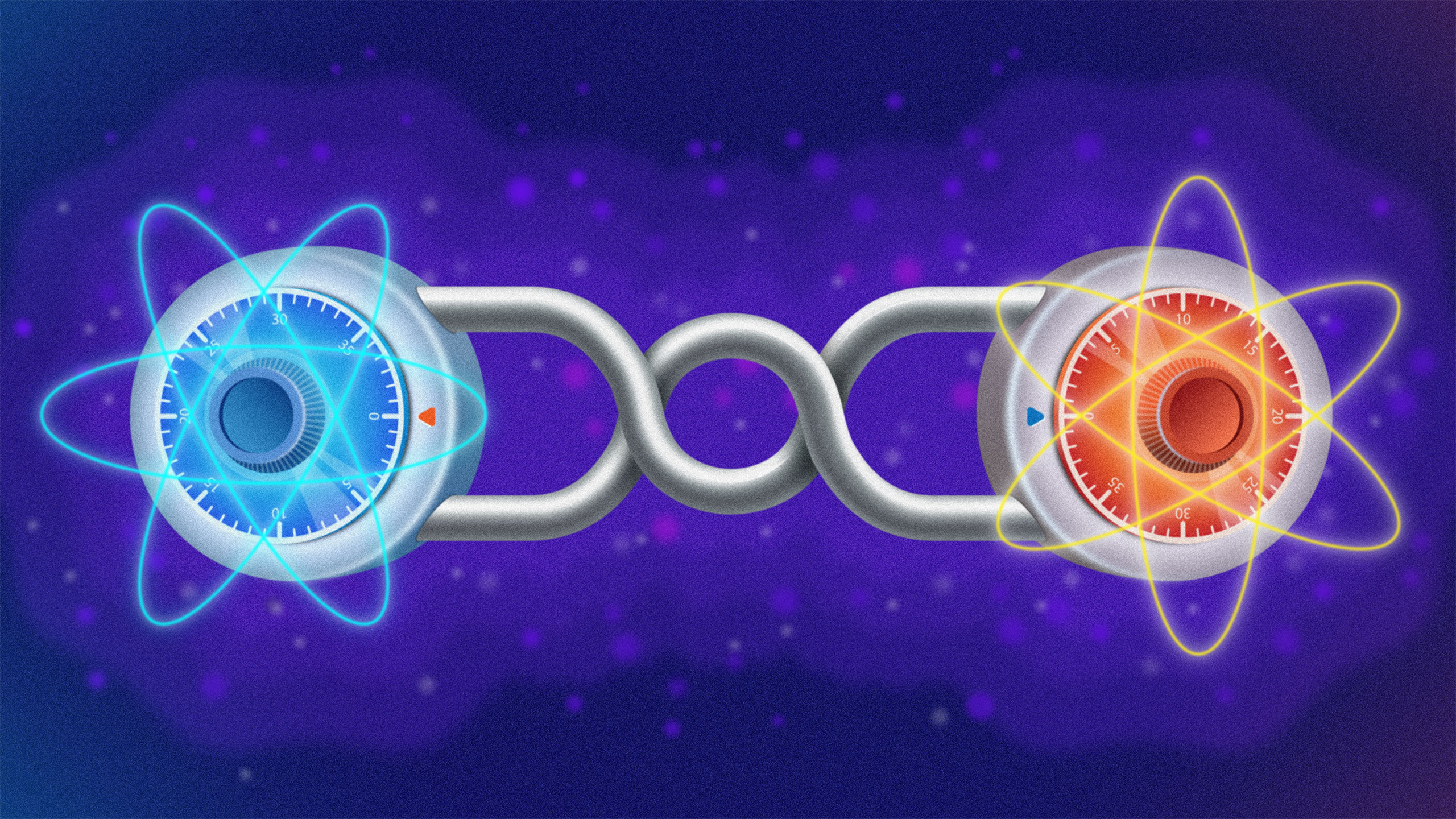
A theoretical idea first floated in the mid-1990s and then ignored for decades is now unsettling quantum cryptography. The concept, called quantum jamming, describes a hypothetical device that could quietly reshape the correlations between two distant particles linked by quantum entanglement without leaving any detectable trace, and without sending a faster-than-light signal. That last part matters: jamming would respect the no-signaling principle that physicists treat as sacred. The problem is that the most secure form of quantum encryption, device-independent quantum cryptography, rests on another assumption called the monogamy of entanglement, which says two maximally entangled particles cannot share their link with a third party. Jamming breaks that rule silently, so an eavesdropper could compromise a quantum-secured channel without tripping any alarm. Ravishankar Ramanathan and Paweł Horodecki rediscovered the dormant 1990s paper in 2016, and physicists now take the idea as a hint that quantum mechanics itself may need a deeper layer to explain what nature actually allows.
Quantum key distribution promises communication security based on the laws of physics rather than the mathematical puzzles behind today's encryption. The device-independent version is considered the gold standard because its guarantees come from measured statistics alone and do not require trusting the hardware.
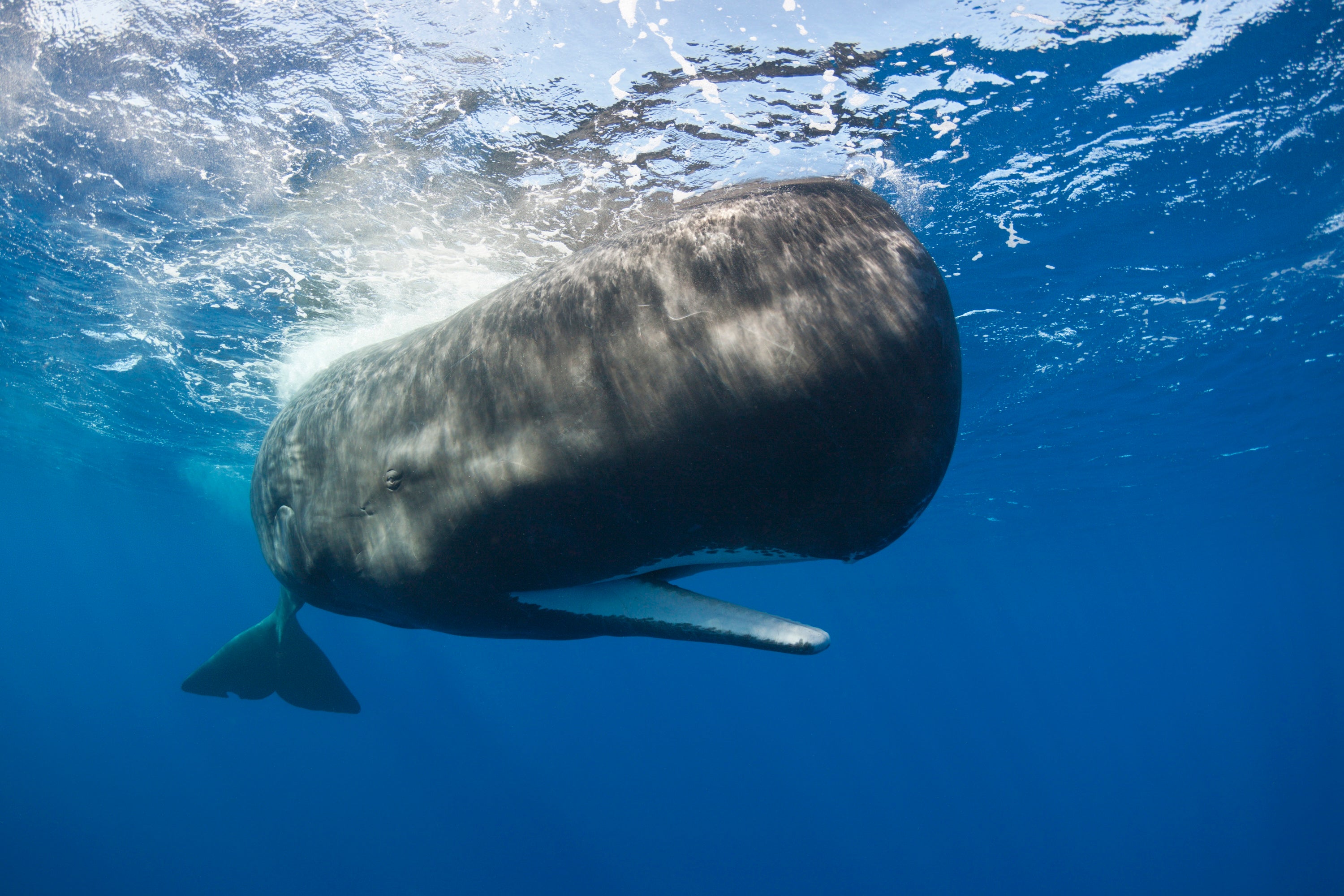
Sperm whales may have something close to vowels, according to a study published April 14 in Proceedings of the Royal Society B. A team led by Gašper Beguš, a linguist at UC Berkeley, working with Project CETI, analyzed the short rhythmic click bursts whales use to talk to each other, known as codas. Across 156 distinct click patterns, the researchers identified two repeated vowel-like contrasts, which they label "a-codas" and "i-codas." Whales shift between them by adjusting the tiny gaps between clicks, a trick structurally similar to how Mandarin, Latin, or Slovenian speakers distinguish vowels. Earlier work had compared sperm whale communication to Morse code, a stream of on-off signals. This study adds a layer of phonology, the internal sound structure of a language, suggesting whales carry something like an alphabet rather than a bare sequence. Beguš: "When you actually look at it closely, you realize, Oh, we're way more similar." The team aims to decode 20 whale expressions by 2031.
Project CETI runs a long-term effort off the Caribbean island of Dominica, using underwater microphones, machine learning, and robotics to record sperm whale conversations. Previous work mapped the rhythms of their click bursts; this is the first paper to argue that vowel-like structure sits inside those rhythms.
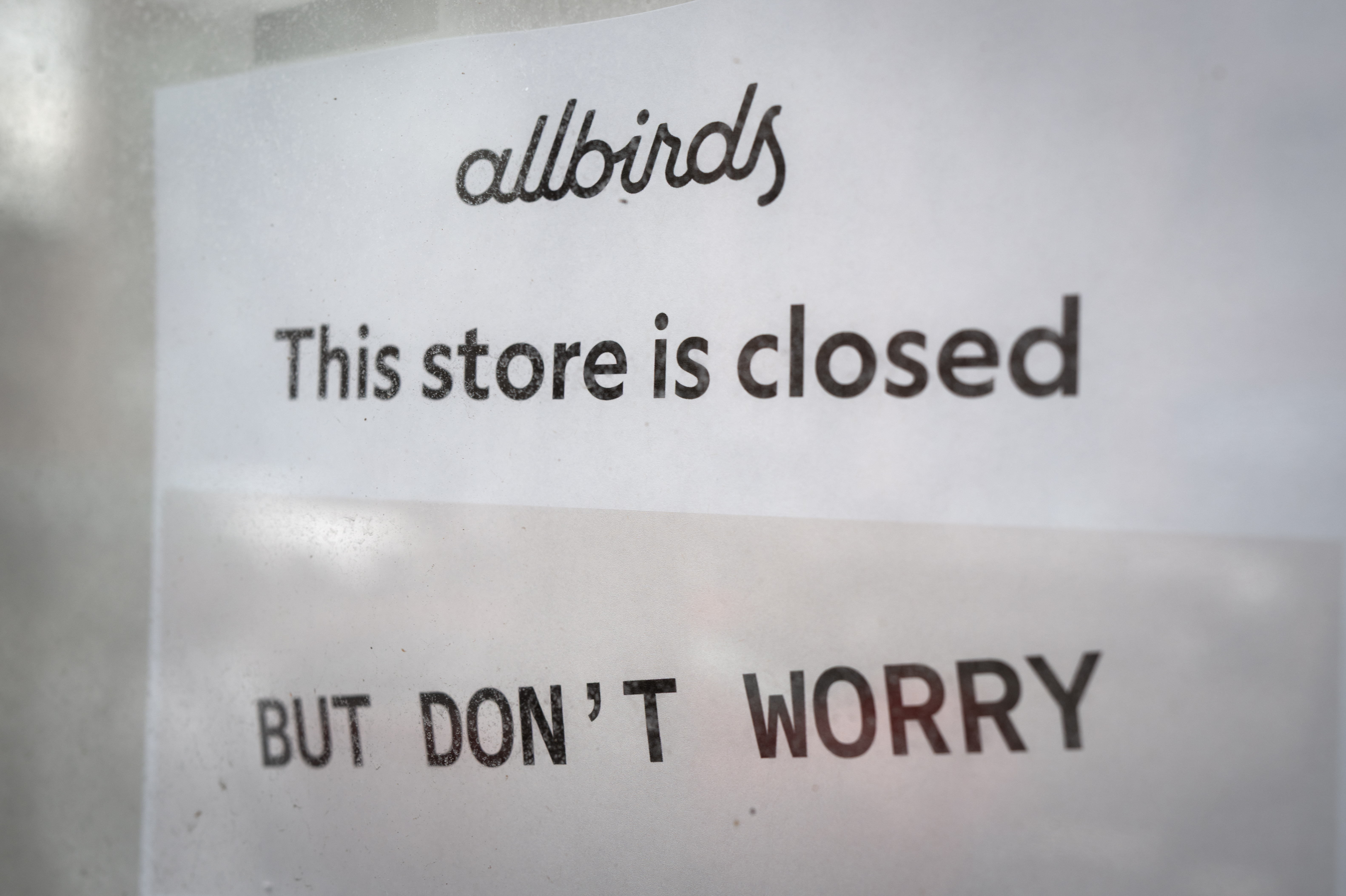
Allbirds, the wool-shoe company sold last year for $39 million (roughly 1% of its 2021 peak), said on April 15 it would rebrand as NewBird AI and become a "GPU-as-a-service and AI-native cloud solutions provider." The company has no AI engineers, no GPU procurement staff, and no data center experience. It raised $50 million in convertible financing to fund the pivot. Shares jumped 600 to 700% on the announcement, then dropped 36% the next day. Steve Sosnick, chief strategist at Interactive Brokers, said the move "says quite a bit about market froth" for a company ditching its business model for one where it has shown no expertise. The episode echoes Long Island Iced Tea's 2018 rebrand to Long Blockchain, which triggered a 500% surge before the company was delisted. Analysts draw a direct line from that crypto-era stunt to the current round of AI rebrandings, where pivot announcements alone can move a stock several multiples in a day.
Renting out GPUs, the chips that train and run AI models, became a lucrative business as model training costs ballooned. The real infrastructure market is held by Amazon, Microsoft, Google, and a handful of specialists who have spent billions on hardware and data centers.
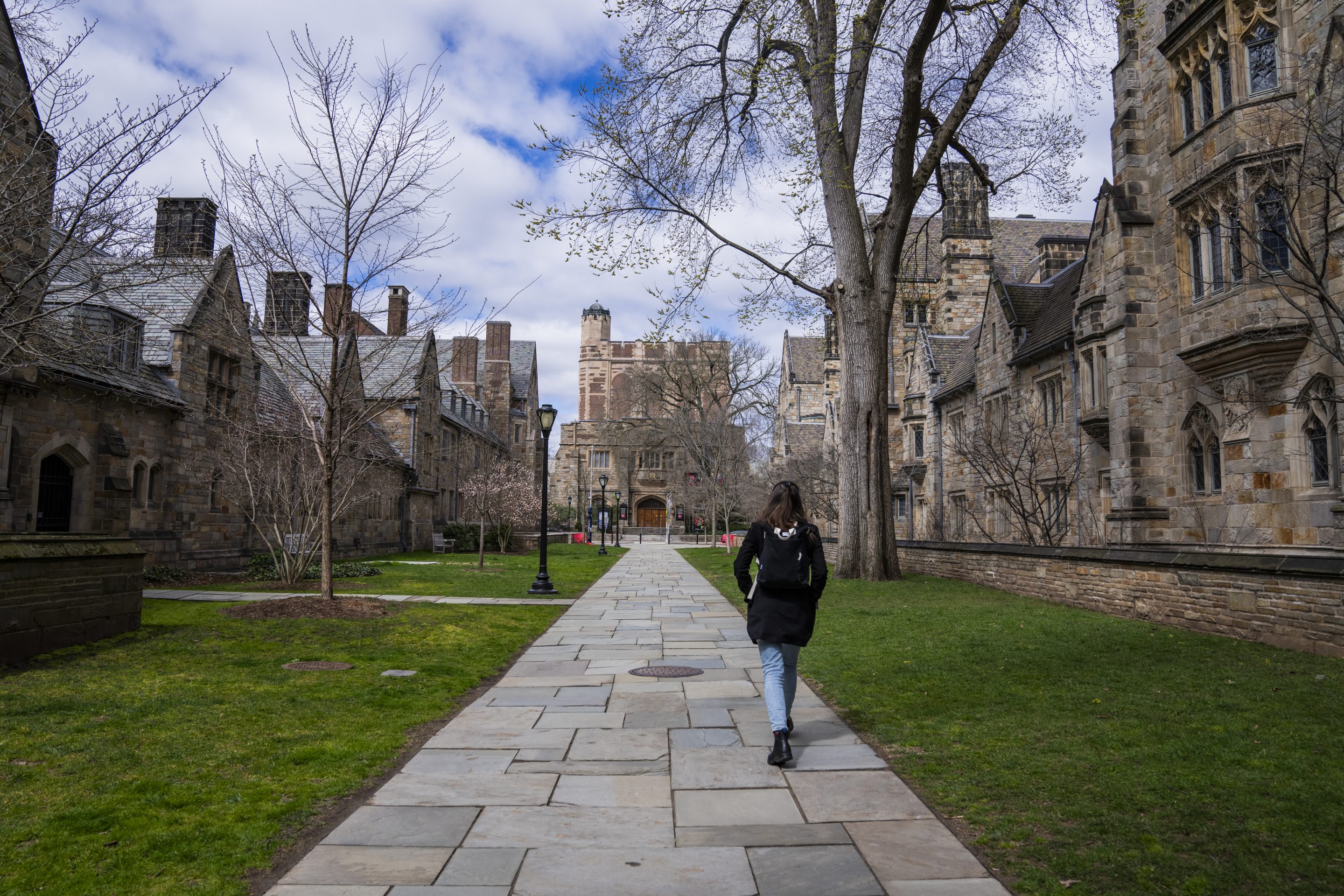
A Yale faculty committee of ten, convened by president Maurie McInnis, released a 58-page report on April 15 concluding that elite universities, Yale included, helped cause the collapse of public trust in higher education. The numbers are pointed. Yale's full cost of attendance is $94,425 a year, above the median US family income of about $84,000; 86% of survey respondents called the university "too expensive." Applicants from the top 1% of incomes are admitted at much higher rates than equally qualified middle-income peers, and legacy preferences and athletic recruiting skew the rest. Decades of grade inflation have left the grading system "almost meaningless." Nearly a third of undergraduates now say they do not feel free to express political views on campus, up from 17% in 2015. The committee offers 20 recommendations, including cutting legacy preferences, targeting a 3.0 mean grade with percentile rankings, requiring intellectual-diversity reviews in hiring, and widening tuition-free enrollment beyond the current $200,000 family income cap. McInnis accepted responsibility directly: "this decline did not come out of nowhere."
Public skepticism of American universities has been building since roughly 2019 over cost, admissions opacity, and campus speech. Ivy League schools drew particular heat after the protest controversies of 2023 and 2024 and ongoing legal scrutiny of their admissions practices, which the Supreme Court's affirmative-action ruling only intensified.
Google has pulled in its estimate for Q-Day, the projected moment when quantum computers can crack the encryption that protects almost all internet traffic, to 2029. That shift is pushing Big Tech toward a $15 billion migration to post-quantum cryptography, the new family of algorithms standardized in 2024 by NIST, the US standards agency. The work is slow: companies must inventory every cryptographic dependency in their stack, then swap the math out across legacy systems. Google has already shipped post-quantum key exchange in Chrome, offers it in Google Cloud, and will add ML-DSA signatures in Android 17. Meta published its own migration framework on April 16. The NSA has set deadlines for federal agencies. Many large enterprises have not started. The driving fear is a strategy called harvest now decrypt later: adversaries can vacuum up encrypted traffic today, store it, and decrypt it once a capable quantum machine finally arrives.
Today's internet encryption, from HTTPS to online banking, rests on math problems that classical computers cannot crack in any reasonable time. A sufficiently powerful quantum computer would solve those problems, unlocking in hours what now would take billions of years and exposing any encrypted data that had been saved along the way.
Senate Republicans tried in a late-night session to reauthorize FISA Section 702, the post-9/11 law that lets federal agencies read Americans' calls, texts, and emails without individual warrants. The vote failed. Congress passed a short-term extension instead, pushing the full fight down the road. The Trump White House wants a clean reauthorization with no privacy reforms. Reporting by The Lever reportedly helped hold wavering Senate Democrats against that position. Privacy advocates are pressing for new guardrails before any renewal, pointing to an FBI "pre-crime" center that has reportedly flagged people for "anti-Christian" or "anti-capitalist" posts on social media. Section 702 is formally aimed at foreigners, but a "backdoor" exception lets agencies search the scooped-up data for Americans' communications without a warrant, which is the core of the current dispute. The law has been contested since Edward Snowden first exposed it in 2013, and each reauthorization becomes another round in the same fight.
FISA Section 702 dates to the post-9/11 expansion of US surveillance authority and comes up for reauthorization on a regular cycle. Edward Snowden's 2013 leaks first showed the public how broadly it was being used. The law targets foreign intelligence on paper, but in practice sweeps in Americans' communications too.